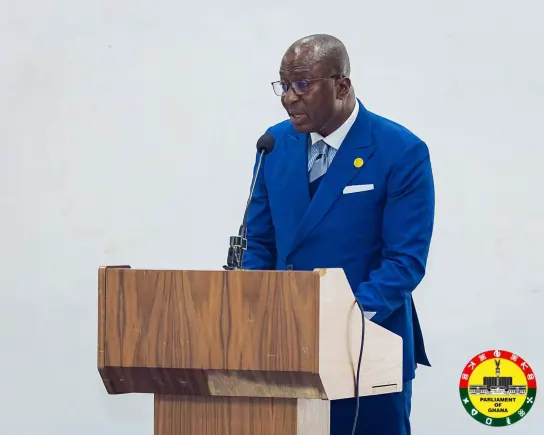
The Speaker of Ghana's Parliament, Alban Sumana Kingsford Bagbin, has urged the introduction of direct elections for ECOWAS Parliament members to strengthen regional integration and democratic participation. He emphasized that citizens should have a direct role in choosing their representatives at the regional level. This call was made through an address read on his behalf by the Second Deputy Speaker of Parliament, Andrew Amoako Asiamah, at the joint Second Parliamentary Seminar and Second Extraordinary Session of the ECOWAS Parliament in Accra on September 21.
According to Bagbin, allowing citizens to elect their representatives would enhance regional integration efforts and ensure that citizens' concerns are effectively represented at the regional level. This move would also strengthen the regional legislature's democratic legitimacy. The ECOWAS Parliament's current composition and selection process have been criticized for lacking direct citizen input, which Bagbin believes undermines its legitimacy and effectiveness.
The ECOWAS Parliament's seminar and session were held under the theme "Climate change, environmental degradation, population displacement and growing insecurity in the ECOWAS Region." The Second Deputy Speaker, Andrew Amoako Asiamah, noted that the theme was particularly timely given the interconnected environmental, economic, and security challenges facing West Africa. Climate change is disrupting weather patterns, intensifying floods and droughts, and increasing pressure on natural resources.
Asiamah identified illegal small-scale mining, or galamsey, as a significant environmental threat to the sub-region, causing water contamination, deforestation, habitat destruction, soil erosion, air pollution, and biodiversity loss. He warned that these challenges threaten not only the environment but also economic security and quality of life, requiring an integrated response. The growing insecurity in West Africa can no longer be viewed solely through the traditional security lens.
The Speaker of the ECOWAS Parliament, Hadja Memounatou Ibrahima, called on lawmakers to renew their commitment to tackling climate change and its impact on communities. She emphasized that collective action by legislators and stakeholders was necessary to address the increasing incidence of flooding, heat waves, and rising sea levels. Climate change effects have moved beyond data and projections, directly affecting livelihoods, communities, and regional security.
The Leader of Ghana's delegation to the ECOWAS Parliament, George Kwaku Ricketts-Hagan, highlighted the importance of the joint events in providing a platform for members to deliberate on common issues and strengthen the parliamentary dimension of regional integration. He emphasized that parliamentarians have a unique position within democratic systems and an indispensable role in advancing good governance and regional cooperation.
Ricketts-Hagan noted that the ECOWAS Parliament has a critical responsibility to bring citizens' voices, aspirations, and concerns closer to the regional decision-making process. This responsibility is particularly significant as West Africa faces challenges that transcend national borders and require collective action. The ECOWAS Parliament's role in promoting dialogue, accountability, and good governance is crucial to addressing these challenges.
Key points
- Direct election of ECOWAS Parliament members can strengthen regional integration and democratic participation.
- Climate change and environmental degradation are significant challenges facing the ECOWAS region.
- The ECOWAS Parliament has a critical role in promoting good governance and regional cooperation.