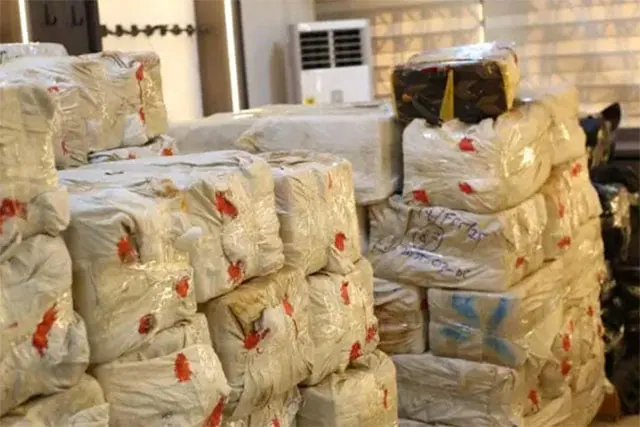
Retired Major Mohammed Bogobiri has called for the resignation or dismissal of the Board and Head of Ghana's Narcotic Control Commission (NACOC) following a recent massive cocaine smuggling breakthrough. The former military officer stated that the leadership's failure to address predictable vulnerabilities led to the exploitation by criminal networks. He emphasized that risk management is crucial in institutional governance, particularly in sensitive agencies like NACOC. Bogobiri's comments come amid criticism of NACOC's handling of the situation.
Security Expert Mr. Richard Kumado faced backlash for his remarks on the cocaine saga, with Bogobiri disagreeing with his assessment. Kumado had reportedly dismissed information from the Minister for National Security, suggesting that the French authorities were not willing to share intelligence with Ghana. However, Bogobiri pointed out that the Minister's line manager is the same person who would typically receive such intelligence, making Kumado's comments inaccurate. The issue has sparked a heated debate among security experts and politicians.
The Minority Group in Parliament has called for a parliamentary probe into the matter, which Bogobiri supports. He noted that Parliament has the constitutional authority to scrutinize the work of the Executive Arm of government and take action in the public interest. The Constitution's Article 278, Clause (1) (c) requires Parliament to act appropriately in such situations. The call for a probe aims to restore public confidence in NACOC, particularly after intelligence leaks revealed gaps in the system.
According to Mr. Sampson Awugabit, Executive Secretary General of the Exporters and Importers Association, there were suggestions that could have prevented the smuggling. He recommended that NACOC be involved in the surveillance and physical checking of containers before they are loaded onto ships. Awugabit's suggestions included having NACOC personnel present during the loading process, fixing the Commission's seal on containers, or escorting them to the port. These measures could have potentially prevented the smuggling.
The French authorities' decision to bust the cocaine at the Port of Dunkirk was based on reliable intelligence, but it is unclear if this intelligence came from Ghana or elsewhere. Bogobiri emphasized that the intelligence could have originated from various sources, including Sierra Leone or satellite images of the high seas. The French authorities' collaboration with Ghana after the busting of the cocaine is expected, but it does not necessarily imply that the intelligence was shared by Ghanaian authorities.
The reactions of key officials, including the Interior Minister and the Head of NACOC, have raised concerns. The Commander-in-Chief of the Armed Forces, President Mahama, swiftly took remedial action, demonstrating effective leadership. Bogobiri praised the President's proactive measures, which included collaboration with the port authorities. The incident has highlighted the need for improved communication and coordination among Ghana's security agencies.
The calls for change in NACOC's leadership are based on various factors, including the unguided utterances of some officials and the perceived gaps in the system. A fact-finding Commission of Inquiry is proposed to uncover the truth behind the incident. The incident has sparked a national conversation about the effectiveness of Ghana's security agencies and the need for accountability.
Key points
- The Board and Head of NACOC have been called to resign or be dismissed over their handling of the recent cocaine smuggling breakthrough.
- A parliamentary probe has been called to investigate the matter and restore public confidence in NACOC.
- The incident has highlighted the need for improved communication and coordination among Ghana's security agencies.