The Yobe State Government, through the Adolescent Girls Initiative for Learning and Empowerment (AGILE), is set to construct 50 new secondary schools and rehabilitate 225 existing ones. This initiative aims to improve girls' access to quality education in the state. The project, according to Malam Abdullahi Dahiru Bulah, Project Coordinator of AGILE Yobe State, is designed to provide more opportunities for girls to complete secondary school education and equip them with skills to improve their livelihoods and economic independence.
The AGILE project has three major components, including providing safe and accessible quality education, creating an enabling environment for girls to remain in school, and strengthening the education system. The first component focuses on providing safe learning spaces through the construction of new secondary schools for girls and the rehabilitation of existing secondary schools. The rehabilitation programme includes 104 schools being supported through small and medium grants, while preparations are underway for the rehabilitation of another 121 schools under the large-grant component.
Community engagement is a critical aspect of the AGILE project. The facilitators and mobilisers have a crucial role to play in changing perceptions and social norms that discourage parents from sending girls to school. Some girls are out of school not necessarily because their parents lack the financial capacity, but due to negative perceptions about girls' education. The project coordinator emphasized that the success of the initiative depends partly on effective community engagement and behavioural change.
The AGILE project also includes life skills, digital skills, second-chance education, and conditional cash transfers. A total of 875 desktop computers have been procured for 35 secondary schools, with each benefiting school receiving 25 computers, alongside solar power, internet facilities, and teacher training. An additional 15 schools will soon benefit from the digital skills component. This initiative aims to equip girls with the necessary skills to improve their livelihoods and economic independence.
Second-chance education is another critical component of the AGILE project. The project has established 20 non-formal learning centres and commenced the establishment of an additional 100 centres, bringing the number to about 120 across the state. These centres provide literacy, numeracy, and livelihood skills to girls who have missed the opportunity to attend formal schools. This initiative aims to provide girls with a second chance at education and equip them with the necessary skills to improve their livelihoods.
The AGILE project is also providing conditional cash transfers to girls at key transition points from primary to junior secondary school and from junior to senior secondary school. The financial support is intended to help beneficiaries meet educational needs such as uniforms, school bags, and other requirements that could otherwise contribute to girls dropping out of school. Subsequent payments under the programme are linked to school attendance, with girls required to attain up to 70 per cent attendance to qualify for full payment.
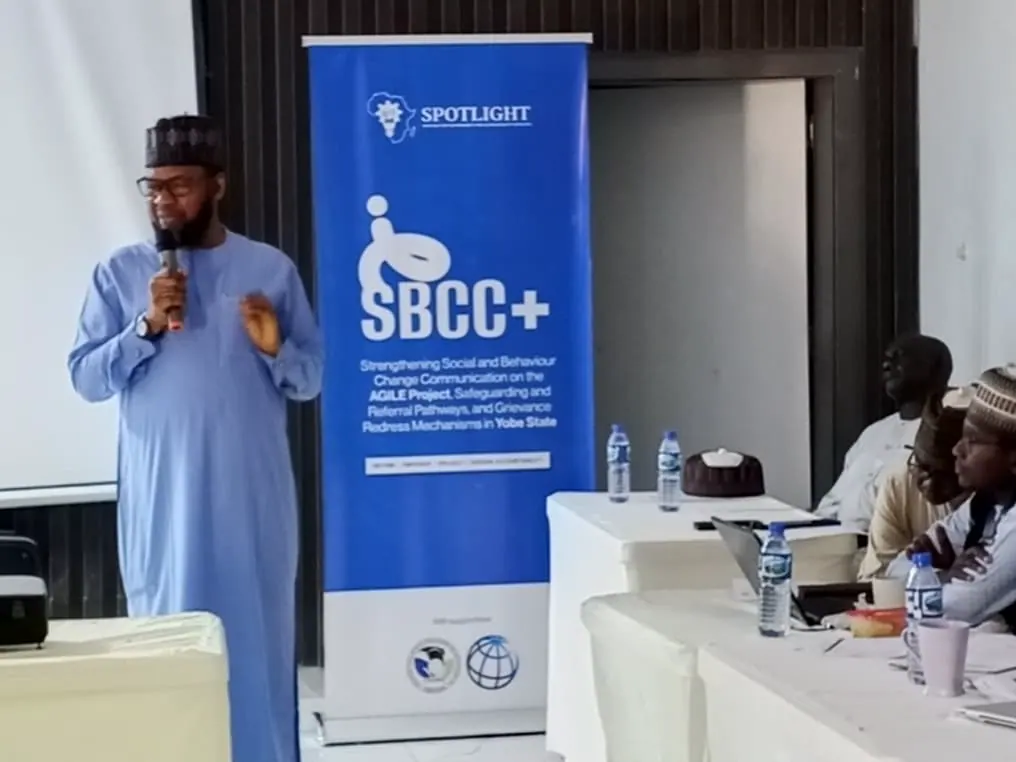
The Spotlight for Transparency and Accountability Initiative (STAI) has been engaged by the AGILE project to conduct social and behavioural change communication across the state. The organisation will leverage its network across the 17 local government areas to mobilise parents, teachers, traditional rulers, religious leaders, and other community stakeholders to support girls' education. The community-based intervention is expected to run for the next 22 months, with a focus on changing social norms and behaviour towards girls' education.
Key points
- The Yobe State Government aims to construct 50 new secondary schools and rehabilitate 225 existing ones to improve girls' access to quality education.
- The AGILE project includes life skills, digital skills, second-chance education, and conditional cash transfers to equip girls with the necessary skills to improve their livelihoods and economic independence.
- The project is expected to run for 22 months, with a focus on changing social norms and behaviour towards girls' education.