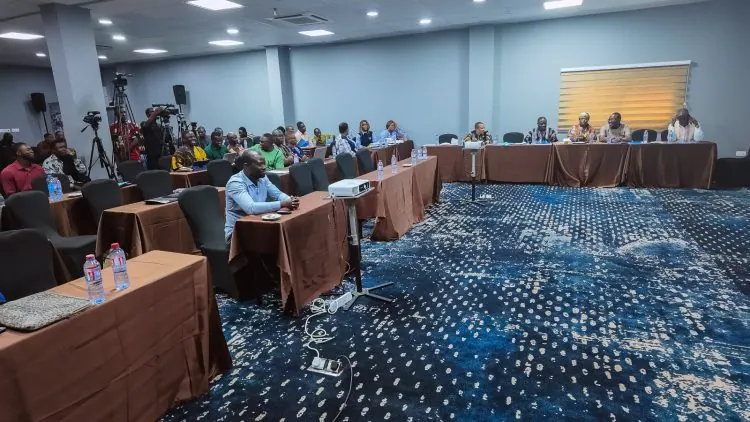
The Parliamentary Select Committee on Sanitation and Water Resources has conducted a two-day accountability engagement with Metropolitan, Municipal and District Assemblies in the Volta and Oti Regions of Ghana. The committee assessed how the 10 percent allocation of the District Assemblies Common Fund for sanitation and waste management is being accessed and utilised at the local level. The engagement involved 18 MMDAs in the Volta Region and nine districts in the Oti Region.
During the engagement, the assemblies presented details of their 2025 and 2026 DACF allocations and receipts, sanitation projects and programmes undertaken, as well as difficulties encountered in accessing and utilising the funds. The presentations showed that the allocation was supporting practical interventions in communities, including investments in institutional toilets, mechanised and hand-pump boreholes, desilting, drainage works and other sanitation-related activities.
Member of Parliament for Salaga South and member of the Committee, Ibrahimah Mohammed Zuwera, commended the assemblies for their accomplishments, quality of work and commitment to addressing sanitation challenges. She noted that out of the nine districts in the Oti Region, eight had been stellar in their implementation of sanitation projects. However, the Committee identified concerns with the presentation from the Nkwanta North District Assembly and directed the assembly to return to Accra for further engagement and clarification.
The Committee's exercise was not merely to establish whether assemblies had spent their allocations, but also to determine whether public funds were being used for their intended purposes and whether the projects were producing results at the community level. The Committee examined the actual status of DACF releases, with Ms. Zuwera cautioning assemblies against blaming implementation challenges on non-release of funds where allocations had already been transferred.
According to Ms. Zuwera, the two quarterly allocations for 2026 had been paid and urged the assemblies to provide accurate information on the status of their funds and expenditure. She stressed the need for public resources to translate into tangible benefits for residents, adding that public funds are not for personal use. The Committee's engagement aims to ensure that public funds are utilised efficiently and effectively.
Deputy Ranking Member and Member of Parliament for Bekwai, Ralph Poku-Adusei, however, stressed the need for more sustainable interventions to address the structural challenges confronting sanitation management. He emphasised that addressing sanitation challenges requires a more dedicated and sustainable financing mechanism. The Committee's assessment will inform future decisions on sanitation funding and implementation.
The Parliamentary Select Committee's review of sanitation spending in the Volta and Oti Regions highlights the importance of effective utilisation of public funds for sanitation and waste management. The Committee's engagement with MMDAs aims to ensure that sanitation projects are implemented efficiently and effectively, ultimately improving the lives of residents in the regions.
Key points
- The Parliamentary Select Committee on Sanitation and Water Resources has reviewed the utilisation of 10% DACF allocation for sanitation and waste management in Volta and Oti Regions.
- The Committee engaged 27 MMDAs in the two regions, assessing their 2025 and 2026 DACF allocations, receipts, and sanitation projects.
- The Committee identified areas for improvement, including concerns with the Nkwanta North District Assembly's presentation, and stressed the need for sustainable interventions to address sanitation challenges.