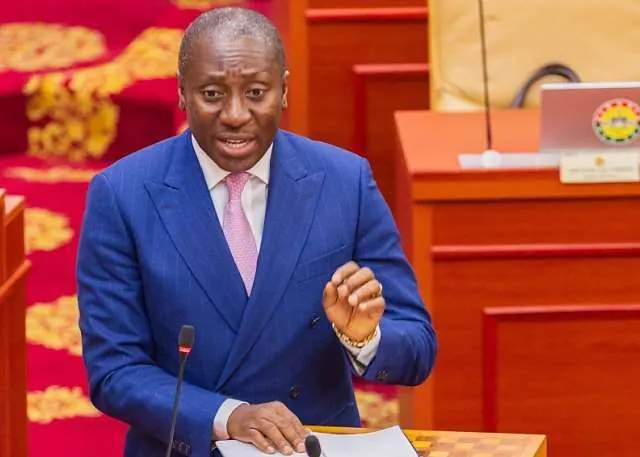
The Minority Leader, Alexander Afenyo-Markin, has expressed disappointment and concern over the Speaker of Parliament's decision to dismiss a motion to investigate recent cocaine busts. The motion, filed by the Minority, sought to establish an Ad Hoc Committee to probe the circumstances surrounding the seizures. Afenyo-Markin stated that the Minority will not rest on this matter and will use every legitimate means to inform the public about the cause of the cocaine arrests. He criticized the Speaker's decision, citing that it has weakened Parliament's function and failed the integrity test required of Parliament to discharge its duty.
The Speaker of Parliament, Alban Bagbin, rejected the motion during an emergency sitting on September 29, citing that it was inadmissible under the Standing Orders. The motion highlighted several high-profile narcotics seizures, including the seizure of 3.9 metric tonnes of cocaine by French Customs at Dunkirk on September 10, 2026, valued at $261 million. It also cited the seizure of 320kg of methamphetamine by Australian Border Force on June 18, 2026, and cocaine interceptions in Takoradi and Pedu in Cape Coast in March 2025.
Afenyo-Markin described the Speaker's decision as sad for Ghana's democracy and parliamentary oversight. He accused the National Democratic Congress (NDC) administration of being afraid of its own failures. The Minority Leader emphasized that the 24-hour economy has turned into a 24-hour cocaine economy, and the Majority is not interested in scrutiny. He vowed that the Minority will continue to push for accountability and transparency in the matter.
The proposed committee would have investigated the circumstances under which the consignments were processed and cleared in Ghana, including the ports from which they departed and the intelligence profiling, scanning, physical inspection, and customs procedures applied. The motion also sought to establish the identities and roles of companies, state agencies, and other entities involved in processing and clearing the consignments.
The Minority's motion aimed to examine the adequacy of Ghana's security systems at its ports, airports, and other entry and exit points, including scanning, surveillance, and intelligence capabilities. It also sought to assess the status of investigations, arrests, and prosecutions connected to the seizures and evaluate the extent of cooperation and intelligence sharing between Ghanaian authorities and international law-enforcement agencies.
Afenyo-Markin emphasized that the Speaker's decision has failed to uphold Parliament's duty to ensure accountability and transparency. He stated that the Minority will continue to use every legitimate means to bring the matter to light and ensure that the public is informed. The Minority Leader expressed concern that the Majority's supermajority, with the support of the Speaker, has weakened Parliament's ability to perform its oversight functions.
The dismissal of the motion has sparked concerns about the effectiveness of Ghana's parliamentary oversight and the ability of the Minority to hold the government accountable. The Minority's push for an investigation into the cocaine busts highlights the need for transparency and accountability in the country's efforts to combat narcotics trafficking. The matter is expected to continue to be a point of contention between the Minority and the Majority.
Key points
- The Speaker of Parliament, Alban Bagbin, dismissed the Minority's motion to investigate recent cocaine busts, citing that it was inadmissible under the Standing Orders.
- The Minority Leader, Alexander Afenyo-Markin, vowed that the Minority will not rest on the matter and will use every legitimate means to inform the public about the cause of the cocaine arrests.
- The proposed committee would have investigated the circumstances surrounding the seizures, including the processing and clearing of consignments in Ghana, and the adequacy of the country's security systems.