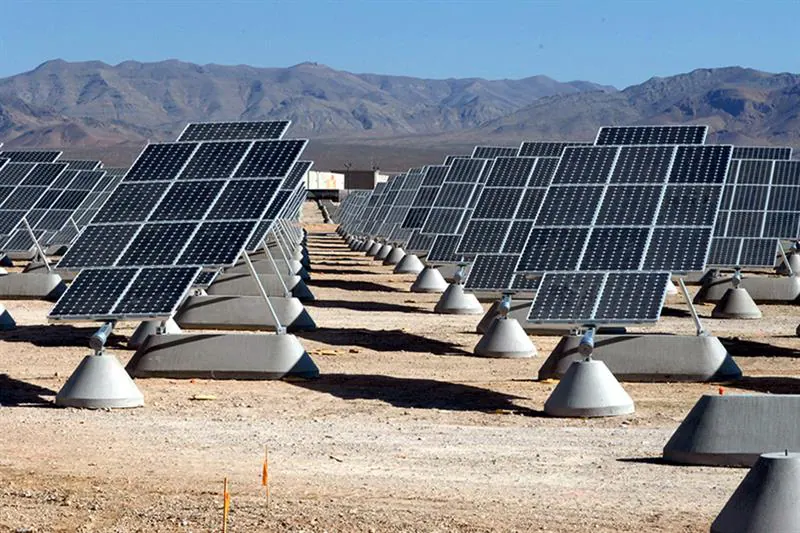
Egypt is targeting a significant increase in its renewable energy share, aiming to generate 45% of its electricity from renewables by 2028 and 65% by 2040. This ambitious goal was discussed at the 106th edition of the Cairo Climate Talks, held at the German Embassy in Cairo. The event brought together experts to explore Egypt's path to energy transition and how Germany's experience can support this journey. Germany has been a partner in Egypt's energy sector since 1963, committing over €1.87 billion in financial and technical cooperation.
Germany's energy transition program, known as Energiewende, has seen the share of renewables in its energy mix rise from 6% in 2000 to nearly 56% last year. Hendrik Barkeling, head of science and climate at the German Embassy in Cairo, presented the program, highlighting its economic opportunities and public backing. However, Barkeling emphasized that Germany's experience is not a model to copy, but rather a reference for Egypt to draw on as it pursues its own path. Egypt has advantages in areas like green hydrogen, which can be leveraged to achieve its renewable energy targets.
The Nexus of Water, Food, and Energy (NWFE) program, launched in July 2022, aims to accelerate climate action by mobilizing finance and private investment for renewable energy, water, and food security projects. Germany has acted as an enabler for substantial private investments in Egypt's energy transition through this program. Jürgen Schulz, ambassador of the Federal Republic of Germany to Egypt, noted that the NWFE is a flagship platform for mobilizing climate finance and accelerating renewable energy projects.
Egypt's legislative foundation for renewables is in place, with Article 32 of the constitution promoting research and development in this field. The 2014 constitution introduced five schemes, four of them voluntary, to facilitate electricity generation from renewable sources. Mohamed ElSobki, Founding managing director of the Egyptian Electric Utility and Consumer Protection Regulatory Agency (Egypt ERA), explained that the main system now in use is the Build-Own-Operate (BOO) scheme, but there are also efforts to introduce power purchase agreements (PPAs) that would allow developers to sell electricity directly to end users.
ElSobki noted that exceeding a 45% share of electricity generation from renewables by 2028 is an ambitious goal but an achievable one. This target was first revealed in 2015 with an end date of 2040, but due to the current rate of implementation, it could be achieved much faster. The real target, according to ElSobki, is to eventually achieve a liberalized market where there is a direct relationship between producers and purchasers based on competition, both technically and financially.
Ghada Ahmadein, National Coordinator for the Global Environment Facility (GEF) Small Grants Programme, emphasized that Egypt's energy transition should be understood not only as a shift towards renewable energy, but also as a broader transformation in how energy is produced, consumed, and managed. Achieving a sustainable and inclusive energy future requires a strong focus on energy efficiency, responsible consumption, and raising public awareness at household, institutional, and community levels.
Christoph Schäfer, country director of the KfW Development Bank, noted that a stable regulatory framework, credible long-term offtake, sound project preparation, and the right blend of concessional and private finance are essential for making renewables projects bankable at scale. Schulz reiterated that Germany is ready to continue its support for Egypt's energy transition and provide innovative finance that catalyzes private investment.
Key points
- Egypt aims to generate 45% of its electricity from renewables by 2028 and 65% by 2040.
- Germany has committed over €1.87 billion in financial and technical cooperation to Egypt's energy sector since 1963.
- The Nexus of Water, Food, and Energy program aims to accelerate climate action by mobilizing finance and private investment for renewable energy, water, and food security projects.