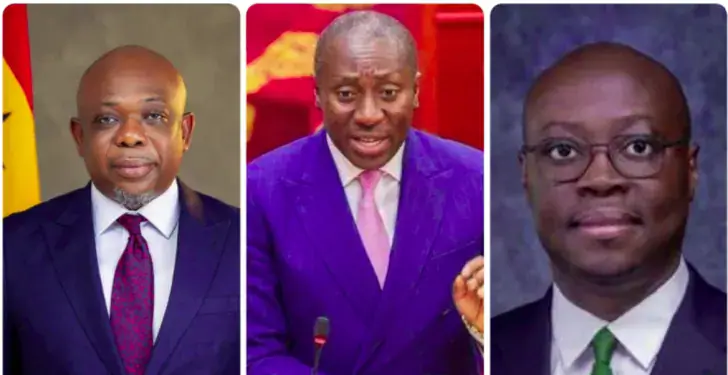
The Ghanaian Parliament recently debated the 2027 Budget Statement, with the Majority Leader, James Agalga, describing it as a budget of restraint with purpose that prioritizes the needs of Ghanaians. He emphasized that the budget does not introduce new taxes, nor does it involve borrowing for the Accra-Kumasi Expressway or the Western Corridor railway line. According to Agalga, this approach rejects the notion that progress must come with pain and that development must be financed by more debt.
Agalga highlighted the government's achievements in economic management, citing a reduction in inflation from 8.0% in October 2025 to 5.5% in October 2026. He also noted that public debt has decreased to GH¢759.3 billion, equivalent to 47.5% of Gross Domestic Product (GDP). Furthermore, gross international reserves stood at $12.7 billion by the end of September, providing about 4.5 months of import cover. Agalga contrasted these achievements with the previous administration's records.
The Majority Leader pointed out that the government is building infrastructure without new borrowing, citing the multi-purpose Pwalugu Dam and Agenda 111 as examples. He also criticized the previous administration for abandoning projects commenced by the previous government, including the E-blocks. In response, Minority Leader Alexander Afenyo-Markin argued that the government has not produced a single private sector policy to drive jobs, investment, and growth.
Afenyo-Markin challenged the government's philosophy of a public sector-driven "New Economy," citing the proposal for the Social Security and National Investment Trust (SSNIT) to invest in new hotels as an example of policy misalignment. He argued that a 24-hour Economy built on the promise of one job, three shifts cannot work without deliberate incentives to make it profitable for businesses to stay open around the clock.
The Minority Leader accused the government of cancelling the One District, One Factory (1D1F) programme without putting anything in its place. He also pointed to the promised Women's Bank, which has not materialized two years after its announcement. Afenyo-Markin emphasized that the government needs to provide incentives for the private sector, including rebates on electricity tariffs and preferential rates on income tax.
Agalga responded by challenging former Finance Minister Ken Ofori-Atta to return home and account for his stewardship, just as Dr. Forson had done. He emphasized that the government has delivered on its core promises, including reducing inflation and cutting profligate spending. The debate highlights the differences between the Majority and Minority leaders on the 2027 Budget Statement.
The 2027 Budget Statement has been a topic of discussion in Ghana, with various stakeholders weighing in on its merits. The government's approach to economic management and private sector development has been a major point of contention. As the country moves forward, it remains to be seen how the budget will be implemented and what impact it will have on the economy.
Key points
- The 2027 Budget Statement prioritizes restraint with purpose, rejecting new taxes and borrowing for certain infrastructure projects.
- The Majority and Minority leaders have differing views on the government's approach to private sector development and economic management.
- The budget has been criticized for lacking incentives for the private sector, particularly in driving jobs, investment, and growth.
Reporting sources
- Majority, Minority trade punchlines on budget · Daily Graphic