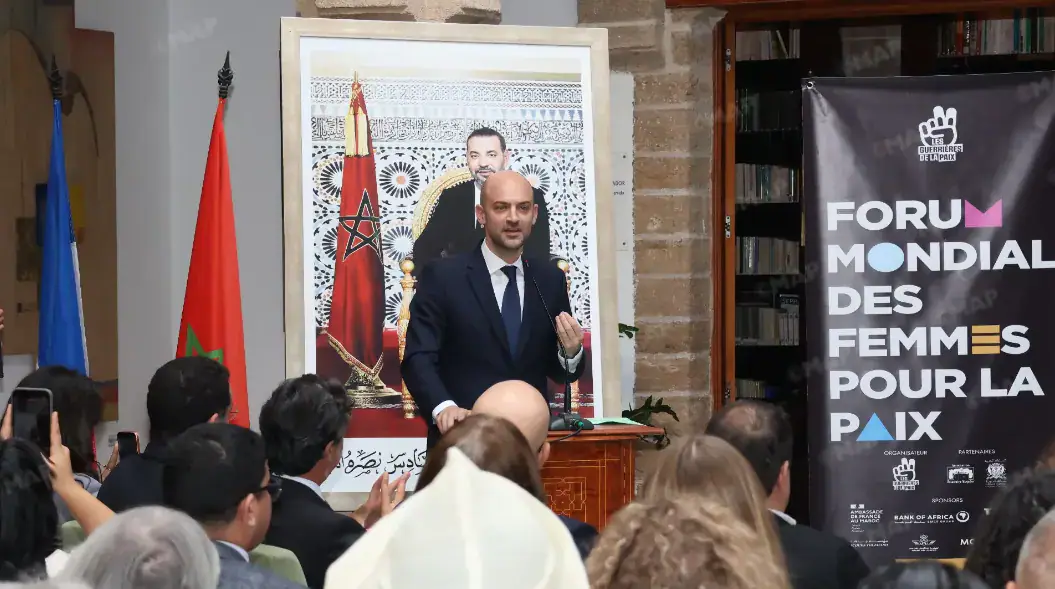
French Foreign Minister Jean-Noël Barrot recently visited Morocco to address the escalating situation in the Middle East and explore diplomatic solutions. The visit, which took place from November 12 to 14, was an opportunity for Barrot to engage with Moroccan officials and discuss strategies for promoting peace and stability in the region. The visit coincided with the third edition of the Global Women's Forum for Peace, held in Essaouira, where Barrot participated in a high-level panel discussion on "Croising Diplomacy and Civil Society to Build Peace".
During his visit, Barrot met with Moroccan Foreign Minister Nasser Bourita to discuss the strengthening of bilateral relations between France and Morocco. The two ministers also touched on the upcoming signing of a historic bilateral treaty between the two countries. Barrot praised Morocco's experience in promoting coexistence and dialogue, highlighting the country's unique role in fostering peace and understanding. He emphasized that Morocco's values of coexistence, tolerance, and dialogue make it a singular space for cultural exchange and a bulwark against intolerance and hatred.
The Global Women's Forum for Peace, organized by the Guerrières de la Paix movement, brought together nearly 500 participants from conflict zones around the world. The forum provided a platform for women to share their experiences and advocate for peace, justice, and human dignity. Barrot's participation in the forum was seen as a significant gesture of support for Morocco's efforts to promote peace and stability in the region. The French foreign minister's visit was also seen as a reflection of France's conviction that Morocco can play a key role in resolving the Israeli-Palestinian conflict.
Morocco has historically maintained a unique relationship with Israel, with many Israelis of Moroccan origin maintaining strong ties to the country. The Moroccan king is considered a symbolic figure by many Jews of Moroccan descent, who have maintained their allegiance to the monarch. This relationship has allowed Morocco to maintain diplomatic ties with Israel, unlike many other Arab countries. Barrot's visit was seen as an effort to build on this relationship and explore ways to promote peace and stability in the region.
The visit was also seen as a strategic move by France to strengthen its relations with Morocco, particularly in the context of the upcoming bilateral treaty. The treaty is expected to further solidify the already strong relations between the two countries and provide a framework for cooperation on key issues such as security, trade, and development. Barrot's participation in the Global Women's Forum for Peace was also seen as a reflection of France's commitment to promoting women's rights and empowerment.
André Azoulay, advisor to King Mohammed VI and president-founder of the Essaouira-Mogador Association, praised the forum for providing a platform for women to share their experiences and advocate for peace. He emphasized that the forum was not just about rhetoric, but about promoting real change and understanding. Azoulay also highlighted Morocco's tradition of openness and tolerance, which has allowed the country to maintain a unique position in promoting peace and stability in the region.
The visit by Barrot and the Global Women's Forum for Peace highlighted the importance of Morocco in promoting peace and stability in the region. The country's unique relationship with Israel and its commitment to promoting coexistence and dialogue make it a key player in efforts to resolve the Israeli-Palestinian conflict. The visit also underscored France's commitment to strengthening its relations with Morocco and promoting peace and stability in the region.
Key points
- France sees Morocco as a key player in promoting peace and stability in the Middle East.
Reporting sources
- Maroc-France: Jean-Noël Barrot met le turbo · Challenge Hebdo