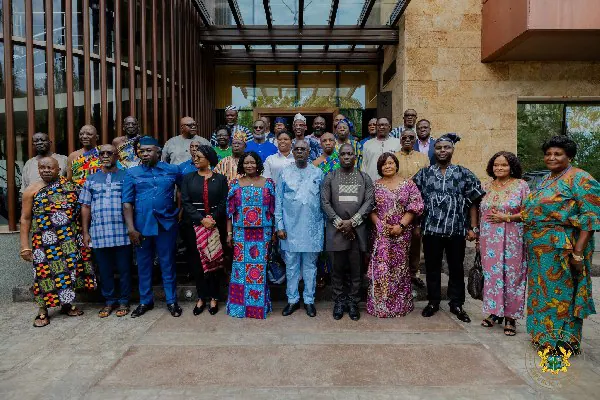
The Council of State, comprising a former Chief Justice, a former Inspector-General of Police, the Chief of Defence Staff, 16 regional representatives, the President of the National House of Chiefs, and 11 presidential appointees, plays a crucial advisory role in Ghana's governance structure. According to Article 89 of the 1992 Constitution, the Council's primary function is to advise the President on the exercise of his constitutional duties and matters of national importance. This advisory body has been a part of Ghana's governance landscape since the 1992 Constitution came into effect.
The Council of State has specific roles, including providing advice on certain appointments, reviewing bills passed by Parliament, and setting up committees to investigate specific matters. The Council must be consulted on specific appointments as required by the Constitution or other laws, and it must provide its advice within 30 days of such a request. Additionally, the Council can review bills that have been gazetted or passed by Parliament, with a normal 30-day window after a bill's third reading, or 72 hours for bills passed under a certificate of urgency.
Despite its roles, the Council of State has been criticized for being toothless, as its recommendations are not binding on the President, ministers, Parliament, or other authorities. Under Article 91(3) of the Constitution, these entities are under no obligation to act on the Council's recommendations. The Council cannot overrule the President or Parliament, nor does it exercise any executive power of its own, limiting its influence on national decision-making.
The debate over the Council of State's relevance is part of a broader conversation about reforming Ghana's governance architecture. Civil society groups and individuals, including Akuffo, have argued that the current reform plan still concentrates too much power in the presidency. Others have questioned the President's role in selecting Metropolitan, Municipal, and District Chief Executives (MMDCEs) despite proposed reforms. Media advocates have also pushed for press freedom to be explicitly written into the Constitution.
The Council of State's work is largely invisible, as it meets, advises, and reviews bills behind closed doors, with no power to force any outcome. The Council's composition, including 16 regional representatives and traditional authority voices through the National House of Chiefs, provides a platform for diverse perspectives to be represented. However, the Council's advisory status and lack of binding power have raised questions about its effectiveness.
The call to scrap the Council of State has sparked a national conversation about its role and relevance in Ghana's governance structure. Commentator Kofi Bentil has argued that the body has "outlived its usefulness" and should be abolished. This debate is taking place within the context of a broader constitutional review process, which is examining various aspects of Ghana's governance, including the presidency's powers, local government appointments, and press protections.
The fate of the Council of State remains uncertain, with no scheduled vote, parliamentary hearing, or formal timeline for a decision. The debate is currently at the level of public commentary, with various stakeholders weighing in on the Council's relevance and effectiveness. As the constitutional review process continues, the Council of State's role and future will likely remain a topic of discussion and debate.
Key points
- The Council of State's advisory status and lack of binding power have raised questions about its effectiveness.
- The debate over the Council of State's relevance is part of a broader conversation about reforming Ghana's governance architecture.
- The Council of State's composition provides a platform for diverse perspectives to be represented, including 16 regional representatives and traditional authority voices.