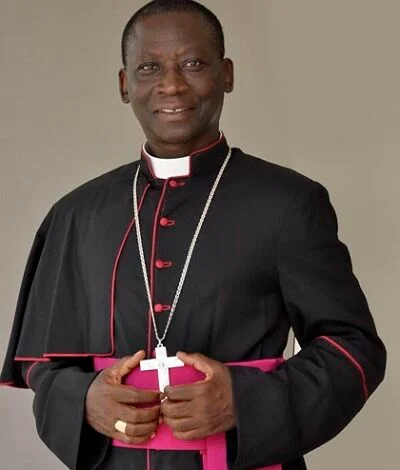
The Ghana Catholic Bishops' Conference has called for a more robust response to combat drug trafficking in the country. According to Most Rev. Matthew Gyamfi, President of the Conference, recent cocaine seizures linked to Ghana indicate that existing controls are not effective enough. He emphasized the need for collaboration among agencies responsible for narcotics control, ports, prosecution, judiciary, and security to dismantle trafficking networks.
Most Rev. Gyamfi made these comments on the Asaase Breakfast Show on September 22, following the seizure of a large cocaine consignment in France reportedly linked to Ghana. He expressed concern that the seizure raises questions about Ghana's ability to prevent narcotics from passing through its ports and entry points. The Bishop noted that despite measures in place, the recent seizure suggests that systems are not robust enough to arrest the problem.
The Catholic Bishops' Conference has urged the government and Parliament to examine the country's narcotics control architecture. Most Rev. Gyamfi stressed that investigations should go beyond those physically transporting the drugs to identify those who finance, receive, package, and facilitate the movement of narcotics. He emphasized the need to pursue what he described as the "bigger fishes" behind trafficking operations.
Most Rev. Gyamfi also expressed concern that legitimate commercial channels could be exploited by criminal networks, potentially compromising officials responsible for inspecting goods. He suggested that some officials might be compromised with money or other rewards, allowing them to overlook these issues. President John Dramani Mahama has established an inter-agency task force to examine narcotics trafficking through Ghana's ports, airports, and borders.
Most Rev. Gyamfi welcomed efforts to strengthen coordination but cautioned that creating another structure would not solve the problem unless existing institutions were adequately supported and made to work together. He called for stronger parliamentary oversight, suggesting that Parliament should summon relevant agencies to account for major narcotics trafficking incidents. He also emphasized the need for consequences for officials found responsible for serious failures.
The Catholic Bishops' Conference believes that corruption and impunity are major factors that could undermine Ghana's efforts to combat drug trafficking. Most Rev. Gyamfi urged authorities to ensure that prosecutions and investigations result in meaningful consequences, arguing that failure to punish those responsible could encourage further offenses. The Conference also plans to intensify education and counseling on drug abuse through its churches, schools, hospitals, and other institutions.
The issue of cocaine trafficking in Ghana requires a comprehensive approach, involving multiple stakeholders and agencies. As the country continues to grapple with the problem, the Catholic Bishops' Conference remains committed to advocating for a robust response to combat drug trafficking. The Conference's efforts aim to support the government's initiatives to address the issue and ensure a safer future for Ghanaian citizens.
Key points
- The Ghana Catholic Bishops' Conference has called for a stronger and more coordinated response to combat drug trafficking in the country.
- Most Rev. Matthew Gyamfi emphasized the need for collaboration among agencies to dismantle trafficking networks.
- The Conference plans to intensify education and counseling on drug abuse through its institutions.