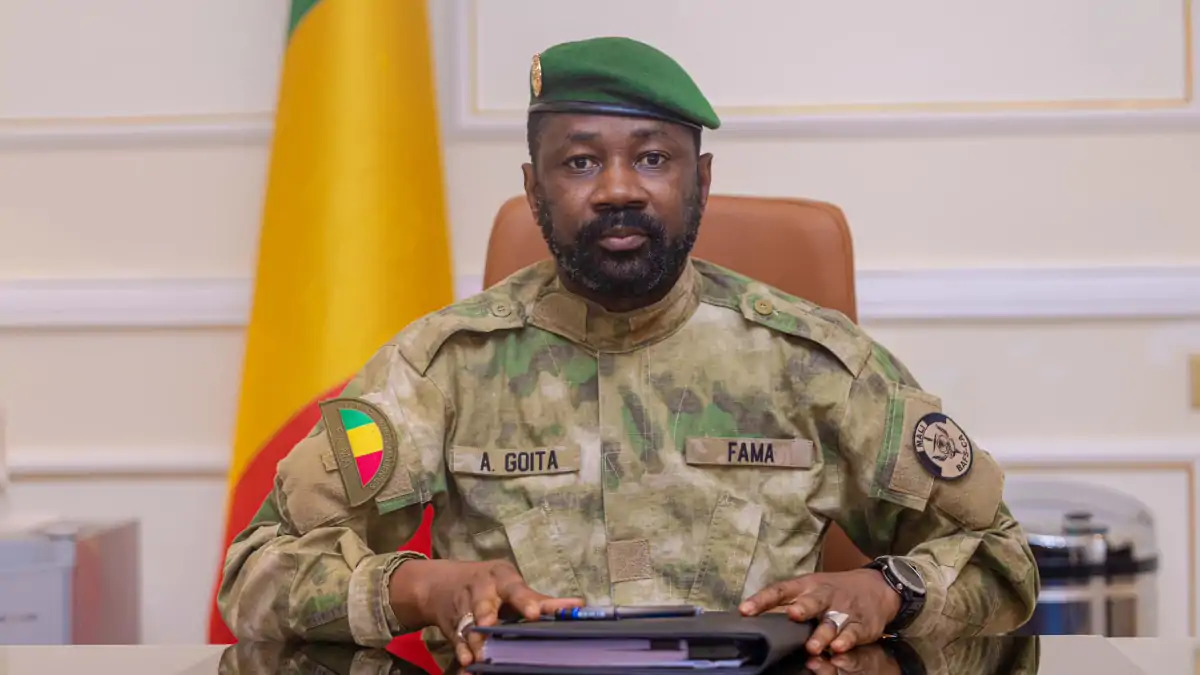
On September 21, 2026, Mali's President Assimi Goïta announced that the country's economic growth is expected to reach 6.3% in 2026. This projection surpasses the 5.5% forecast by the International Monetary Fund (IMF). The announcement was made during Goïta's address to the nation on the 66th anniversary of Mali's independence. The country's independence is celebrated on September 22, commemorating the proclamation of the Republic of Mali in 1960.
The IMF had previously revised its estimates for Mali's economic growth in 2026, citing a rebound in gold production and an improvement in the security situation. The institution predicted a growth rate of 5.5%, following a difficult year in 2025. The IMF's forecast was influenced by an agreement between Bamako and Canadian mining company Barrick Gold to restart operations at the Loulo-Gounkoto site. This site is one of the world's top ten gold mining complexes.
According to President Goïta, Mali's economic growth in 2025 was 5.6%, exceeding the IMF's projection of 5%. Goïta attributed this performance to the country's policy of mobilizing and managing internal resources. He emphasized the importance of transforming the mining sector, which is expected to play a growing role in the national economy. The government's reforms aim to shift the focus from mining revenue to mining investment.
The Malian government has made progress in implementing reforms in the mining sector. Two financial mechanisms have been established: the Mining Development Fund and the Infrastructure Fund for Energy, Water, and Transport. The government has mobilized 18.435 billion CFA francs for the Mining Development Fund and 109.142 billion CFA francs for the Infrastructure Fund. These funds will finance local projects and infrastructure development in gold-producing regions.
The mining sector is a significant contributor to Mali's economy, accounting for around 70% of the country's exports. The sector's growth is expected to drive economic development in the country. President Goïta's announcement highlights the government's efforts to assert its economic sovereignty, particularly after Mali's withdrawal from the Economic Community of West African States (ECOWAS).
The country's celebration of its 66th anniversary of independence is taking place amid a backdrop of economic reforms and regional developments. Mali's rapprochement with Burkina Faso and Niger within the Alliance of Sahel States (AES) reflects the country's efforts to strengthen regional ties. The divergence between the government's projections and IMF estimates highlights the differences between national and international perspectives on Mali's economic outlook.
The IMF is scheduled to hold consultations with Bamako in the coming months, which will provide an opportunity to assess the gap between the two growth trajectories. The consultations will take place as part of the IMF's regular 12-month cycle. The outcome of these discussions will be closely watched by stakeholders, as they will shed light on the country's economic prospects and the effectiveness of its reforms.
Key points
- Mali's President Assimi Goïta forecasts 6.3% economic growth for 2026, surpassing IMF's 5.5% projection.