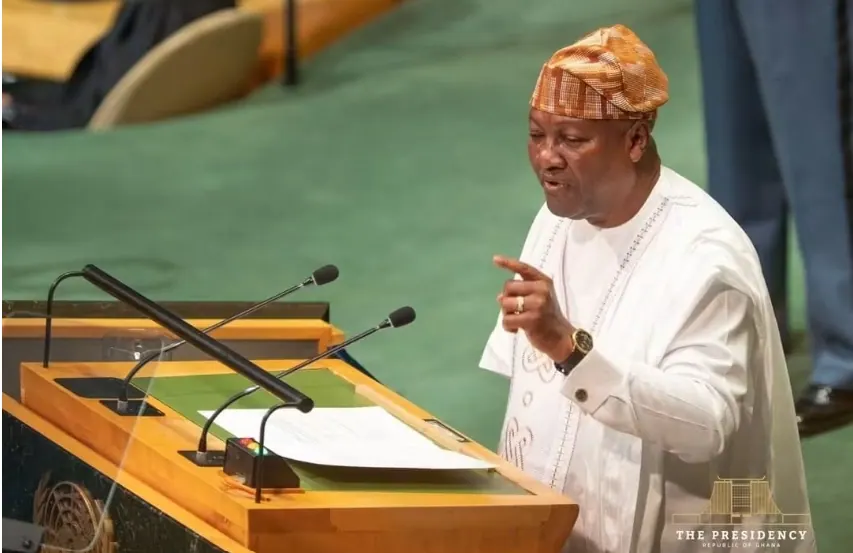
On September 24, 2026, Ghanaian President John Mahama delivered his 7th address to the United Nations General Assembly in New York. The speech emphasized Ghana's stance on various international issues, including the need for reform in the United Nations system. Mahama stressed that Africa, with its substantial population, must have a permanent seat on the Security Council. This call for reform highlights Ghana's commitment to giving Africa a stronger voice in global governance.
Mahama's address covered a range of topics, from the situation in Gaza to climate change and African integration. His speech was well-received globally for its content and delivery. A key aspect of his address was the demand for Pan-African representation in global governance. He emphasized that Africa's participation in decision-making processes that affect the continent is crucial. This stance connects with Ghana's historical role in African liberation and the country's vision for a more equitable international order.
The speech also underscored Ghana's independent voice on international affairs. Mahama criticized Israel's conduct in Gaza while condemning Hamas, and supported Palestinian statehood. He called for the lifting of the embargo on Cuba, showcasing Ghana's commitment to sovereignty and international law. By taking these positions, Ghana presents itself as a state that articulates its own views on contentious international issues, independent of other powers.
Mahama reiterated the importance of reformed multilateralism and international law. He insisted that the UN Charter must prevail in a world where "might makes right." His criticism targeted the inequalities and failures of the international system rather than multilateralism itself. Mahama advocated for reform to make international institutions more representative and equitable. This stance reflects Ghana's belief in the necessity of these institutions for global stability.
Economic sovereignty was another key theme in Mahama's address. He declared that Africa would not remain a passive arena for a new scramble for resources. Mahama emphasized the need for African countries to control their resources and benefit from their value. This includes processing minerals at home, developing value chains, and industrialization. By broadening the meaning of sovereignty, Ghana highlights the importance of economic independence for African nations.
Mahama also elevated the issue of reparatory justice in international diplomacy. He acknowledged the transatlantic slave trade's impact on Africans and connected it with the need for recognition, restitution, and reparatory justice. This historical perspective brings an unfinished international question to the forefront of diplomatic discussions. By doing so, Ghana positions itself as a champion of historical and contemporary justice.
Finally, Mahama emphasized African responsibility and the need to strengthen governance at home. He told African leaders that they must "put their own houses in order." This includes better governance, stronger democracy, and deeper continental cooperation. As Ghana prepares to assume the African Union chairmanship in January 2027, Mahama's address outlines a comprehensive vision for Africa's role in the international order and the responsibilities that come with it.
Key points
- Ghana's President John Mahama calls for UN reform, including permanent Security Council representation for Africa.
- Mahama emphasizes economic sovereignty, advocating for African control over resources and industrialization.
- The speech highlights Ghana's commitment to historical and contemporary justice, including reparatory justice for the transatlantic slave trade.