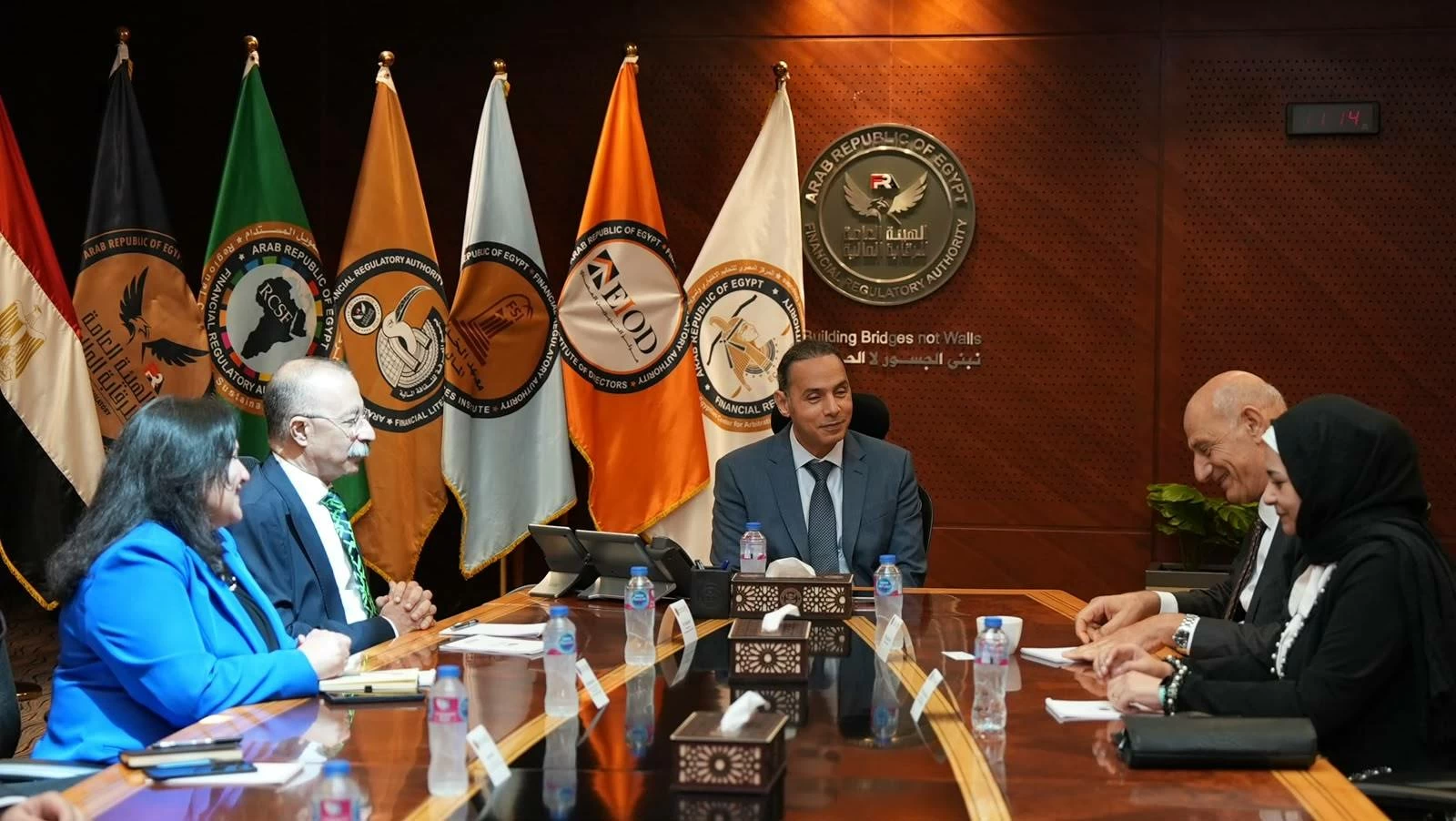
Egypt's capital market regulator, the Egyptian Financial Regulatory Authority (EFRA), has reported that the total value of transactions on the Egyptian stock exchange reached 6.4 trillion pounds in the second quarter of 2024, representing a 78.3% increase compared to the same period last year. This significant growth is attributed to various market developments and regulatory initiatives aimed at enhancing market efficiency and deepening the capital market. EFRA Chairman, Dr. Islam Azzam, highlighted these achievements during a meeting with Jaleel Tarraf, Secretary General of the Arab Financial Markets Union.
Dr. Azzam and Mr. Tarraf discussed ways to strengthen cooperation between their organizations in areas such as awareness, training, and capacity building through EFRA's financial services training institute and the Regional Center for Sustainable Finance and Carbon Markets. The two parties reviewed the positive outcomes of training programs implemented under a memorandum of understanding between the Regional Center and the Arab Union, focusing on exchanging technical expertise and qualifying cadres in Arab countries to deal with green financial instruments.
The meeting also touched on opportunities for continued collaboration, including launching new diverse training programs that involve transferring Egyptian expertise to financial sector cadres in other Arab countries in areas such as non-bank financial technology, financial derivatives, and carbon markets. Egypt has made significant strides in regulating and monitoring carbon markets, completing the framework governing voluntary carbon markets and implementing steps to activate it as the first regulated and monitored market of its kind in Africa.
Dr. Azzam shed light on recent regulatory developments in the capital market and investment funds, noting that "short selling" operations will officially commence within weeks, following the completion of a centralized lending system and technical linkage between the Egyptian Clearing Company and brokerage firms, as well as trial training for market participants. He explained the regulatory framework for "short selling," which ensures transparency, governance, and protection of all parties' rights in line with international best practices.
The introduction of "short selling" is a significant milestone in updating the capital market toolset, following the launch of the financial derivatives market in March 2024, the introduction of futures contracts on some leading stocks, and the regulation of hedge fund activities. Dr. Azzam emphasized the importance of these updates in expanding and deepening the market, improving pricing efficiency, increasing liquidity, and providing diverse investment alternatives for various investor categories.
The Egyptian capital market has seen substantial growth, with the number of new investors exceeding 171,000 by the end of the second quarter of 2024. EFRA is studying the introduction of incentives for market makers to stimulate institutional investments, alongside the listing and offering of several major state-owned companies on the stock exchange. Mr. Tarraf commended EFRA's efforts to develop non-bank financial activities in Egypt, enhance awareness and training, and protect investor rights.
The meeting concluded with a discussion on priority issues, including the development of a market maker mechanism to enhance trading and liquidity, and the exchange of information among Arab financial regulatory bodies to address challenges related to technological advancements, financial technology, and cyber risks. The cooperation between EFRA and the Arab Financial Markets Union aims to promote efficient and transparent markets in the region.
Key points
- The Egyptian stock exchange reported 6.4 trillion pounds in transactions during the second quarter of 2024.
- EFRA is set to introduce "short selling" operations, enhancing market efficiency and providing new investment opportunities.
- Egypt has made significant progress in regulating carbon markets, establishing the first voluntary carbon market in Africa.