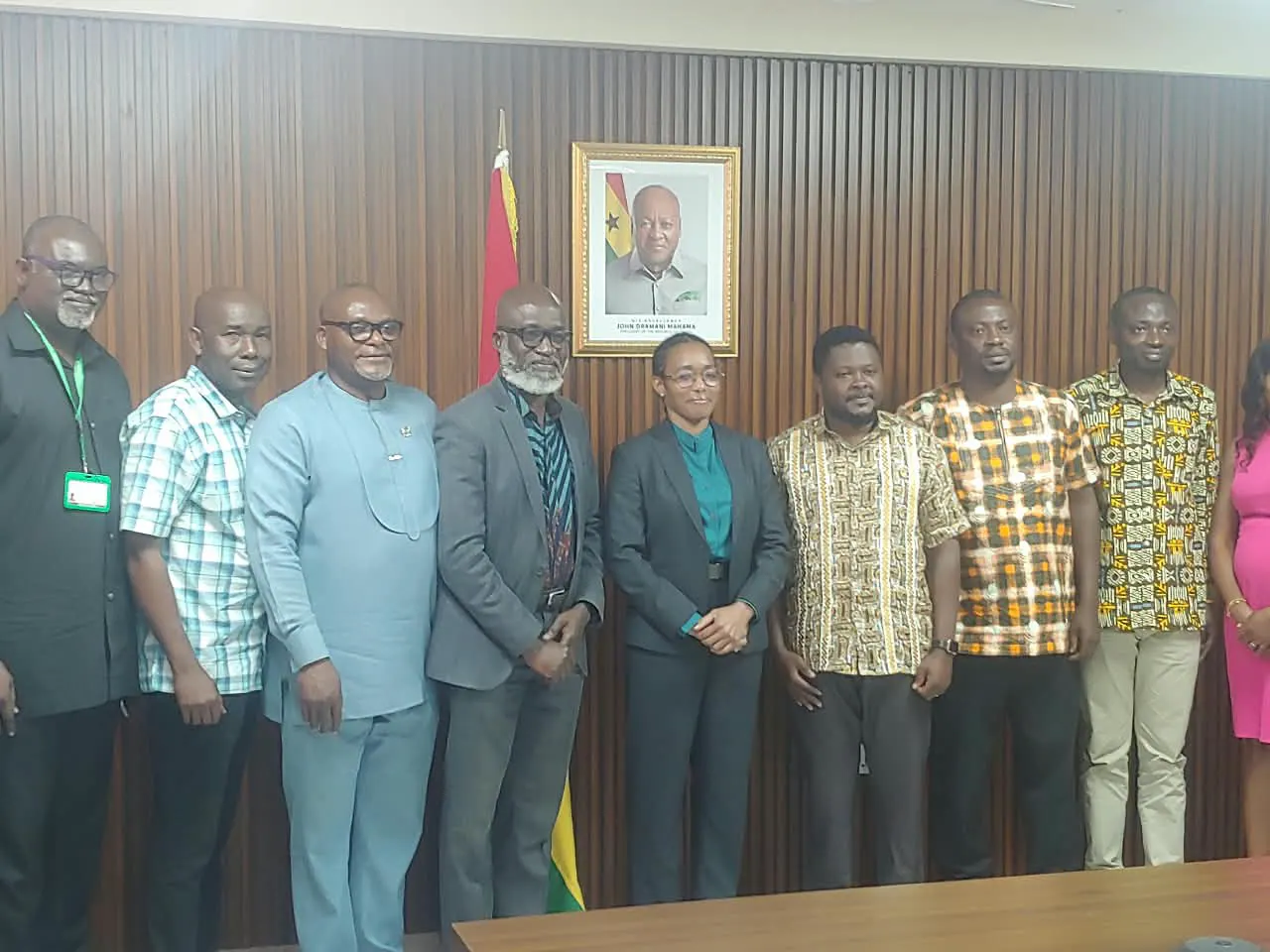
The government of Ghana has taken steps to establish a national space agency, aimed at strengthening the country's space science and technology sector. This move was disclosed by Dr. Zanetor Agyeman-Rawlings, Minister of Environment, Science, and Technology, during a media engagement marking her first 100 days in office on October 2, 2026. The Cabinet has approved the transformation of the Ghana Space Science and Technology Institute (GSSTI) into a national space agency.
According to Dr. Agyeman-Rawlings, the next phase involves developing the legislative and institutional framework required to establish and operationalize the proposed agency. The agency will provide a coordinated structure for Ghana's space-related activities, supporting research, innovation, infrastructure development, public-private partnerships, and international cooperation. The Minister emphasized that the objective is to establish a capable national institution that can coordinate Ghana's activities and enable the country to participate meaningfully in the global space economy.
Dr. Agyeman-Rawlings stated that Ghana's space program should focus on practical applications addressing pressing national development needs. She identified areas such as agriculture, flood forecasting, climate adaptation, environmental monitoring, telecommunications, maritime surveillance, urban planning, and national security that could benefit from satellite and geospatial technologies. Ghana's proximity to the equator, location along the Gulf of Guinea, and relative stability in the West African region make it an ideal hub for space science, Earth observation, research, and innovation.
The proposed space agency will contribute to environmental monitoring and management in Ghana. The Minister noted that satellite imagery, combined with drones, ground observations, geospatial systems, and artificial intelligence, can monitor issues like illegal mining, deforestation, land degradation, pollution, and biodiversity loss. This technology will enable Ghana to move towards more evidence-based and predictive environmental management, with particular attention to monitoring illegal mining and water body degradation.
Dr. Agyeman-Rawlings highlighted human capital development as a key component of Ghana's space ambitions. The government will encourage young Ghanaians to pursue careers in fields like aerospace and satellite engineering. This focus on human capital development will ensure that Ghana has a skilled workforce to drive its space sector forward.
The Minister emphasized that the value of satellite images lies not in the images themselves but in the information that can be derived from them. The government will work to improve Ghana's ability to acquire, manage, and analyze satellite data, converting it into useful information for policymaking. This will enable informed decision-making and support national development.
With the establishment of the space agency, Ghana aims to become a hub for space science, Earth observation, research, and innovation in the West African region. The agency will support the country's participation in the global space economy, driving growth and development through space technology applications. Key initiatives will focus on addressing pressing national development needs and promoting sustainable development.
Key points
- The Ghana Space Agency will provide a coordinated structure for Ghana's space-related activities.
- The agency will focus on practical applications addressing pressing national development needs.
- Human capital development is a key component of Ghana's space ambitions.