The Ghana Health Service (GHS) has introduced a 21-day monitoring policy for travellers arriving from Ebola-affected countries. This move is part of the country's efforts to prevent the spread of Ebola Disease caused by the Bundibugyo virus. The policy, implemented at all international airports, includes precautionary screening and monitoring of travellers.
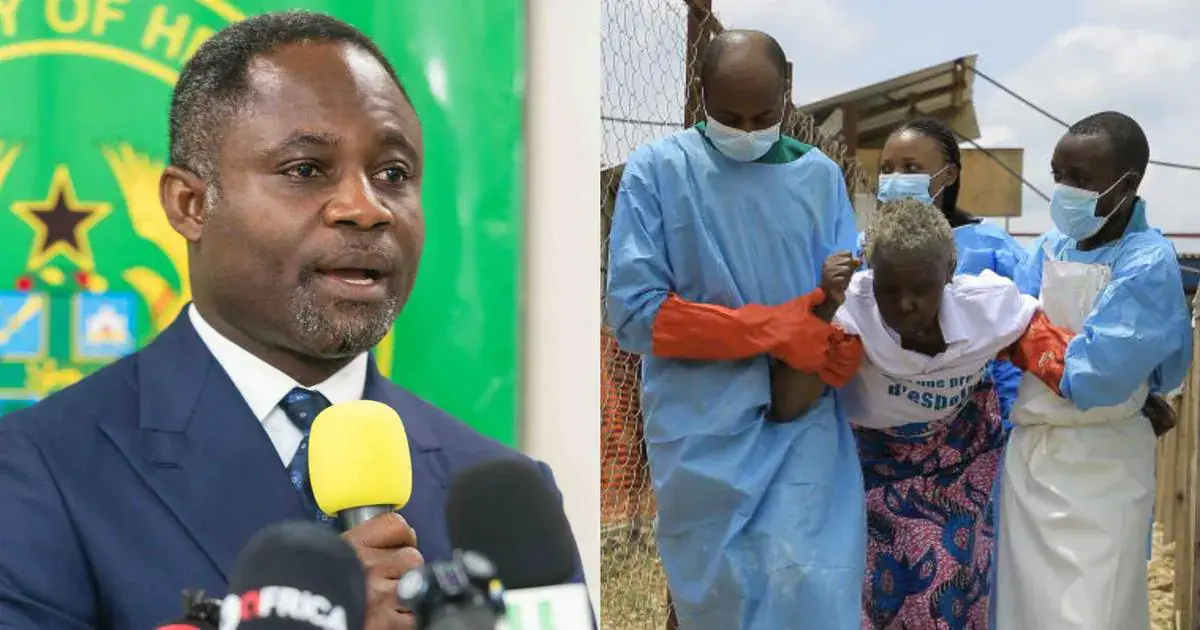
The Minister for Health, Kwabena Mintah Akandoh, stated that the measures aim to minimise the risk of Ebola being brought into Ghana and spreading through international travel. As of November 3, 2026, Ghana has not recorded a confirmed case of Ebola Disease. The measures will be reviewed as the situation evolves.
All passengers arriving at Ghana's international airports will undergo screening by Port Health officers. This includes non-contact temperature checks, reviews of health declaration forms, and questions about travel history, symptoms, and possible exposure. Travellers must declare recent travel, symptoms, and possible exposure to Ebola.
Travellers who have visited or transited through Ebola-affected countries within the previous 21 days must disclose their travel history. They must also report close contact with suspected or confirmed patients, visits to health facilities treating Ebola cases, participation in relevant funeral or burial rites, and contact with blood, body fluids, or contaminated materials from an ill person.
Passengers with symptoms, relevant travel histories, or possible exposure will undergo further assessment. They will be taken to a designated area, temporarily isolated for evaluation, and referred to a health facility where necessary. Hotels and similar establishments must report guests arriving from affected countries to the nearest district health directorate.
The GHS will contact travellers arriving from countries with ongoing transmission for follow-up, and they must remain reachable and report symptoms immediately. Passengers who refuse screening or provide false information may face legal measures. The public is urged to rely on official information from the Ministry of Health and the GHS and avoid spreading rumours.
According to the US Centres for Disease Control and Prevention, as of October 31, 2026, 10,498 confirmed cases and 5,107 confirmed deaths had been reported across the affected countries. The Democratic Republic of the Congo accounted for 10,467 cases and 5,103 deaths. The World Health Organization has reported continued high-level transmission in the DRC, with imported cases also recorded in Kenya and Nigeria.
Key points
- Ghana's Health Ministry has implemented a 21-day monitoring policy for travellers from Ebola-affected countries.
- The policy includes precautionary screening and monitoring of travellers at all international airports.
- Travellers who refuse screening or provide false information may face legal measures.