Algeria has reaffirmed its climate commitment under the leadership of President Abdel Majid Tebboune, as stated by Prime Minister Aïmene Benabderrahmane. This commitment is part of a strategic vision that balances national development needs with environmental and climate responsibilities. The country's approach includes integrating climate change into its 2020 constitution, recognizing environmental sustainability as a key aspect of development.
The strategic vision for climate action involves several key initiatives. These include the adoption of a national hydrogen green strategy in 2023 and the submission of an updated nationally determined contribution (NDC) to the United Nations Framework Convention on Climate Change in August. These actions demonstrate Algeria's commitment to addressing climate change and promoting sustainable development.
Prime Minister Benabderrahmane emphasized that Algeria is preparing a national plan to adapt to climate change. This plan is part of the country's efforts to enhance climate governance and mobilize resources to implement its climate commitments under the Paris Agreement. The plan will help Algeria address the challenges posed by climate change and capitalize on opportunities for sustainable development.
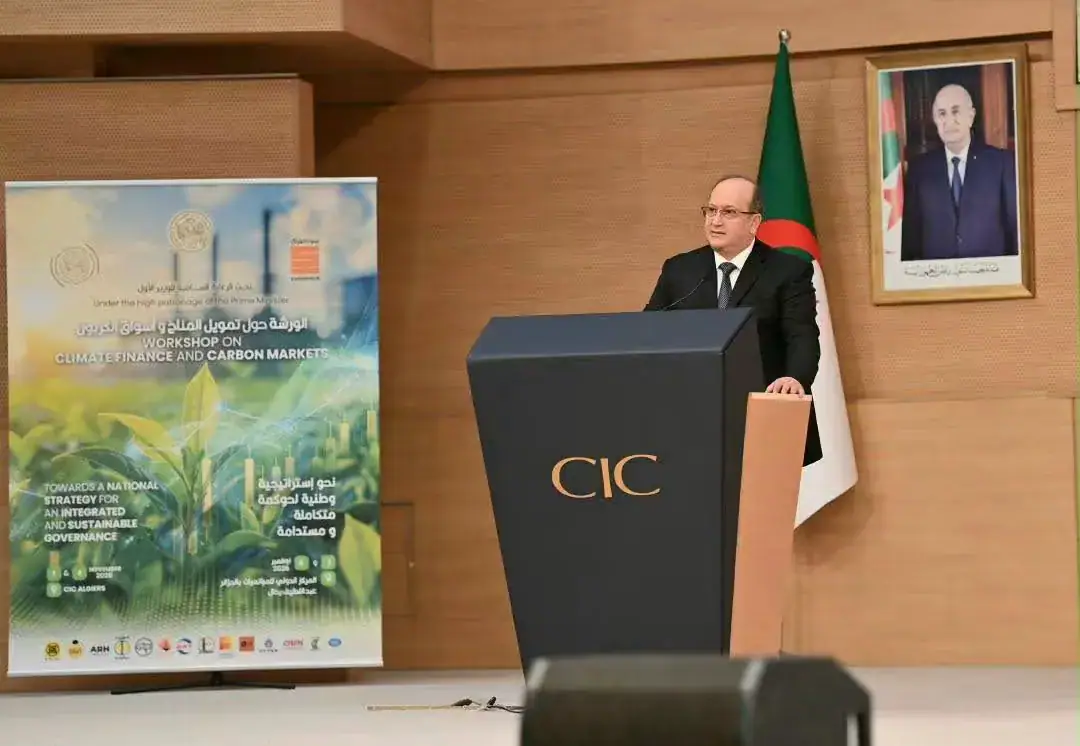
The prime minister's remarks were made during the opening of a workshop on climate finance and carbon markets. The workshop, hosted by the International Conference Center "Abdelatif Rahal," brings together experts and stakeholders to discuss climate finance and carbon market mechanisms. The event aims to facilitate the exchange of ideas and experiences on climate finance and carbon markets.
The workshop takes place against the backdrop of rapid developments in the global energy and climate landscape. Algeria, like many countries, faces significant challenges related to climate change, including rising temperatures, changing precipitation patterns, and increased frequency of extreme weather events. The workshop provides a platform for discussing these challenges and exploring opportunities for climate finance and carbon markets.
Prime Minister Benabderrahmane noted that the global transformations in energy and climate present both challenges and opportunities for Algeria. The country can leverage these changes to transform its energy systems, production processes, and investment frameworks. This transformation can lead to the emergence of new industries and technologies, driving economic growth and sustainable development.
The Algerian government's commitment to climate action and sustainable development is reflected in its policies and strategies. The country aims to balance its development needs with environmental responsibilities, recognizing the importance of protecting the environment for future generations. By reaffirming its climate commitment, Algeria is demonstrating its leadership on climate action and sustainable development in the region.
Key points
- Algeria has reaffirmed its climate commitment under a strategic vision that balances development needs with environmental responsibilities.
- The country aims to leverage global transformations in energy and climate to drive economic growth and sustainable development.
- Algeria is preparing a national plan to adapt to climate change, enhancing climate governance and mobilizing resources to implement its climate commitments.