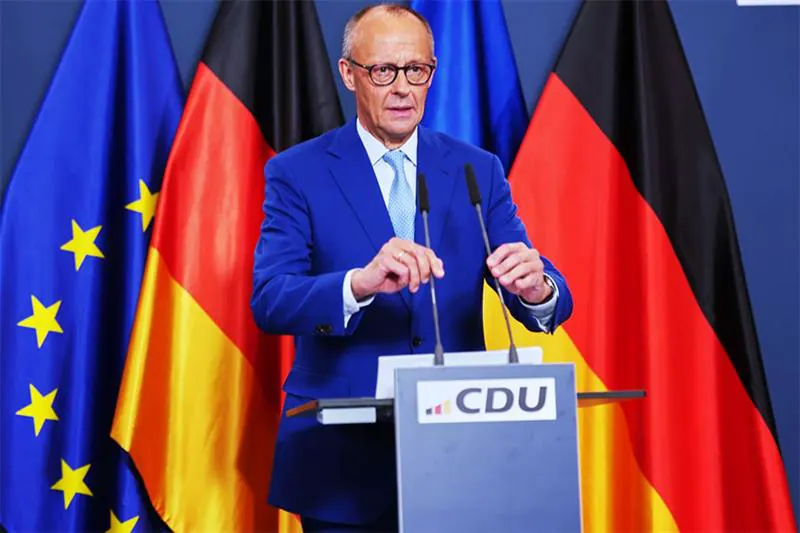
German Chancellor Friedrich Merz stated on Monday that he will continue to serve as leader of Germany and his centre-right party, the Christian Democratic Union (CDU), despite suffering two more regional election defeats. Merz made the announcement at the CDU party headquarters in Berlin, Germany, after a string of disappointing results for his party. The Chancellor conceded that the results were a "disaster" but expressed his determination to push through reforms to Europe's largest economy.
The CDU suffered a significant defeat in Mecklenburg-Western Pomerania, an eastern region on the Baltic Sea coast, where the party fell just below the 5% threshold needed to retain seats in the regional parliament. This marks the first time the CDU has failed to meet the threshold in 77 years of modern Germany's federal republic. The far-right Alternative for Germany (AfD) emerged as the strongest party in the region. In another election, the CDU dropped to second place in Berlin behind the hard-left Left Party.
Despite speculation about Merz's future, there were no prominent public calls for his departure and no sign of a leadership challenge on Monday. Merz stated that no one had raised any "personnel questions" in party leadership meetings on Sunday or Monday. He emphasized that it was the historic task of the governing coalition to make Germany fit for the coming years and that extremist solutions were not viable.
Merz acknowledged that the CDU needs to work on its profile and provide satisfactory answers to many questions. He stated that the party will have to change and adapt to the current political landscape. The Chancellor's comments come after a stinging defeat by the AfD in Saxony-Anhalt two weeks ago, which damaged his authority and sparked speculation about his potential replacement.
The Social Democrats, the junior party in Merz's national governing coalition, have expressed doubts about aspects of the federal government's reform agenda, which aims to boost Germany's chronically sluggish economy. The reform plans include a potentially painful overhaul of the pension and healthcare systems. Vice Chancellor Lars Klingbeil stated that the party stands by the coalition but will seek changes to the plans to ensure they are fair and have popular support.
The CDU's influential regional leaders have not publicly challenged Merz's leadership, and it remains to be seen how the party will perform in upcoming state elections. Five state elections are scheduled for next year, including one in North Rhine-Westphalia, Germany's most populous state. The elections will be closely watched for signs of how the CDU and Merz will fare in the future.
Political analysts have noted that swapping out Merz as leader would not necessarily achieve significant improvements, but the Chancellor has made avoidable mistakes in the past. The government's performance will need to improve to address the challenges facing Germany, including the growing influence of the AfD and the need for economic reforms. Merz's leadership and the CDU's performance will be closely watched in the coming months.
Key points
- German Chancellor Friedrich Merz resists leadership challenge after regional election defeats
- CDU suffers significant defeats in Mecklenburg-Western Pomerania and Berlin
- Merz vows to push through reforms to boost Germany's economy despite opposition from within his party