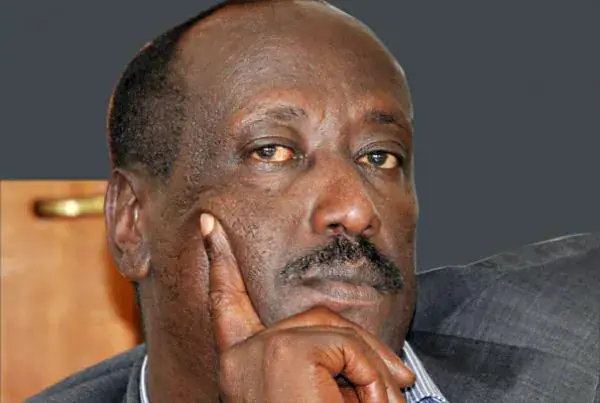
General Salim Saleh, a prominent Ugandan leader, articulated a profound philosophy of leadership 27 years ago, emphasizing humility, acknowledgement of error, forgiveness, and the courage to begin again. In his 1999 Tarehe Sita Statement, titled "From Fighting Dictatorship to Fighting Poverty: The Struggle Continues," Saleh demonstrated his commitment to reconciliation and personal responsibility. This statement reflects convictions he has held for nearly three decades, showcasing consistency in his approach to leadership and conflict resolution.
Saleh's statement included a poem titled "It Isn't Easy," which highlighted the importance of apologizing, admitting error, and being unselfish. The poem celebrated forgiveness, accepting blame, learning from mistakes, and exercising restraint. These reflections were remarkable coming from a revolutionary commander just 13 years after the NRA's 1986 military victory. Saleh's willingness to acknowledge his personal and public failures, mistakes, and errors in judgement demonstrated his humility and commitment to personal responsibility.
In November 2002, Saleh relocated to Gulu as part of efforts to negotiate peace with the Lord's Resistance Army amid the devastating insurgency in northern Uganda. He publicly declared that he had returned seeking peace rather than war. Although those initiatives did not immediately end the insurgency, they demonstrated his willingness to pursue dialogue alongside military approaches. This action showcased Saleh's commitment to finding peaceful solutions to conflicts.
On October 30, 2026, Saleh spoke to parliamentarians at Kapeeka, explaining how he had reconnected with his former revolutionary colleague, Dr. Kizza Besigye, after years of political estrangement. Concerned about Besigye's deteriorating health, Saleh intervened to facilitate specialized medical attention. He subsequently raised a larger political question: why should younger Ugandans inherit the unresolved quarrels of the revolutionary generation? This question deserves reflection and consideration.
Critics demand accountability, constitutional safeguards, and respect for judicial independence, which are indispensable. However, treating every humanitarian intervention as political manipulation or every reconciliation initiative as an admission of wrongdoing risks making peace itself politically suspect. There is an important distinction between forgiveness, reconciliation, and legal accountability. Forgiveness addresses human relationships, while reconciliation seeks to restore political and social coexistence.
Saleh's philosophy has consistently challenged the contradiction between reconciliation and capitulation, apology and weakness. His interventions must be assessed against their outcomes, but intellectual fairness demands recognition of historical consistency. The General who spoke about apology, error, and forgiveness in 1999 is substantially the same General now encouraging former comrades to confront their differences and consider a common national future.
The proposed consociational arrangements in Uganda aim to address how power may be shared among competing political and social interests. These arrangements can only succeed sustainably if historical mistrust is overcome, and there is a willingness to coexist. Saleh's reflections suggest an understanding of the responsibility to demonstrate comparable courage in confronting political contradictions, just as the NRA generation demonstrated remarkable courage in confronting dictatorship.
Key points
- General Salim Saleh's philosophy emphasizes humility, forgiveness, and courage in leadership.
- Saleh's commitment to reconciliation has been consistent for nearly three decades.
- The proposed consociational arrangements in Uganda require a willingness to coexist and overcome historical mistrust.