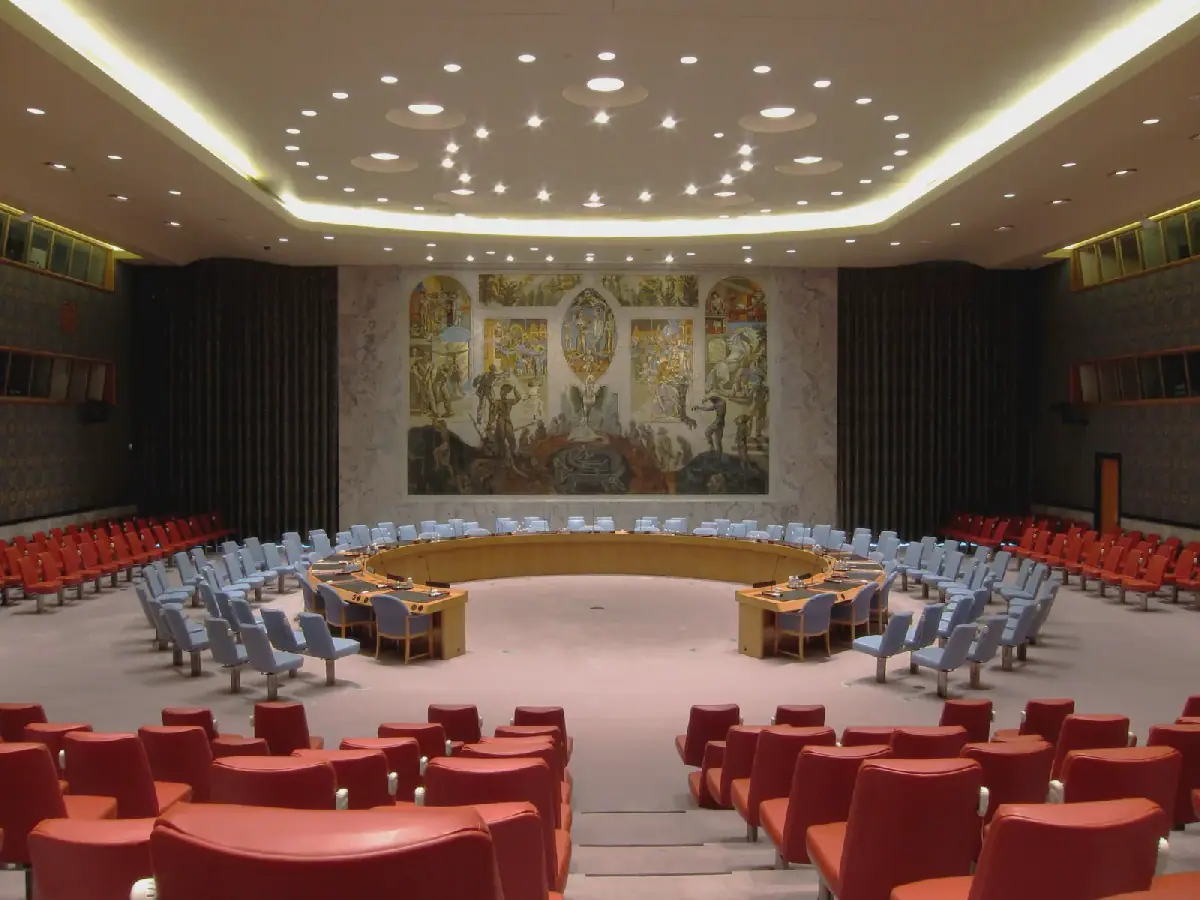
The UN Security Council has voted to extend the mandate of its mission in Libya, known as UNSMIL, for an additional 12 months, until October 31, 2027. The vote, which took place on Friday, October 30, 2026, saw 13 members in favor, with Russia and Greece abstaining. The resolution, numbered 2835, aims to support the ongoing political process in Libya and promote stability in the country.
The resolution welcomes the roadmap for a political solution announced by UN Special Envoy to Libya, Hanna Tetteh, and encourages Libyan parties to engage in structured dialogue. It also adopts an agreement reached by Libyan parties through the UN-facilitated "mini-dialogue" process, which outlines a framework for unifying state institutions, forming a unified executive authority, and organizing presidential and parliamentary elections within 24 months.
The resolution calls on Libyan institutions to negotiate without preconditions and urges them to work towards national reconciliation. It also requests the UN mission to expand its presence in key cities, including Benghazi, Sebha, and Sirte, and to maintain an economic section focused on monitoring fuel smuggling and the misuse of public resources.
The UN Security Council has reiterated that the crisis in Libya is a political one, not a military one, and has called for full implementation of the ceasefire agreement signed on October 23, 2020. The council has also emphasized the need for the withdrawal of mercenaries, fighters, and foreign forces from Libyan territory.
Libyan leaders have welcomed the Security Council's decision, with Presidential Council head Mohamed al-Menfi stating that it confirms respect for Libya's sovereignty and unity. However, al-Menfi also cautioned that any agreements lacking national consensus will not ensure a lasting solution. Authorities in eastern Libya have also welcomed the extension, calling for a unified executive authority and an end to institutional divisions ahead of free elections.
Libya has been plagued by division and conflict since the ousting of Muammar Gaddafi in 2011. The country has been split between rival governments in the west and east, with elections scheduled for December 2021 ultimately failing to take place. The UN mission in Libya has been working to support a peaceful resolution to the crisis.
The Security Council's decision comes as Libya continues to face significant challenges, including the presence of mercenaries and foreign forces, and ongoing divisions between rival factions. The UN mission will continue to play a critical role in supporting Libyan efforts to achieve stability and hold elections.
Key points
- The UN Security Council extends the mandate of its Libya mission until October 2027.
- The resolution aims to support the ongoing political process in Libya and promote stability in the country.
- Libyan leaders welcome the decision, but emphasize the need for national consensus to achieve a lasting solution.