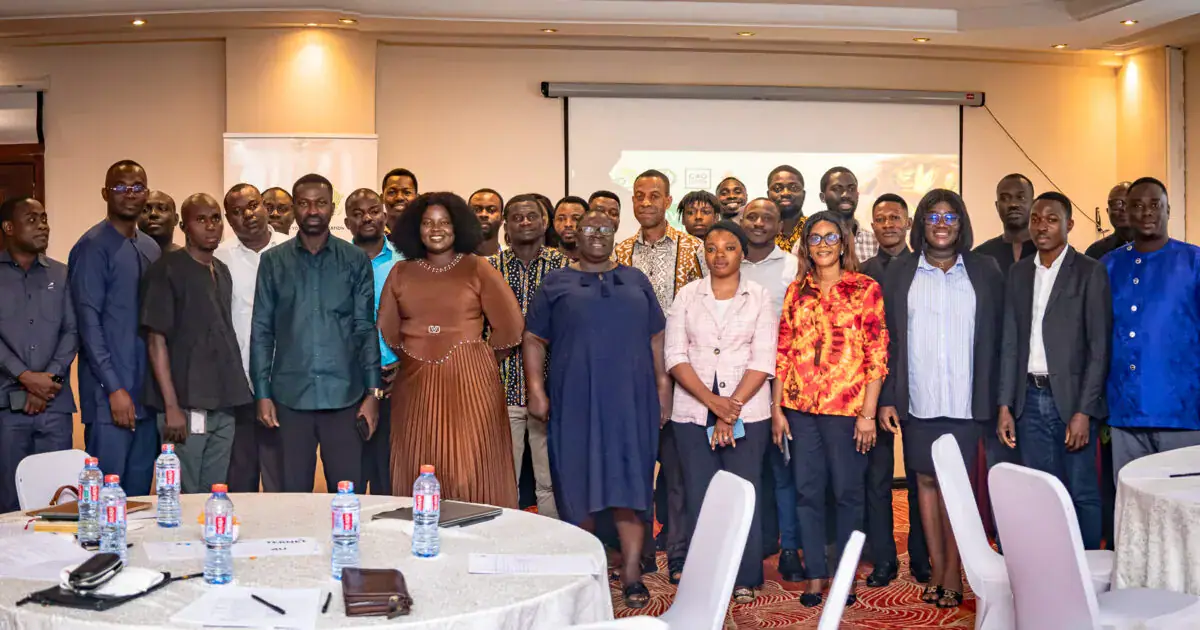
The Green Africa Youth Organization (GAYO) and the Accra Metropolitan Assembly (AMA) have held a roundtable to secure funding and institutional backing for Accra's plan to reduce methane emissions from waste. The meeting, co-organized with the Global Alliance for Incinerator Alternatives (GAIA) and C40 Cities, brought together government institutions, funders, the private sector, and informal waste workers. The Accra LOW-M Institutional and Climate Finance Roundtable focused on the Accra LOW-M Portfolio, which aims to cut methane emissions from the city's waste by at least 30 percent by 2030.
The plan mainly aims to reduce methane emissions by turning organic waste into compost and biogas instead of sending it to landfills. Fathia Selasi Charway-Glover, Project Coordinator on GAYO's Zero Waste Cities Project, said the aim was to get each institution to take responsibility for its part of the plan. The LOW-M initiative is a global effort supported by the Climate and Clean Air Coalition, launched at COP28 to encourage cities to set targets for reducing organic waste and methane by 2030.
More than 55 percent of Accra's waste is organic, and the plan depends on separating it at source. Desmond Alugnoa, Africa Programme Manager of GAIA, said the portfolio was designed to bring scattered efforts under one plan. He added that informal waste workers would be central to educating households on separating their waste, and that he was looking to the Ministry of Finance to commit budget to collection, composting, and biogas.
The AMA says it needs support to implement the plan, as waste management is expensive and the Assembly cannot raise enough revenue on its own. Victor Kotey, the Assembly's Climate Change Focal Point, said investment is a problem in the waste sector and other sectors as well. He warned that without more effort and money, Ghana may not meet its 2030 target.
Engineer Godfred Fiifi Boadi, Head of Climate Action, Sustainability, and Partnerships at the Ministry of Local Government, said the plan builds on existing national efforts, including compost plants, biogas facilities, and faecal sludge treatment plants. There are many interventions across the country that help divert organic waste from entering landfills.
The roundtable is expected to produce four outcomes: a responsibility matrix naming the lead institution and focal person for each action, a six- to 12-month action plan, a pipeline of projects seeking funding, and a tracker to monitor commitments made at the meeting. Organisers say the outcomes will be shared with participants in early November, with follow-up on commitments through to December.
The meeting is a step towards achieving Ghana's goal of reducing methane emissions and transitioning to a more sustainable waste management system. The country's efforts to address climate change and promote sustainable development have been recognized globally, and the Accra LOW-M Portfolio is an important part of this effort.
Key points
- The Accra LOW-M Portfolio aims to cut methane emissions from the city's waste by at least 30 percent by 2030.
- The plan depends on separating organic waste at source and turning it into compost and biogas.
- The roundtable brought together government institutions, funders, the private sector, and informal waste workers to secure funding and institutional backing for the plan.