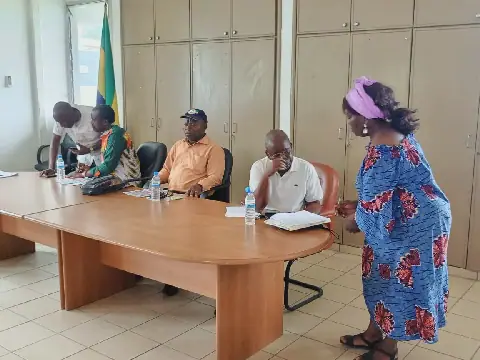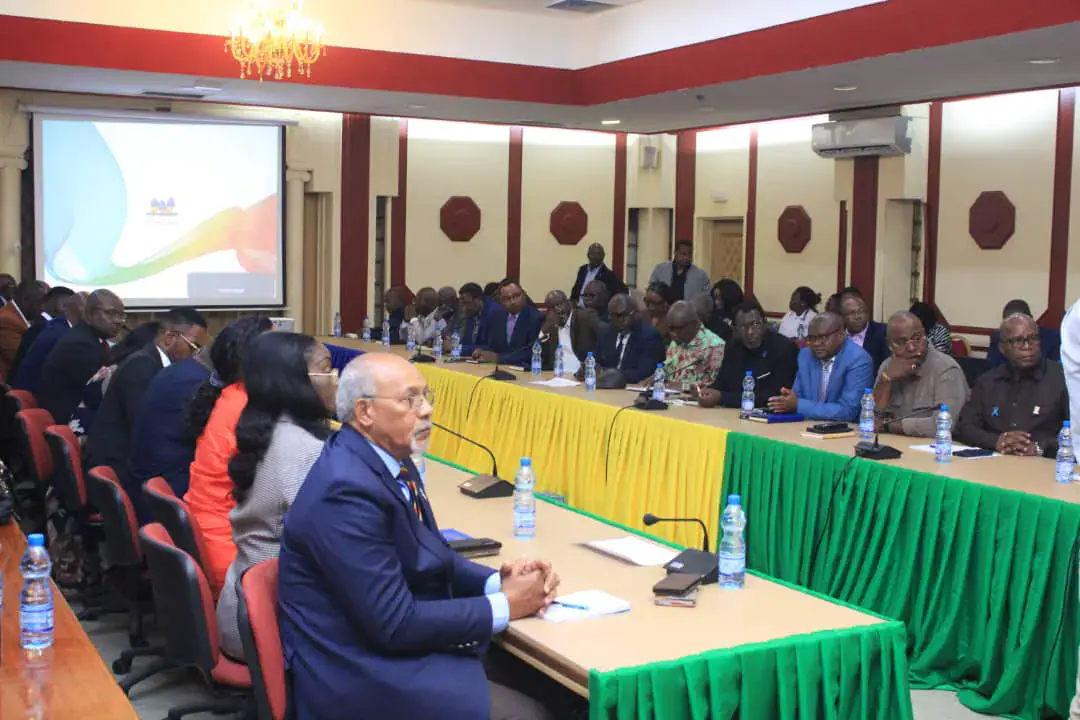
In Libreville, Gabon, a national seminar was held from November 5-6, 2026, to educate members of municipal and departmental council bureaus on the challenges and opportunities of decentralization. The seminar, reported by the Gabon Press Agency, focused on proximity governance, financial autonomy, and capacity building for territorial administrations. The event aimed to enhance the understanding of local officials on the decentralization process and its implications for local development.
The seminar's keynote speaker, Aimé Roger Mouloungui Maganga, a legal advisor to the Ministry of Interior, Security, and Decentralization, discussed the historical context, challenges, and prospects of decentralization in Gabon. He emphasized that the main stakes of this process concern proximity democracy, governance, territorial planning, and socio-economic development. To address these challenges, Mouloungui Maganga urged local authorities to be rigorous in designing and implementing projects that respond to local realities and population needs.
Mouloungui Maganga identified three primary challenges associated with decentralization: institutional, financial, and human. Institutionally, he stressed the need to clarify responsibilities between deconcentrated state services and local officials. Financially, the focus should be on strengthening local taxation. Human capacity development is also crucial, requiring the creation of a local civil service and specialized professions in local governance and management to address the competency gap in local administrations.
The legal advisor highlighted the constitutional framework for decentralization, established by the December 2024 Constitution, which was adopted with a 91% approval rate. He also referenced the 1996 law (n°15/96) that laid the foundation for organizing communes, departments, and provinces but noted its limited implementation over the years due to a lack of political will.
To revitalize decentralization, Gabon's Fifth Republic plans to leverage several instruments, including the National Growth and Development Plan (PNCD), Local Development Plans (PLD), and the Local Authorities Equalization Fund (FPCL). The FPCL now receives 5-10% of the state's own resources. These mechanisms, part of the presidential project's sixth pillar, aim to enhance local financial autonomy and improve living conditions.
The implementation of these instruments is accompanied by decrees transferring competencies and corresponding resources. Mouloungui Maganga also outlined future prospects, including the ongoing revision of the organic law on decentralization, the implementation of the FPCL with audits and a reinforced monitoring and evaluation system, and partnerships with universities to develop training programs in local governance and management.
In conclusion, Mouloungui Maganga emphasized the importance of coherence between constitutional provisions, organic laws, and regulatory frameworks in implementing decentralization for local development and social fulfillment. The seminar aimed to equip local officials with the knowledge and skills necessary to navigate the complexities of decentralization and drive local development in Gabon.
Key points
- The seminar focused on proximity governance, financial autonomy, and capacity building for territorial administrations.
- The decentralization process aims to enhance local financial autonomy and improve living conditions.
- The implementation of decentralization is accompanied by decrees transferring competencies and corresponding resources.