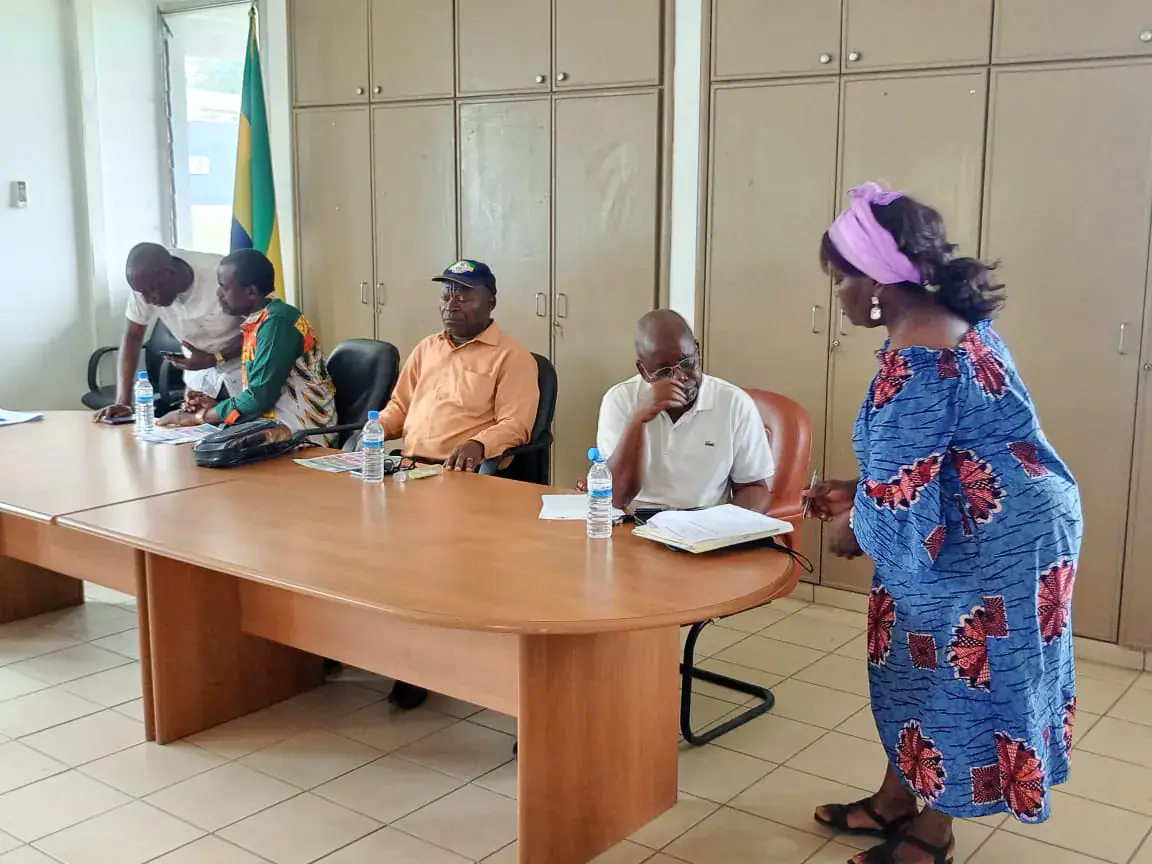
A team led by Germain Endeng Olé, Director of Orientation, Assistance to Handicrafts, and Development of Services at Gabon's Ministry of Tourism and Handicrafts, visited Lambaréné, the capital of Moyen-Ogooué province, on November 5, 2026. The mission aimed to sensitize, identify, and census artisans in the region, understanding their professional realities and challenges. This initiative seeks to support, structure, and promote handicrafts, a sector considered a lever for wealth creation, employment, and economic development.
The meeting took place at the governorate's meeting room, attended by local artisans and sector officials. Germain Endeng Olé emphasized the importance of handicrafts in the country's economic diversification policy, led by President Brice Clotaire Oligui Nguema. He highlighted the need to recognize handicrafts as a key sector contributing to the national economy's transformation, rather than a secondary activity. The team encouraged artisans to share their daily challenges, particularly regarding formalization and normalization.
Artisans expressed concerns about accessing financing, training, and raw materials, as well as difficulties in commercializing their products and gaining recognition for their professions. Stéphane Nguema, President of the Moyen-Ogooué Artisans Association, advocated for the adoption of a Handicrafts Code. This legal instrument would help regulate the profession, officially recognize sector actors, and guarantee them better national visibility.
The mission team assured artisans that their concerns would be reported to their superiors for in-depth examination and consideration of potential solutions. Germain Endeng Olé emphasized the importance of accompanying, structuring, and promoting handicrafts in all its components. The sector is expected to play a significant role in Gabon's economic growth and development.
The census and sensitization mission is part of the government's efforts to support the handicraft sector. By understanding artisans' challenges, the government can develop targeted strategies to address these issues and promote the sector's growth. The mission's findings will inform policy decisions and interventions aimed at enhancing the handicraft sector's contribution to Gabon's economy.
The handicraft sector is a significant contributor to Gabon's economy, with the potential to create wealth, employment, and stimulate economic growth. The government's recognition of the sector's importance is reflected in the National Growth and Development Plan (PNCD), which dedicates a pillar to economic diversification. The plan aims to transform the national economy, with handicrafts playing a vital role.
The successful implementation of the handicraft sector's development strategies will depend on effective collaboration between the government, artisans, and other stakeholders. By working together, they can address the challenges facing artisans and promote the growth of the handicraft sector. The government's commitment to supporting artisans and the handicraft sector is crucial to achieving these objectives.
Key points
- The Gabonese government has launched a census of artisans in Moyen-Ogooué to identify challenges and promote the handicraft sector.
- The handicraft sector is considered a key lever for wealth creation, employment, and economic development in Gabon.
- Artisans in Moyen-Ogooué face challenges, including limited access to financing, training, and raw materials.