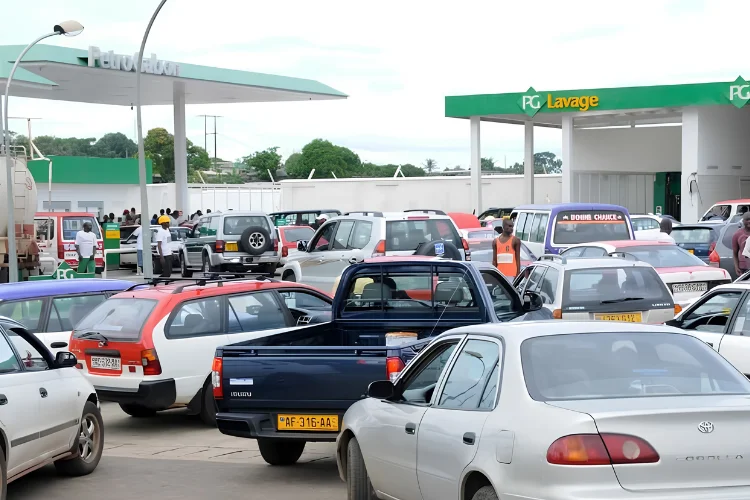
The city of Libreville in Gabon is experiencing a temporary diesel shortage, causing many economic activities to come to a halt. This is not the first time the country has faced a fuel shortage, with a similar crisis occurring in 2025 with petrol. The current shortage has affected the Société d'énergie et d'eau du Gabon (SEEG), which has announced that the diesel shortage is disrupting its production operations, leading to rotational power and water outages in several areas.
The diesel shortage has significant implications for the country's economy, with many businesses and households relying on diesel generators for power. The SEEG has urged residents to be patient as it works to resolve the issue. Meanwhile, experts believe that one way to address the problem is to reduce Gabon's dependence on imported fuel. The country's sole refinery, the Société gabonaise de raffinage (Sogara), is working on a modernization and rehabilitation project to increase its production capacity.
The Sogara refinery project aims to double and then triple the country's production capacity, with the goal of achieving national self-sufficiency in fuel. The project is expected to be completed in two phases, with the first phase scheduled for completion by 2027. This phase will increase production to 1.25 million tons per year. The second phase involves the construction of a new 130-hectare site with new units, including hydrocracking and desulfurization, with a target production capacity of 2.7 to 2.8 million tons per year by 2030.
According to Hans NDONG MEBALE, writing for L'Union, the diesel shortage is a recurring problem that requires a long-term solution. The author suggests that reducing dependence on imported fuel is crucial to addressing the issue. The government's plan to modernize and rehabilitate the Sogara refinery is seen as a step in the right direction.
The diesel shortage has also highlighted the need for Gabon to diversify its energy sources and reduce its reliance on fossil fuels. The country has been working to promote the use of renewable energy, including solar and hydroelectric power. However, more needs to be done to address the country's energy needs and reduce its dependence on imported fuel.
The impact of the diesel shortage is being felt across the country, with many businesses and households struggling to cope with the lack of fuel. The government has urged residents to remain calm and to report any incidents of fuel hoarding or price gouging. Meanwhile, the Sogara refinery is working around the clock to increase production and meet the country's fuel needs.
In the long term, the government's plan to reduce Gabon's dependence on imported fuel is expected to have a positive impact on the country's economy. By increasing domestic production and promoting the use of renewable energy, Gabon can reduce its reliance on imported fuel and improve its energy security. This, in turn, is expected to boost economic growth and improve living standards for residents.
Key points
- The diesel shortage in Gabon is a recurring problem that requires a long-term solution, including reducing dependence on imported fuel.
- The Sogara refinery project aims to increase production capacity and achieve national self-sufficiency in fuel by 2027.
- The government plans to promote the use of renewable energy to reduce Gabon's reliance on fossil fuels.