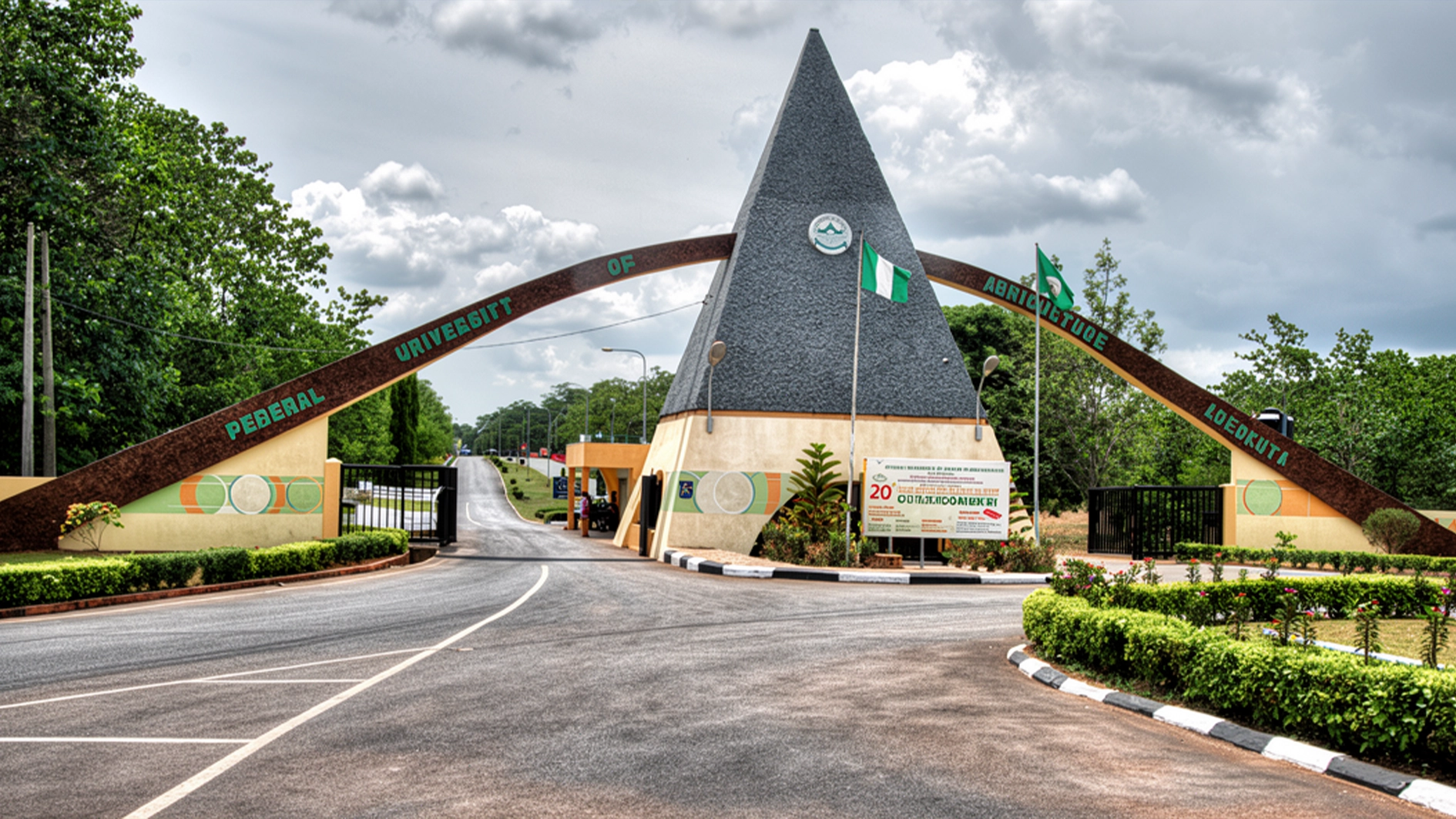
The Federal University of Agriculture, Abeokuta (FUNAAB) is set to adopt Compressed Natural Gas (CNG) and electric vehicles (EVs) as part of its efforts to reduce transportation costs and promote cleaner mobility on its campus. This move was disclosed during a CNG and EV sensitisation programme organised by SYD Mega System Limited in collaboration with the Senior Staff Association of Nigerian Universities (SSANU), Non-Academic Staff Union (NASU), and National Association of Academic Technologists (NAAT).
Representing the Vice-Chancellor, Prof. Babatunde Kehinde, the Deputy Vice-Chancellor, Development, Prof. Olawale Dairo, stated that the university is examining ways to strengthen its transportation system through the acquisition and deployment of vehicles in partnership with strategic stakeholders. He emphasized that collaboration among stakeholders is critical to developing practical transportation solutions capable of improving mobility while reducing the environmental impact of conventional vehicles.
The Managing Director of SYD Mega System Limited, Adebayo Soyode, said the sensitisation programme aimed to improve understanding of CNG-powered vehicles, their benefits, and practical applications. Soyode noted that rising petrol and transportation costs, alongside government efforts to expand the CNG ecosystem, have increased the relevance of alternative fuels to vehicle owners and operators.
The programme also featured goodwill messages from various stakeholders, including the Executive Chairman and Chief Executive Officer of the Presidential Initiative on Compressed Natural Gas and Electric Vehicles, Ismaeel Ahmed. Ahmed disclosed that CNG operations had been activated in 28 states, with more than 120,000 vehicles and tricycles converted, and over 400 accredited conversion centres operating across the country.
Ahmed urged FUNAAB to participate in the campus conversion partnership by converting its shuttle buses to CNG and training engineering students as certified CNG technicians. He suggested that such a model could position the university as a CNG-enabled institution where academic training, technical skills development, and cleaner transportation are integrated.
The initiative aligns with the growing trend of Nigerian universities and institutions exploring alternative-fuel vehicles amid efforts to lower mobility costs and expand the country’s CNG and EV ecosystem. The Chairman of SSANU-FUNAAB, Olugbenga Alayode, and the Chairman of NASU-FUNAAB, Samson Edivri, both described the programme as an opportunity for members of the university community to gain practical knowledge about emerging vehicle technologies.
The adoption of CNG and EVs by FUNAAB is expected to offer users lower fuel expenditure and operating costs, while potentially improving engine performance and contributing to longer engine life. The university's move is also seen as a step towards reducing its environmental footprint and promoting sustainable transportation practices.
Key points
- FUNAAB to adopt CNG and EVs to reduce transportation costs and promote cleaner mobility.
- The university to explore partnership with strategic stakeholders to strengthen its transportation system.
- Over 120,000 vehicles and tricycles have been converted to CNG, with 400 accredited conversion centres operating across Nigeria.