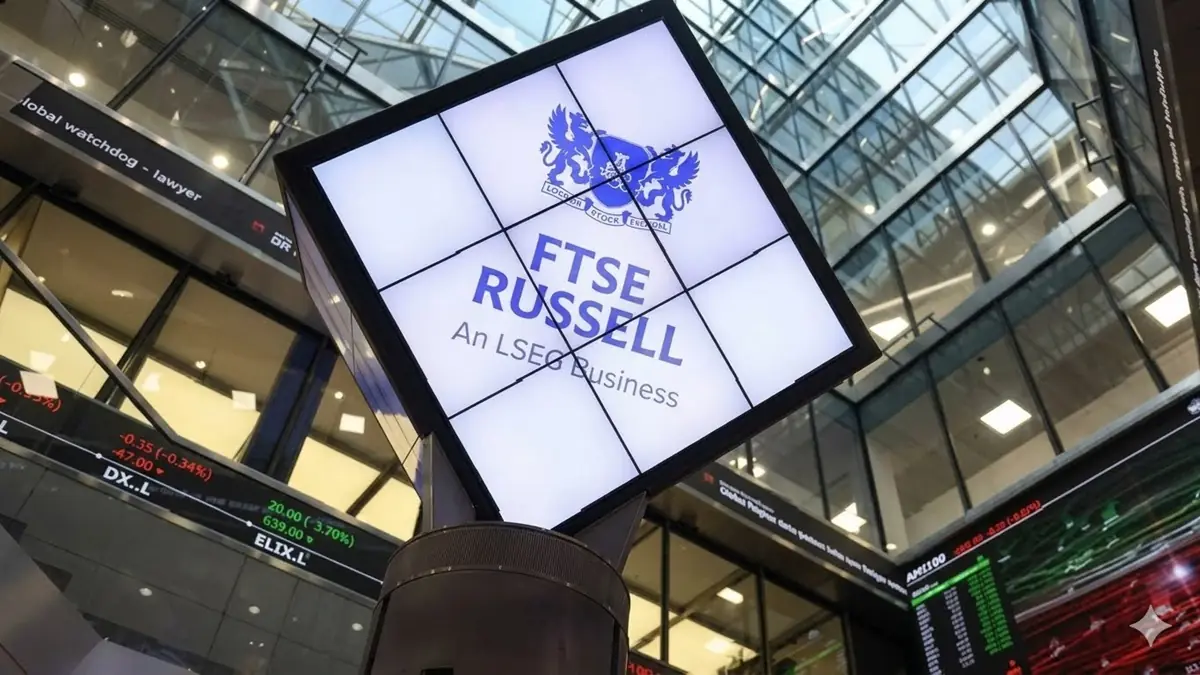
Nigeria's return to FTSE Russell's Frontier Market status on September 21 led to increased trading activity in major banking stocks on Monday. Zenith Bank, GTCO, and FirstHoldCo attracted significant attention from investors, with Zenith Bank trading 77.07 million shares worth N9.9 billion. This represents more than 3.5 times its 30-day average volume. The NGX All-Share Index rose 0.14 percent to a record 250,156.80 points, while total deals jumped 54.86 percent.
The NGX All-Share Index gained 352.24 points, or 0.14 percent, to 250,156.80 points from 249,804.56 points on Friday. Market capitalisation increased from ₦162.16 trillion to ₦162.39 trillion. The modest market-wide gain contrasted with a sharp increase in trading activity, suggesting that investors were positioning selectively rather than triggering a broad-based rally. This development indicates increased participation but not yet a broad-based foreign-led rally.
Zenith Bank Plc recorded the highest trading activity among the major beneficiaries. The stock gained 0.2 percent to ₦128.60. Guaranty Trust Holding Company Plc, popularly known as GTCO, gained 3.9 percent to ₦133.90 after 25.85 million shares valued at ₦3.41 billion were traded. FirstHoldCo Plc recorded ₦1.87 billion in turnover from 12.18 million shares, although its share price remained unchanged at ₦160.
Across the 31 Nigerian equities included in the broader FTSE Frontier Index Series, 13 advanced, nine declined and nine closed unchanged. NASCON Allied Industries gained 10 percent to ₦176, while Transnational Corporation rose 6.78 percent to ₦37. Nigeria's reclassification from “Unclassified” to Frontier Market status took effect at the open on September 21, after FTSE Russell confirmed the country met the required market-accessibility criteria.
Nigeria had been moved to Unclassified status in September 2023 after persistent problems with foreign-exchange transactions and the repatriation of international investors’ capital. FTSE Russell subsequently placed Nigeria on its Watch List after improvements in FX liquidity and capital repatriation. The re-entry followed further assessment of market infrastructure, including the transition from T+2 to T+1 settlement in June.
Coronation research analysts said the reclassification could support additional demand from funds tracking relevant FTSE Russell indices, potentially providing a near-term catalyst for Nigerian equities. Meristem Securities analysts similarly expect the development to increase foreign demand for Nigerian assets, including government securities. However, they warned that greater foreign participation could also make the market more sensitive to global risk sentiment and exchange-rate movements.
The Nigerian Exchange Group has described the reclassification as an opportunity to reconnect Nigerian companies with global pools of capital. Temi Popoola, Group Managing Director and Chief Executive Officer of Nigerian Exchange Group, said the reclassification was “a gateway” to greater international attention. The focus should now shift towards converting that visibility into deeper capital formation and broader market participation.
Key points
- Nigeria regains FTSE Russell Frontier Market status
- Increased trading activity in Zenith Bank, GTCO, and FirstHoldCo
- Reclassification expected to increase foreign demand for Nigerian assets