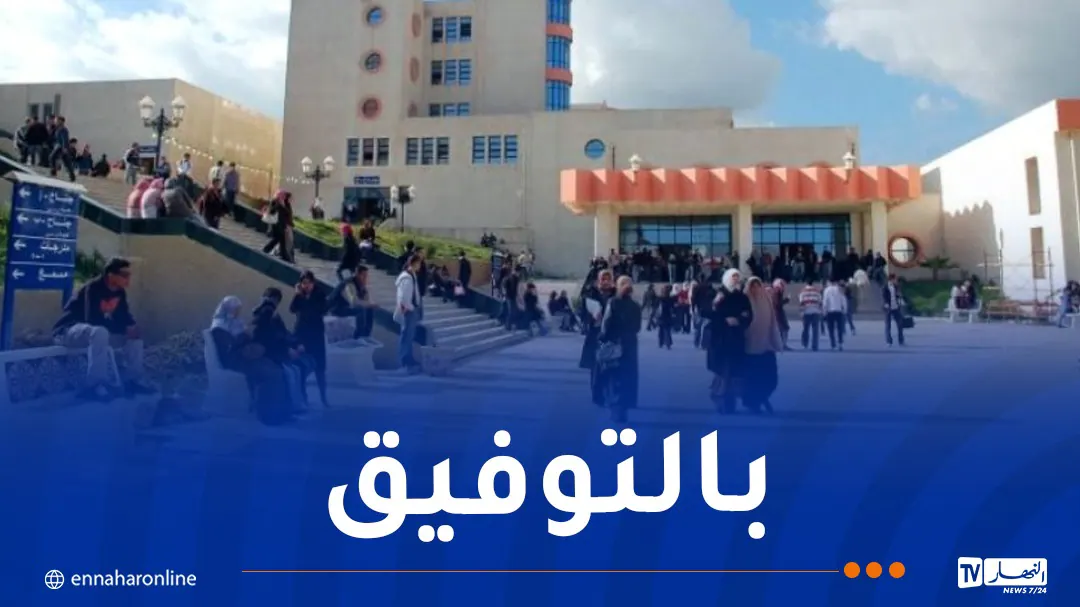
The 2026-2027 academic year has begun in Algeria with approximately 1.884.839 students enrolling in various universities and research centers nationwide. The Ministry of Higher Education and Scientific Research has mobilized all necessary human and material resources to support these students. This initiative aims to foster innovation and excellence by providing a stimulating educational environment. The efforts are part of the ongoing process of transforming universities into active partners in economic development and wealth creation.
The total number of university students in Algeria includes 2600 international students from 36 different nationalities who have benefited from the "Study in Algeria" program. Algerian universities prioritize investment in specialized fields such as artificial intelligence, cybersecurity, renewable energies, and biotechnology. Additionally, entrepreneurship and innovation are emphasized as part of the new phase of development, characterized by the concept of a "smart university" that produces knowledge and wealth.
The new academic year features several significant projects, including the launch of a personalized educational pathway for students supported by artificial intelligence technologies. This pathway allows students to build a formative curriculum that aligns with their aspirations. Furthermore, a smart linguistic model is being developed for university professors, enabling them to prepare exercises and pedagogical activities while utilizing artificial intelligence in evaluating students' responses.
Thirteen new specialties have been introduced, related to future professions, including a state engineering degree in artificial intelligence and a master's degree in quantitative technologies. Other new programs include a master's degree in interoperability of information systems and a master's degree in space systems mechanics. The Ministry has also reviewed programs in management sciences, economic sciences, and human sciences to make them more flexible.
In collaboration with the Ministry of Health, new specialties have been introduced in medicine and health sciences, including a license in dental health and hygiene, and a master's degree in genetic counseling. Additionally, a master's degree in medical artificial intelligence and bio-medical informatics has been established. A postgraduate studies certificate in precision medicine has also been introduced.
The new academic year is also marked by the introduction of training programs that focus on promoting national identity, including a training program in media and communication in the Amazigh language. Furthermore, six new offers have been adopted within the framework of twinning agreements and international partnerships. The teaching of "Algerian History" and "Citizenship and Nationalism" has been made compulsory across various training fields.
The Ministry is emphasizing the support of digitalization and the generalization of digital solutions in university management and services. The education and scientific research sector is being supported by 74 digital platforms, reflecting the commitment to a digital transformation that is fundamental to the transition to a fourth-generation university. This university is open to its economic and social environment, aiming to be a partner in development.
Key points
- Almost 2 million students have enrolled in Algerian universities for the 2026-2027 academic year.
- Algerian universities are prioritizing investment in specialized fields such as artificial intelligence and cybersecurity.
- The new academic year features several significant projects, including personalized educational pathways supported by artificial intelligence technologies.