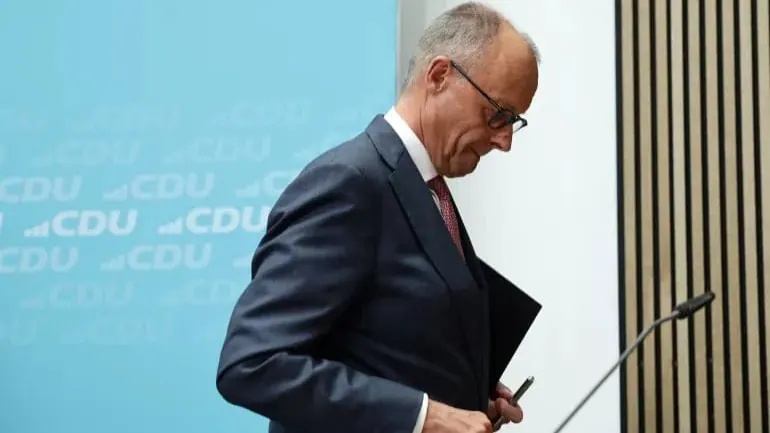
German Chancellor Friedrich Merz has stated that he will continue to lead the Christian Democratic Union (CDU) despite suffering a historic defeat in recent local elections. Merz described the results as an "unprecedented disaster" for the party. He emphasized his determination to maintain the coalition government with the Social Democratic Party, citing the importance of a democratic future for Germany. Merz's comments come as the CDU faces significant challenges in the wake of the election results.
The CDU's defeat was particularly notable in the state of Mecklenburg-Vorpommern, where the party failed to enter the state parliament for the first time since 1945. The party secured only 4.9% of the vote, falling short of the 5% threshold required to enter the state parliament. In contrast, the Alternative for Germany party emerged as the largest party in the state, securing 38.2% of the vote. This result marks a significant shift in the state's political landscape.
Merz has pledged to continue working on the party's economic recovery program, which aims to address Germany's economic stagnation. The program focuses on innovation, competition with China, and managing the country's high social spending and energy costs. Merz emphasized the CDU's commitment to addressing these challenges and ensuring a strong economic future for Germany.
The CDU's poor performance in the local elections has raised questions about the party's future direction. Merz's leadership has been subject to scrutiny, with some critics calling for his resignation in the wake of the defeat. However, Merz has maintained that he will continue to lead the party, citing his responsibility to do so.
The Alternative for Germany party's success in Mecklenburg-Vorpommern reflects a broader trend of growing support for populist and nationalist parties in Germany. The party's rise has been attributed to voter dissatisfaction with the established parties and concerns about issues such as immigration and economic policy.
Merz's commitment to maintaining the coalition government with the Social Democratic Party is seen as crucial to ensuring stability in Germany. The coalition has been in place since 2021 and has focused on addressing key challenges facing the country, including climate change and economic growth.
The CDU's defeat in Mecklenburg-Vorpommern serves as a significant test for Merz's leadership. As the party looks to rebuild and recover, Merz will face pressure to deliver results and restore voter confidence. The party's performance in future elections will be closely watched as it seeks to regain its footing in German politics.
Key points
- German Chancellor Friedrich Merz reaffirms commitment to lead Christian Democratic Union despite historic defeat in local elections.