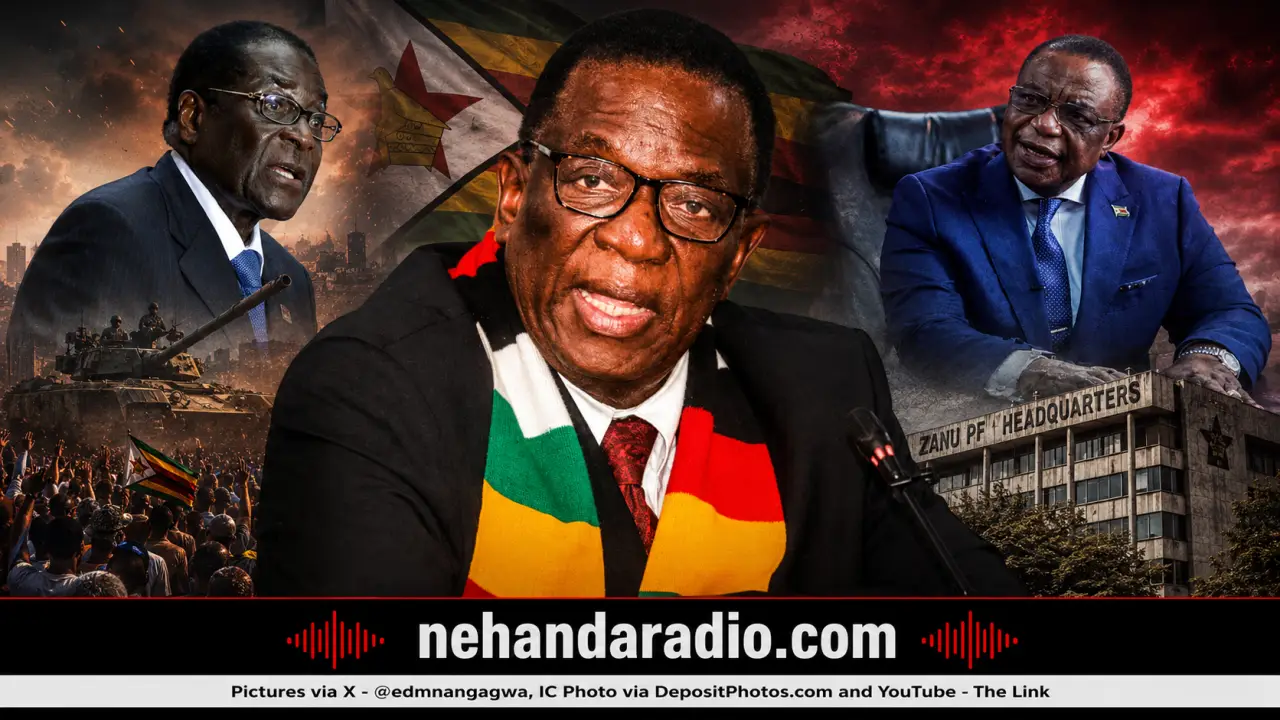
ZANU PF's internal quarrels turned violent in 2017 when General Constantino Chiwenga warned that the party's purging of liberation war veterans must stop. Chiwenga's statement was a response to President Robert Mugabe's dismissal of Vice President Emmerson Mnangagwa, which led to Mnangagwa's flight from the country. Mugabe's wife, Grace, had been campaigning against Mnangagwa, but Chiwenga's intervention revealed that other powerful figures had a say in the party's future.
Within days of Chiwenga's statement, military vehicles took to the streets of Harare, and soldiers seized key installations. Mugabe was placed under house arrest, and although the military denied staging a coup, it claimed to be targeting "criminals" around the president. ZANU PF turned against its leader, and Parliament began impeachment proceedings. Mugabe resigned on November 21, 2017, and Mnangagwa was sworn in as president three days later.
The events of 2017 had been building for decades, rooted in ZANU PF's history of violent succession cycles. In 1963, nationalist leaders formed ZANU, with Ndabaningi Sithole as its founding president, Robert Mugabe as secretary-general, and Herbert Chitepo, Edgar Tekere, and Leopold Takawira as key figures. However, Mugabe was not yet the dominant force in Zimbabwean politics, and Sithole occupied the formal leadership.
The liberation struggle blurred the lines between political and military leadership, and by the mid-1970s, this distinction had become explosive. Chitepo's assassination in 1975 shook ZANU and intensified the struggle for control. A commission attributed the killing to internal ZANU rivalries, while others blamed Rhodesian intelligence. The aftermath led to the Mgagao Declaration, which rejected Sithole's authority and signaled a shift in power to Mugabe.
The Mgagao Declaration marked a turning point in ZANU PF's history, as the military reality of the liberation struggle overtook the political hierarchy. Mugabe consolidated his authority, and Sithole was pushed aside. This pattern would repeat itself in different forms over the years.
Zimbabwe's independence in 1980 transformed Mugabe from guerrilla leader to prime minister, but it did not change the party's culture or the stakes of controlling ZANU PF. Whoever controlled the party stood at the center of government, the civil service, the security establishment, and patronage networks. The conflict between ZANU PF and PF-ZAPU led to the Gukurahundi atrocities, which further entrenched the party's militarized politics.
ZANU PF's history of succession crises highlights the risks of its militarized politics and the challenges of establishing a peaceful transfer of power. As the party continues to navigate its internal dynamics, understanding its past can provide valuable insights into the country's future.
Key points
- ZANU PF's succession crises are rooted in its history of violent power struggles.
- The party's militarized politics have led to significant human rights abuses.
- Understanding ZANU PF's past is crucial to navigating its future.