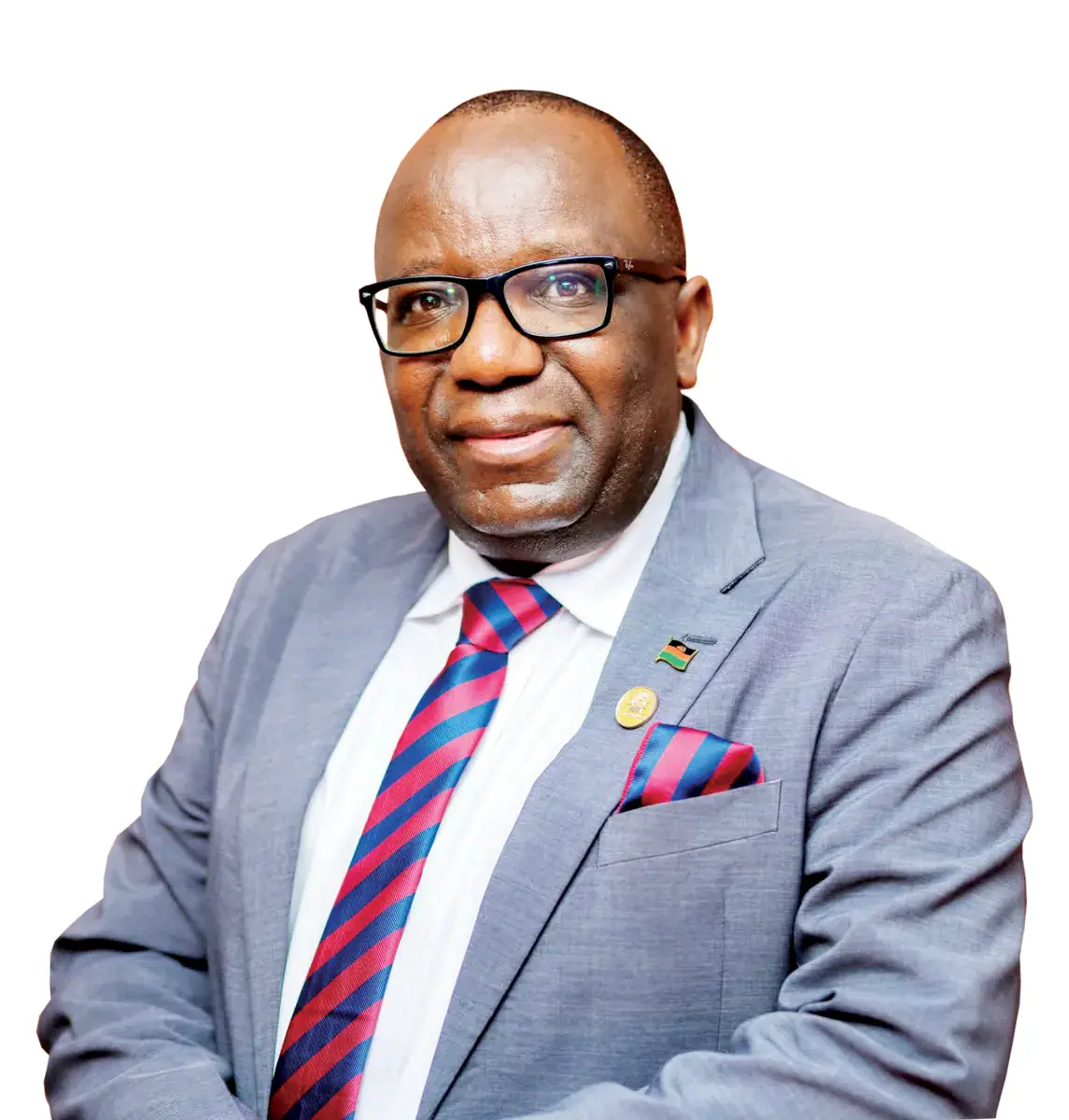
Malawi's economic planning and development face scrutiny as the country's growth trajectory raises concerns. Principal Secretary for Economic Planning and Development, Kisu Simwaka, asserts that the nation cannot achieve higher-income status with an economy driven by consumption rather than production. Simwaka, a former Deputy Governor of the Reserve Bank of Malawi, emphasizes that countries cannot transition from poverty to prosperity when they consume more than they produce.
Simwaka's concerns align with those of the National Planning Commission (NPC), which recently expressed worries over the lack of national commitment to driving economic growth. He cites examples of countries that have successfully transitioned to middle-income status by implementing consistent growth-oriented policies. Simwaka stresses that achieving this requires consistent hard work and discipline, referencing Malawi's previous development plans, including Vision 2020 and the Malawi Growth and Development Strategy.
The National Statistical Office (NSO) reports that Malawi's economy has been driven by consumption, with imports continuously outweighing exports. The Malawi Expenditure report, covering 2017-2025, shows that final consumption increased from K6.39 trillion to K10.36 trillion. This dependence on imports has created pressure on the economy, resulting in forex shortages, inflation, and growth constraints.
The NPC also questions the country's lack of investment in productive sectors to grow the industrial base, which is too weak to support the economy. Simwaka highlights Malawi's demographic challenge, with the population projected to reach 50 million by 2063. He emphasizes that the country must plan for this growth, as it is a present fiscal and monetary problem.
Simwaka expresses skepticism about Malawi's resolve in development, citing failed previous plans. He notes that the country has numerous beautifully written documents, but what makes things different today are demographics. The arithmetic is clear: Malawi will add 20 million more people by 2063.
The current economic model is unsustainable, and there is a need for a shift towards production-led growth. Simwaka's remarks add to mounting concerns over the sustainability of Malawi's current economic model. The government and institutions are calling for a rethink of the country's development trajectory.
The Malawi 2063 vision is the latest development plan aimed at transforming the economy. However, Simwaka questions the country's commitment to implementing the necessary structural changes. The country's growth trajectory and development plans will require consistent hard work and discipline to achieve sustainable economic growth.
Key points
- Malawi's economy is driven by consumption rather than production.
- The country's population is projected to reach 50 million by 2063.
- There is a need for a shift towards production-led growth in Malawi.