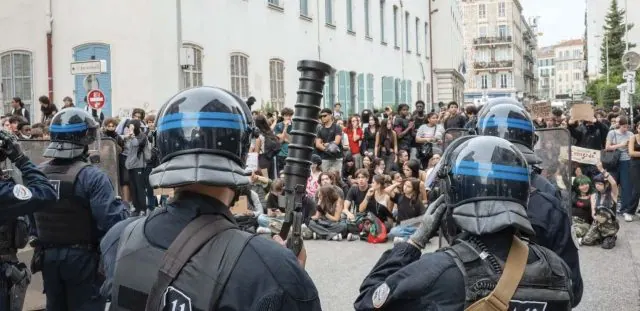
High school students in France have been protesting for weeks, demanding better learning conditions, more teachers, and safer facilities. The movement, which began in September, has gained momentum, with students and their parents calling for the government to address their concerns. However, the protests have been met with a heavy police response, resulting in over 600 police officers injured, according to the police. The crackdown has sparked accusations of excessive force, particularly against female students.
The leader of the far-left party La France Insoumise, Jean-Luc Mélenchon, has called for the protection of high school students during the protests, which are set to continue. Mélenchon has accused the government of trying to discredit the students' movement by blaming him for inciting the protests. However, he has emphasized that the students' demands are legitimate and that the government's response has been unacceptable. Mélenchon has also pointed out that the police violence has been "inacceptable" and has persisted since the yellow vest protests.
The French government has proposed penalties and sanctions against the parents of students involved in the protests, which has further fueled the controversy. Mélenchon has criticized the government's response, saying that it is not acceptable to respond to the students' movement with such violence. He has also called on adults, including parents, to show their support for the students by wearing white armbands or helmets during the protests.
The students' union, Les Lycéens, has reported that their meeting with the Minister of National Education did not yield any concrete commitments to address their demands. The union's vice-president, Louis Letoublon, has stated that they will continue to mobilize and work with the ministry to achieve their goals. The students are demanding better learning conditions, more teachers, and safer facilities.
The police have reported that over 600 officers have been injured during the protests, which have been marked by clashes between students and police. The police have also accused the students of using violent tactics, including burning trash cans. However, Mélenchon has argued that such actions do not help the students' cause and only serve to distract from their demands.
The French government has vowed to take a tough stance on the protests, with the Minister of the Interior, Laurent Nuñez, stating that it is his duty to put an end to the violence. However, Mélenchon has emphasized that the students' movement is legitimate and that the government should engage in dialogue with them rather than using force.
The protests are set to continue, with the students' union calling for a national day of action. Mélenchon has urged adults to show their support for the students and to help protect them from police violence. The controversy has sparked a wider debate about the government's response to the protests and the treatment of high school students in France.
Key points
- Over 600 police officers have been injured during the protests in France.
- The students are demanding better learning conditions, more teachers, and safer facilities.
- The government's response to the protests has been criticized as excessive and violent.