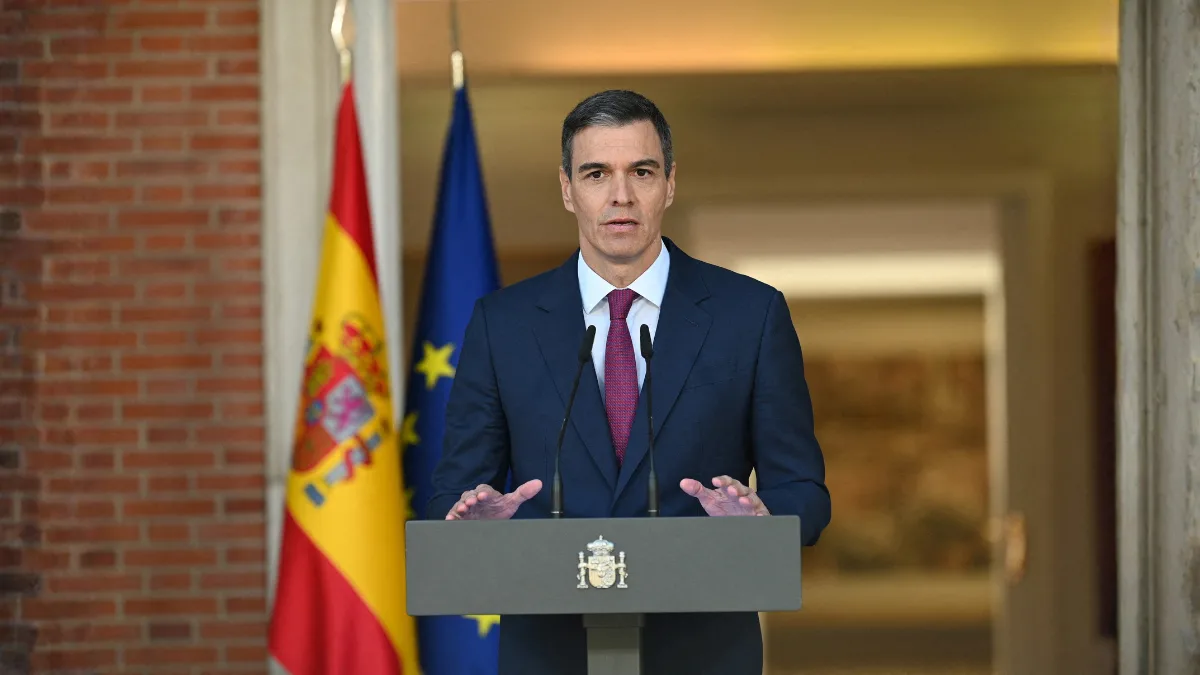
Spanish Prime Minister Pedro Sanchez announced on Monday that he would dissolve parliament and call for early legislative elections on November 29, 2026. This decision comes after he informed King Felipe VI of his plans. Sanchez stated that the current difficulties his government faces within parliament necessitate a renewal of popular trust and the formation of a parliamentary majority capable of continuing governmental work.
Sanchez highlighted that his government has achieved positive results in the economic and social spheres during its term, including increased employment, economic growth, and enhanced social protection policies. However, he acknowledged that several challenges persist, particularly in areas such as housing, public services, and inequality. The Prime Minister also criticized the opposition, accusing them of obstructing several government initiatives.
Sanchez emphasized that the upcoming elections will provide Spaniards with an opportunity to determine the country's political trajectory for the coming years. He urged voters to renew their support for the project led by his government. Furthermore, Sanchez warned of the rise of extreme right-wing forces, noting that the elections will be a critical juncture in deciding the direction Spain will take in the years ahead.
As a result of Sanchez's decision, Spanish voters will head to the polls on Sunday, November 29, 2026, to choose members of both the Congress of Deputies and the Senate. These elections are taking place before the regular end of the legislative term. Sanchez's announcement comes amid a complex political landscape in Spain.
The decision to call for early elections has significant implications for Spain's political future. Sanchez's government has faced numerous challenges, including navigating the country's economic recovery and addressing social concerns. The Prime Minister's move is seen as an attempt to seek a fresh mandate from the Spanish people.
The upcoming elections will be crucial in determining the balance of power in Spain's parliament. Sanchez's government has been working to implement various policies, but its effectiveness has been hindered by opposition resistance. The early elections will provide an opportunity for voters to reaffirm their support for Sanchez's agenda or to opt for alternative political forces.
The international community is closely watching the developments in Spain, as the country's political stability has implications for the European region. Sanchez's decision to call for early elections reflects the complexities of Spanish politics and the need for a clear direction forward. The outcome of the elections will be closely monitored by both domestic and international observers.
Key points
- The early legislative elections in Spain are set to take place on November 29, 2026.
- Sanchez cited difficulties within parliament as the reason for calling early elections.
- The elections will determine the balance of power in Spain's parliament and the country's future political trajectory.