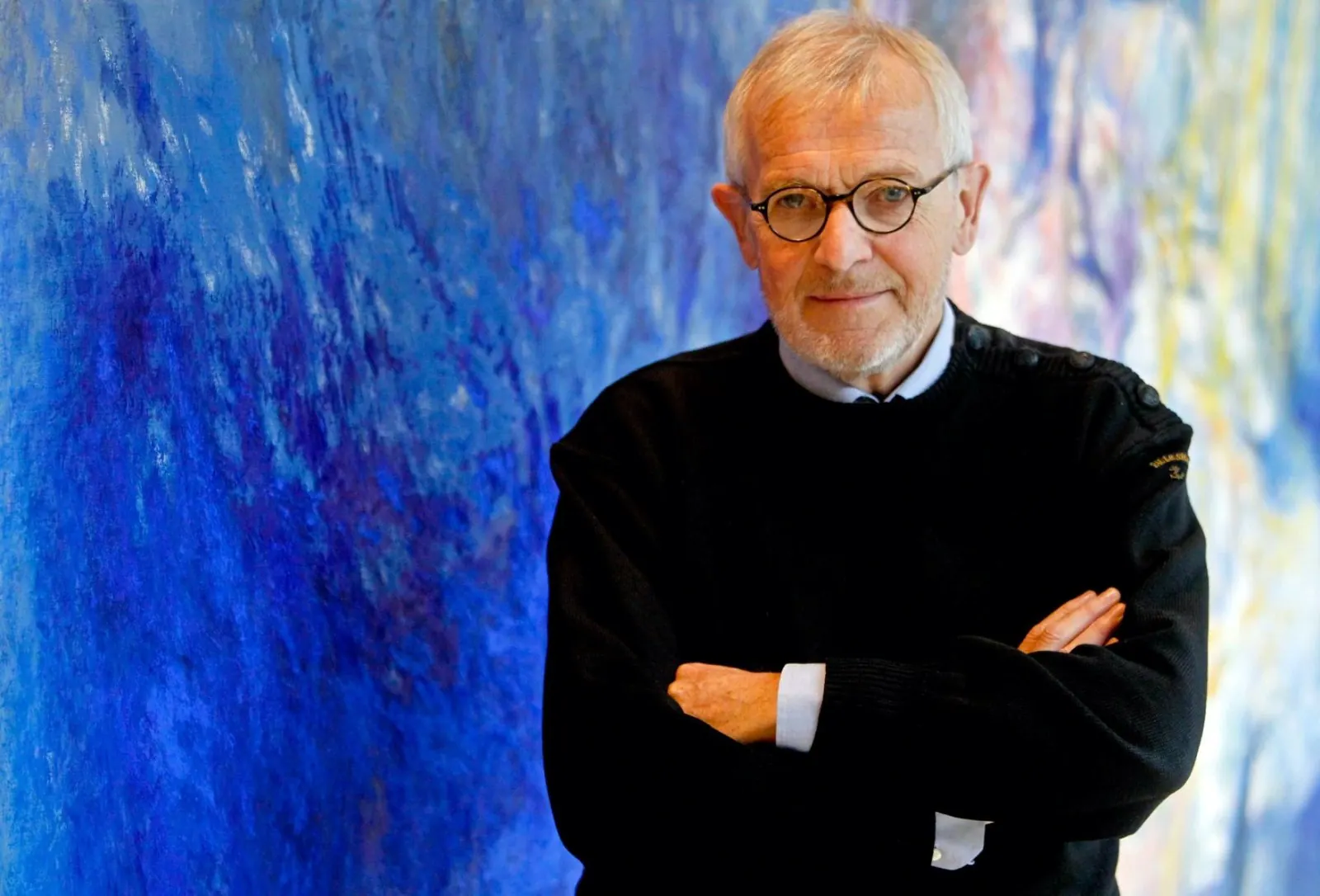
Francis Halzen, a Belgian-born physicist, has been awarded the 2026 Nobel Prize in Physics. He received this prestigious honor on October 6, 2026, for his significant contributions to the construction of the IceCube Neutrino Observatory and the discovery of high-energy neutrinos from distant parts of the universe. Halzen, a professor at the University of Wisconsin–Madison in the United States, was recognized by the Royal Swedish Academy of Sciences.
The Nobel Prize in Physics awarded to Halzen is valued at 12 million Swedish kronor, approximately $1.2 million. He is the sole recipient of this year's prize in the field of physics. The prize specifically acknowledges his pivotal role in the development and operation of the IceCube Neutrino Observatory, a groundbreaking research facility located at the South Pole.
Halzen's research focuses on neutrinos, extremely small particles that interact very little with other matter. These particles pass through the Earth's atmosphere and human bodies constantly, but detecting and studying them is a challenging task due to their minimal interaction with other particles. Halzen's idea of utilizing the vast amount of ice at the South Pole as a detection medium led to the creation of the IceCube Neutrino Observatory.
The IceCube Neutrino Observatory is a massive research facility built into the ice at the South Pole, covering an area of one cubic kilometer. It is equipped with over 5,000 photodetectors that can detect the faint light produced when a neutrino interacts with an ice nucleus. By analyzing this data, scientists can determine the origin and energy of the neutrinos, providing valuable insights into high-energy astrophysical processes.
The completion of IceCube in 2011 marked a significant milestone in neutrino research. Since then, scientists have successfully detected high-energy neutrinos and identified some of their distant sources. This discovery has opened a new window into understanding the universe using neutrinos, allowing researchers to study cosmic phenomena in ways previously impossible.
Mark Pearce, chair of the Nobel Committee for Physics, praised Halzen's leadership of an international team of researchers and engineers that designed and built the IceCube detector. This innovative instrument has enabled scientists to explore a new frontier in astrophysics, shedding light on the universe's most energetic and mysterious phenomena.
Francis Halzen was born in Tienen, Belgium, in 1944 and received his Ph.D. from KU Leuven in 1969. He has been a professor at the University of Wisconsin–Madison, where he played a crucial role in advancing neutrino research and the development of IceCube. This Nobel Prize recognizes the significance of his work in unlocking new secrets of the universe.
Key points
- Francis Halzen was awarded the 2026 Nobel Prize in Physics for his work on neutrinos and the IceCube Neutrino Observatory.
- The IceCube Neutrino Observatory is a massive research facility located at the South Pole that detects high-energy neutrinos from distant parts of the universe.
- Halzen's research has opened a new window into understanding the universe using neutrinos, allowing scientists to study cosmic phenomena in ways previously impossible.