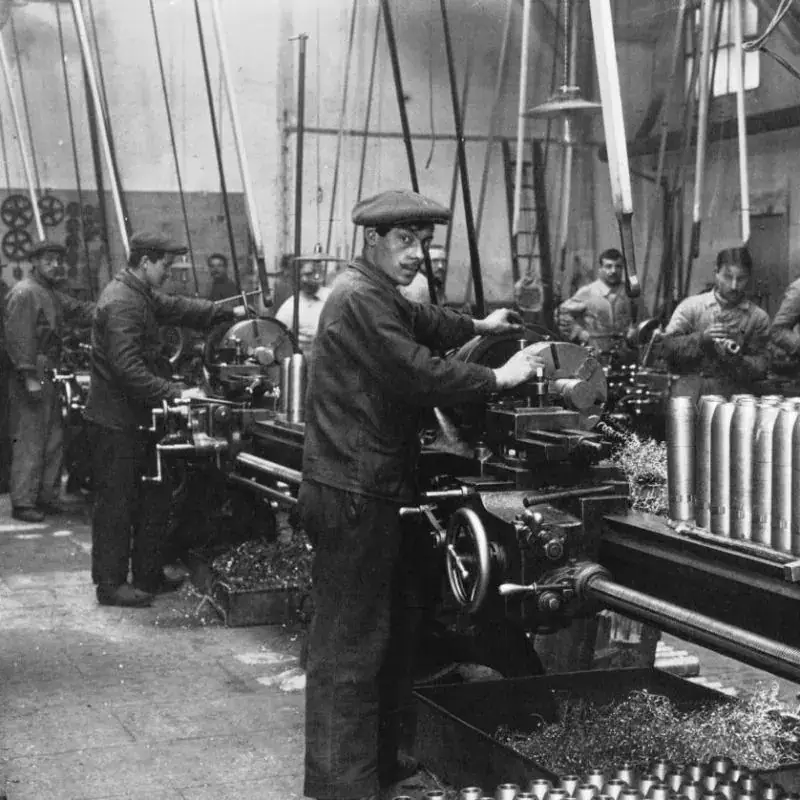
In the aftermath of World War II, France's young Fourth Republic passed a law creating the SMIG, a national minimum wage indexed to consumer prices. This move was part of a series of social security laws aimed at improving working conditions. The SMIG was a significant development in French labor law, marking a shift towards a more comprehensive social safety net. Prior to 1945, the concept of a minimum wage was limited and sector-specific.
Before the introduction of the SMIG, various decrees and laws had attempted to regulate wages. The Millerand decrees of 1899 imposed a "normal salary" in public markets, while a 1915 decree set a minimum wage for textile workers. The Popular Front government also established collective agreements with minimum wages based on region and qualification. However, these measures were limited and did not provide a universal national floor for all workers.
The Vichy regime introduced the concept of a "minimum vital salary" in 1941, but it did not lead to a comprehensive social mechanism. The regime's policies were criticized for being inadequate, with even collaborationist publications like L'Ouest-Eclair questioning the effectiveness of the legislation. The idea of a minimum wage was revisited after the war, with a focus on restoring collective bargaining and protecting vulnerable workers.
The law of February 11, 1950, created the SMIG, which was designed to support consumption and protect workers, particularly in sectors with weak union representation. The SMIG was set by decree in Council of Ministers, after consultation with the Superior Commission of Collective Conventions. The commission developed a "typical budget" to determine the minimum vital wage for an unskilled worker.
The first SMIG rates were announced in August 1950, with a hourly minimum of 64 francs in the provinces and 78 francs in the Paris region. However, these rates were criticized for being too low, with many workers and unions arguing that they did not provide a decent standard of living. The Communist newspaper L'Humanité questioned whether it was possible to live on 9,500 francs per month.
The SMIG sparked widespread debate and criticism, with some arguing that it would lead to inflation. The financial press was particularly critical, with M. Villiers predicting that the wage increase would lead to inflation. However, the SMIG was seen as a crucial step towards improving working conditions and protecting workers' rights.
The introduction of the SMIG was a significant milestone in French labor law, marking a shift towards a more comprehensive social safety net. The law was the result of intense negotiations between unions, employers, and government officials. While the SMIG had its limitations, it paved the way for future reforms and improvements in working conditions.
Key points
- The SMIG was introduced in 1950 to protect workers and promote consumption.
- The SMIG was set by decree in Council of Ministers, after consultation with the Superior Commission of Collective Conventions.
- The SMIG sparked widespread debate and criticism, with some arguing that it would lead to inflation.
Reporting sources
- Le Radical · Le Radical