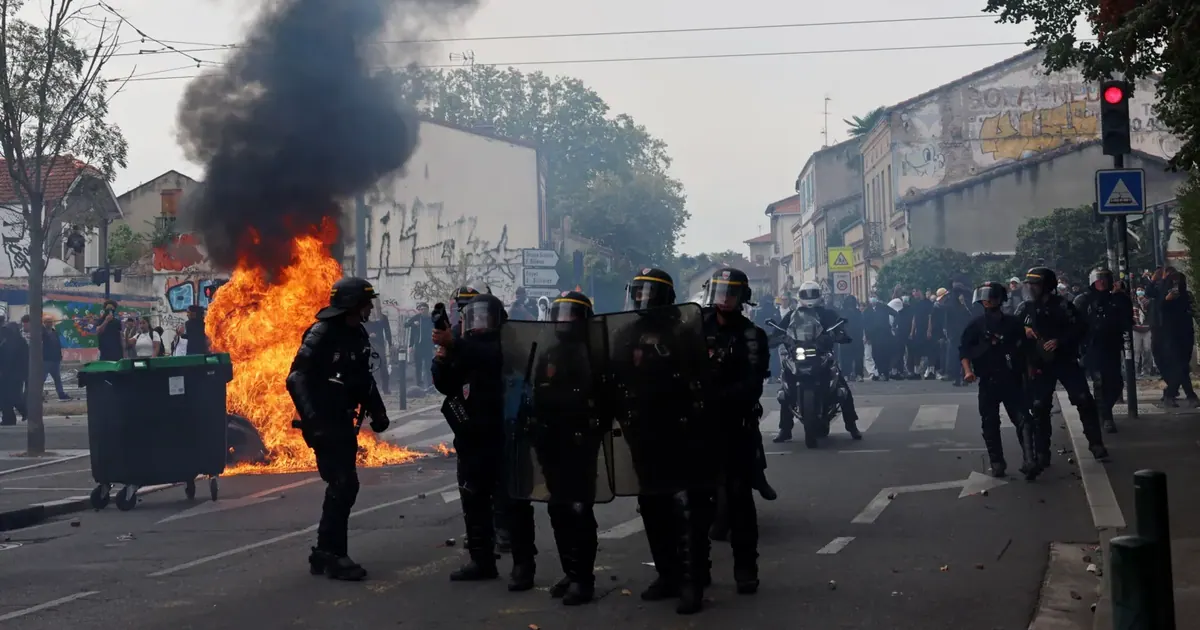
The French education minister, Édouard Geffray, announced on Sunday that 400 to 500 high schools across France would partially or totally close on Monday due to security concerns and ongoing student protests. The decision came after clashes between riot police and student protesters in recent days. Geffray stated that lessons would be "totally or partly suspended" in some schools as the safety conditions had not been fulfilled.
The student protests, which began last week in Paris and spread to other cities like Montpellier, Nantes, and Marseille, are primarily driven by concerns over education standards, lack of teachers, overcrowded classrooms, and run-down buildings. Thousands of students have taken to the streets to express their grievances. On Friday, French Justice Minister Gérald Darmanin reported that 735 of France's 3,700 schools had been affected by violent protests in some way.
The situation escalated on Friday, with 1,747 people arrested, according to French Interior Minister Laurent Nuñez. The AFP news agency reported that over 5,000 people have been arrested since the start of the movement, with around 85% of them being minors. Édouard Geffray claimed that activists from the far-left had infiltrated the high school student movement, leading to extreme violence and posing a risk to staff and students.
Geffray also reported that 78 staff members in education had been wounded, describing it as "something we have never seen before." In response to the protests, French Prime Minister Sébastien Lecornu announced on Sunday that the government would take further steps to address the difficulties faced by high school students and educational staff. This includes ensuring classes continue, improving facilities, better organizing school days, and making the French university admissions platform more transparent.
The government is also accelerating the review of its "vandal-pays" bill, which aims to ensure that individuals responsible for damage bear the cost of their actions. Organizers of the protests have called for demonstrations to continue on Tuesday, accusing the government of a lack of "concrete measures." The protests have resulted in significant disruptions, with 24 schools reported to have been "burned or ransacked" since the start of the protests.
Édouard Geffray warned that the number of schools potentially affected on Monday could be comparable to Friday's figure but promised a "partial, progressive return to lessons." The government is working to address the concerns of students and staff, but the protests are expected to continue. The situation remains volatile, with activists and students pushing for concrete changes and the government trying to balance security concerns with the need for reform.
The student protests in France have garnered international attention, with some drawing parallels to similar movements in other countries. The French government's response will be closely watched, as it navigates the challenges of addressing student concerns while maintaining order and safety in schools. The outcome of the protests and the government's actions will likely have a lasting impact on education policy and student-teacher relations in France.
Key points
- Up to 500 French schools closed on Monday due to student protests.
- The protests are driven by concerns over education standards, lack of teachers, and safety concerns.
- The government has announced measures to address student concerns, including improving facilities and making the university admissions platform more transparent.