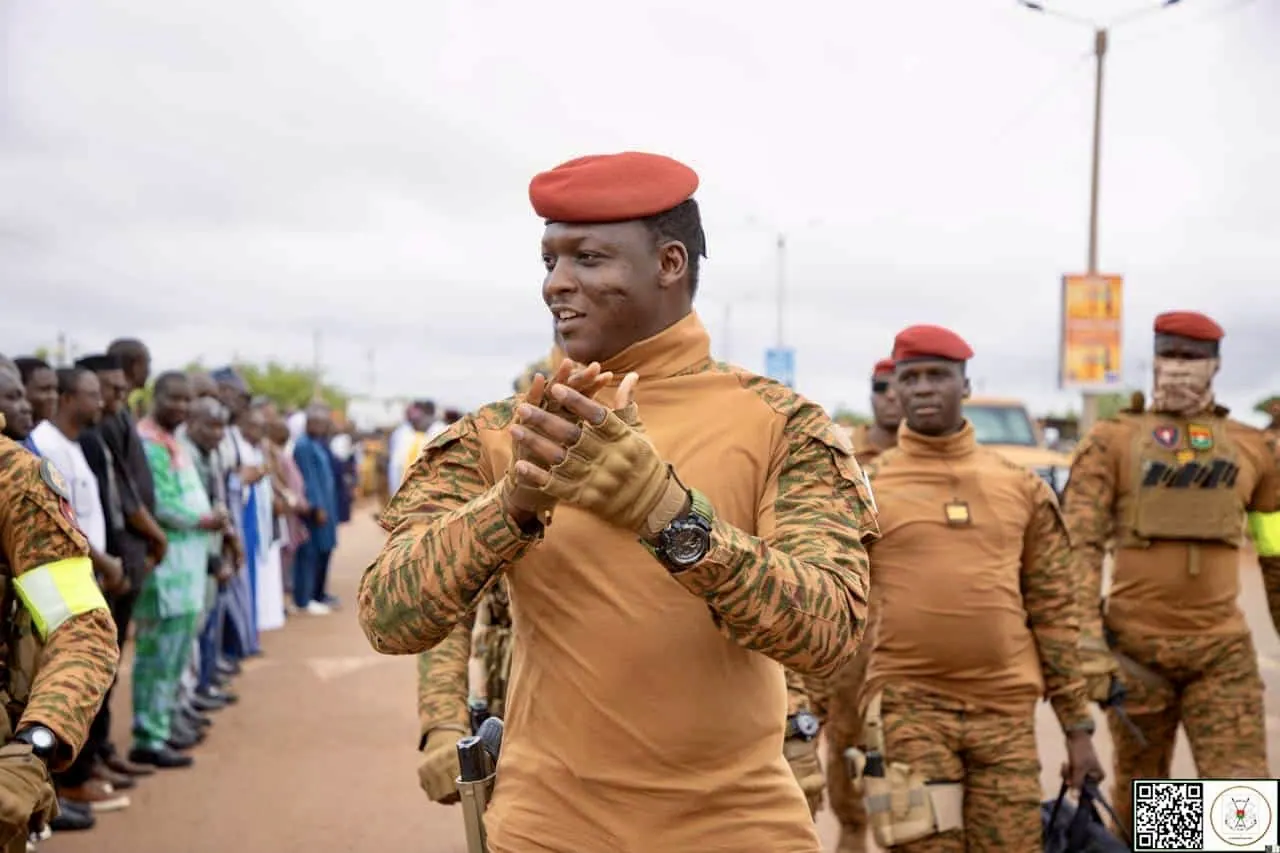
On September 30, 2022, Captain Ibrahim Traoré took control of Burkina Faso in a coup, ousting Lieutenant-Colonel Paul-Henri Sandaogo Damiba, who had himself seized power eight months earlier. At 34, Traoré became the face of a new generation of military leaders in the Sahel region. His rule has been marked by efforts to reclaim territory from jihadist groups and assert economic sovereignty.
Traoré's government has prioritized security, with the president claiming significant gains in the fight against terrorism. The regime has strengthened the military and Volontaires pour la défense de la patrie (VDP), while aiming to develop a national defense industry. The government presents territorial integrity as a central priority, alongside a discourse emphasizing sovereignty and reduced dependence on foreign partners.
Economically, Traoré's administration has launched initiatives to boost local industry, including the relaunch of projects and transformation of resources. The Faso Mêbo program aims to prioritize national achievements and address population needs. Diplomatically, Burkina Faso has distanced itself from traditional partners, particularly France, and strengthened ties with Russia, as well as its alliance with Mali and Niger within the Alliance des États du Sahel (AES).
However, human rights organizations have criticized Traoré's rule, citing a deteriorating human rights situation. Human Rights Watch reports that both jihadist groups and state forces have committed abuses, while the regime has cracked down on critical voices, including journalists, opposition figures, and civil society actors. The case of lawyer Guy-Hervé Kam, who has faced repeated arrests and judicial proceedings, is emblematic of this repression.
The media landscape has also suffered, with several journalists and commentators facing arrest, requisition, or disappearance. In June 2024, Serge Oulon, director of publication of L’Événement, and commentators Kalifara Séré and Adama Bayala were abducted by unidentified men. Human Rights Watch has documented these incidents, denouncing the forced disappearance of a Burkinabè journalist in June 2026.
Another significant concern is the duration of the military transition, with Traoré's regime yet to commit to a timeline for a return to civilian rule. The government has initiated institutional reforms, including the development of a new Constitution, raising questions about the potential impact on democratic governance. The regime's emphasis on security and sovereignty has led to concerns about the erosion of democratic freedoms.
As Burkina Faso marks four years under Traoré's rule, two competing narratives emerge. The government presents a story of territorial reconquest, sovereignty, and industrialization, while human rights organizations highlight the shrinking civic space, media repression, and persistent violence against civilians. The reality is complex, with Traoré's rule having profoundly reshaped Burkina Faso's politics, diplomacy, and national discourse.
Key points
- Traoré's regime has made significant gains in the fight against terrorism but faces criticism over human rights and democratic freedoms.
- The government has prioritized economic sovereignty, launching initiatives to boost local industry and reducing dependence on foreign partners.
- Human rights organizations have documented a deteriorating human rights situation, including repression of critical voices and media.