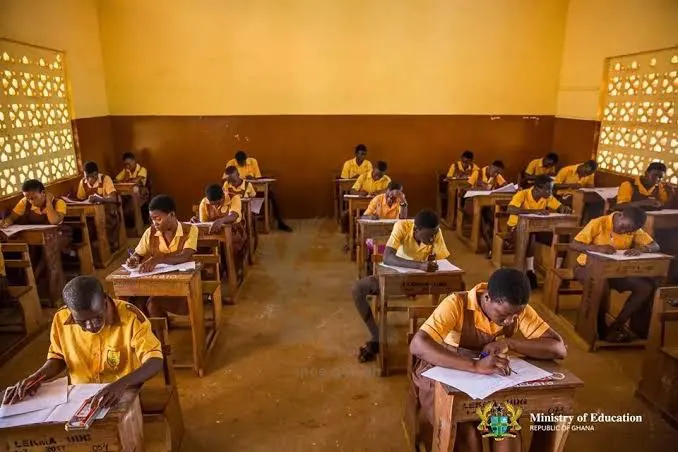
In New Juaben North, Eastern Region, Ghana, a severe furniture shortage has led to overcrowding in classrooms. Some students share a single desk, hindering effective teaching and learning. The municipality's Education Directorate reports that this problem persists in several schools, affecting both pupils and teachers. According to Okyere Boateng Samuel, Head of Planning and Statistics, shared furniture makes it difficult to maintain an orderly classroom setting.
The New Juaben North Municipal Assembly recently donated over 1,000 chairs to the Education Directorate to alleviate the issue. While welcomed, this donation falls short of the actual need. Okyere Boateng Samuel has called on the government, authorities, organizations, and stakeholders to provide additional desks and chairs. Adequate furniture, he argues, would improve pupils' comfort and the overall quality of education.
The chair donation was made under a government directive requiring assemblies to allocate part of the District Assembly Common Fund to furniture provision. Samuel Adongo, New Juaben North Municipal Chief Executive, stated that he had visited schools where pupils sat on bare classroom floors due to a lack of desks. The intervention aimed to address such situations and provide relief to students.
New Juaben North's desk shortage is part of a broader infrastructure gap in Ghana's education sector. Overcrowding and delayed construction have been reported in other areas, such as Amantin and Wa East. Conversely, some schools, like the model school setup in Asuogyaman, demonstrate the benefits of adequate resources. The crisis in New Juaben North highlights the need for sustained investment in education infrastructure.
The shortage affects families in New Juaben North, who face cramped and uncomfortable learning conditions. Education officials argue that these conditions hinder concentration and teaching. While the exact number of affected schools and pupils is unclear, the situation emphasizes the importance of addressing the furniture shortage to ensure quality education.
The Education Directorate's appeal for help remains ongoing, with no specified timeline for additional furniture arrivals. It is unclear whether the government or other stakeholders have responded to the appeal. The newly donated chairs' distribution to all identified schools also lacks a clear timeline, leaving the situation uncertain.
The situation in New Juaben North underscores the challenges faced by schools in Ghana. Addressing these challenges will require sustained efforts from the government, local authorities, and stakeholders to provide adequate infrastructure and resources. This will enable students to learn in comfortable and conducive environments, ultimately improving the quality of education in the country.
Key points
- The Education Directorate in New Juaben North received 1,000 donated chairs but still faces a significant shortage of desks and chairs.
- The furniture crisis affects the quality of education, with officials citing difficulties in maintaining orderly classrooms and pupils' comfort.
- The situation in New Juaben North is part of a broader infrastructure gap in Ghana's education sector, with reports of overcrowding and delayed construction in other areas.