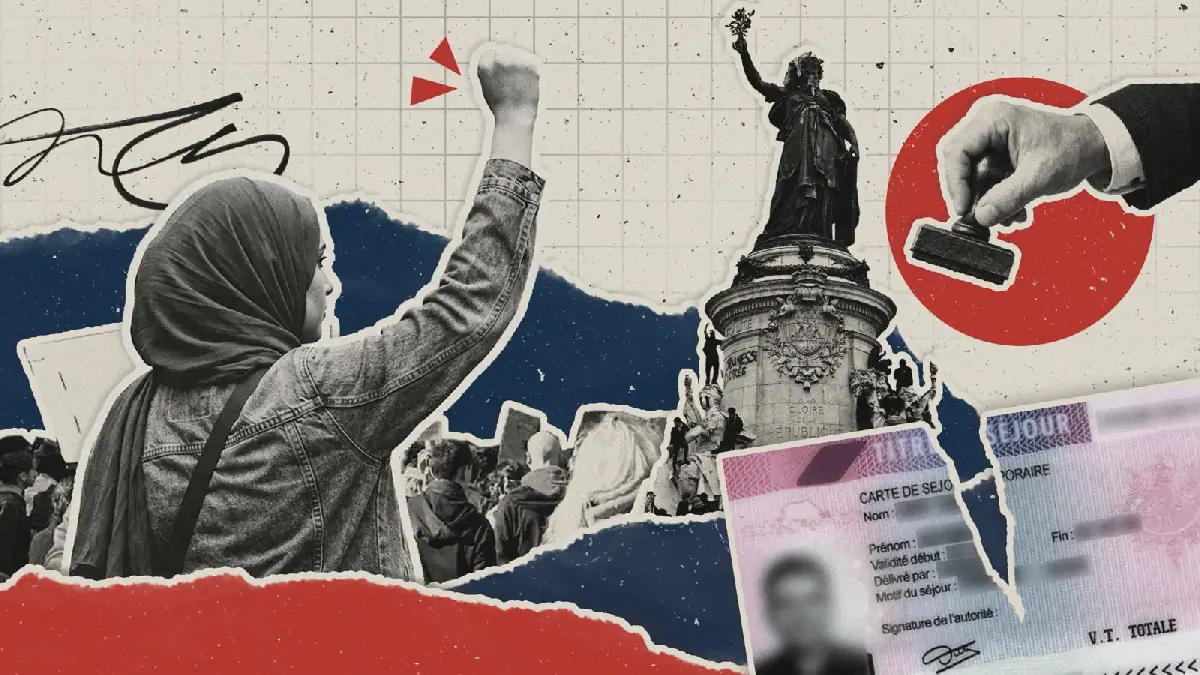
As protests against the high cost of living and for youth rights continue in France, many foreign residents are joining in, despite the risks of deportation and losing their residency permits. For Djihane, an Algerian student who has lived in France almost her entire life, the risk of losing her residency permit is a constant worry. She has participated in university blockades, but is hesitant to join larger protests.
The risks of protesting for foreign residents in France are not new. In 2023, during pro-Palestinian protests, the French government ordered the systematic ban of such demonstrations, citing concerns of public order. The Interior Minister at the time, Gérald Darmanin, also instructed prefects to withdraw residency permits from foreign nationals who participated in the protests and to expel them without delay.
Despite these risks, many foreign residents are choosing to participate in protests. Diego, a 24-year-old Moroccan employee, has been protesting since October 2023. He takes precautions, sticking to officially approved protest routes and avoiding the front lines. For him, the sense of solidarity with others who are fighting for their rights takes precedence over his fears.
Awa, an Ivorian student, initially decided not to protest after seeing social media posts warning of the risks of deportation. However, she eventually joined in, motivated by a sense of responsibility and a desire to stand in solidarity with others. She believes that the more the government tries to intimidate protesters, the more it shows that their actions are having an impact.
For Abdullah and Diego, both Moroccan and in their mid-twenties, the decision to protest is driven by a sense of solidarity and duty. They believe that they have a responsibility to stand up for what they believe in, even if it means taking risks. Abdullah, a recent law graduate, says that he feels a sense of duty to be at the protests, even though he does not enjoy them.
The French government has tried to discourage protests, with President Emmanuel Macron calling on people to wait for the next presidential election in 2027. However, many foreign residents do not have the right to vote and feel that they have no other way to express themselves. Djihane, who doubts she will be naturalized in time to vote in 2027, feels that she has no choice but to protest.
Despite the challenges, many foreign residents are determined to continue protesting and to find ways to make their voices heard. Awa and Djihane plan to engage in local activism, such as distributing leaflets and trying to persuade others to vote for candidates who share their values. Diego, who is involved with the La France insoumise movement, plans to continue his political activism, even without being able to vote in the presidential election.
Key points
- Many foreign residents in France are participating in protests despite fears of deportation and losing their residency permits.
- The French government has tried to discourage protests, but many foreign residents feel that they have no other way to express themselves.
- Despite the risks, many foreign residents are determined to continue protesting and to find ways to make their voices heard.