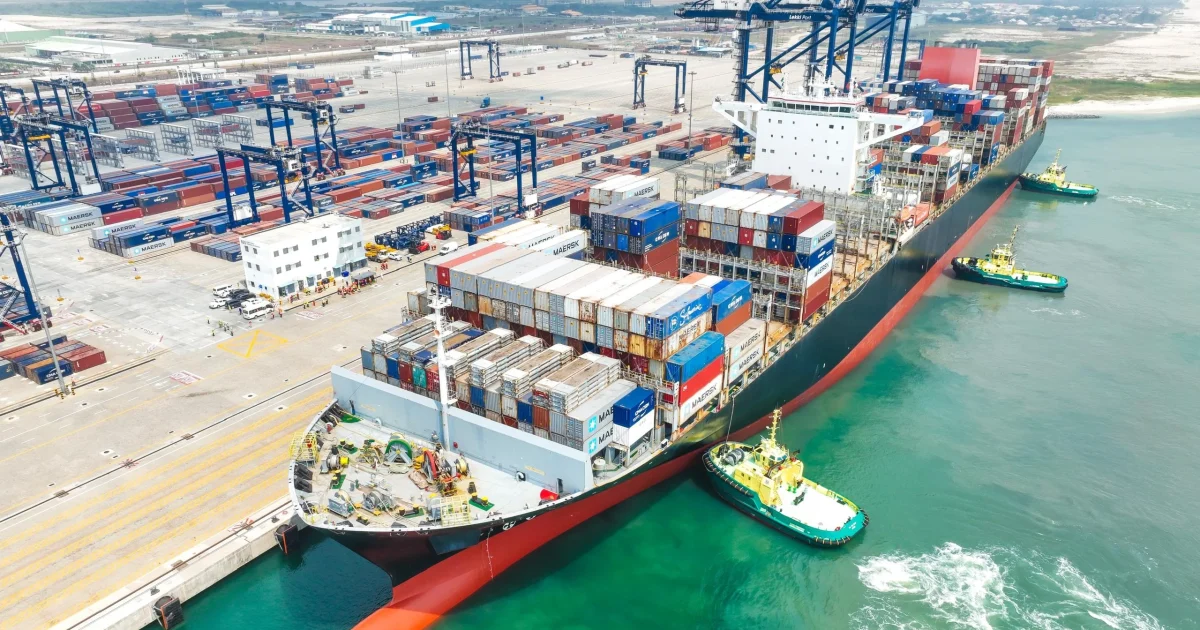
A maritime research group, the Sea Empowerment and Research Center, has warned that global supply chains are increasingly challenging Nigeria's traditional business model. This model involves foreign manufacturers producing goods, Nigerian importers bringing them into the country, clearing agents processing them, wholesalers distributing them, and retailers selling them to consumers. The center's Head of Research, Eugene Nweke, signed a bulletin obtained by The PUNCH, highlighting this development.
The recent protest by traders at the Lagos International Trade Fair Complex on September 15, 2026, over alleged increasing participation of Chinese businesses in direct retail and domestic distribution, should not be viewed merely as another market dispute. Instead, it is a strategic warning about the changing architecture of international commerce and competition in Nigeria. The protest reflects growing concerns among some Nigerian traders about foreign businesses allegedly participating directly in domestic retail and distribution.
According to SEREC, manufacturers and international businesses can combine production, financing, shipping, warehousing, digital commerce, distribution, and retail in ways that reduce dependence on traditional intermediaries. This development is not exclusively a Chinese phenomenon but part of a wider transformation driven by globalization, e-commerce, technology, logistics integration, and increasingly sophisticated supply-chain management.
The group queried why foreign businesses are coming into the Nigerian market and expressed worry about why Nigerian businesses are still operating predominantly at the trading and distribution end of value chains. Nigeria possesses the market, resources, entrepreneurial capacity, and regional access necessary to produce, add value, brand, and export. SEREC called for Nigeria to urgently transition from an economy disproportionately dependent on importation and resale towards one driven by production, value addition, manufacturing, logistics, branding, and exports.
SEREC highlighted that the African Continental Free Trade Area, Nigeria's Free Trade Zone system, and the country's large domestic market provide important platforms for this transition. The opportunity is not to isolate Nigeria from foreign competition but rather to make Nigerian enterprise competitive within Nigeria and across Africa. This transition would enable Nigeria to leverage its strengths and capitalize on emerging trends in global commerce.
The Sea Empowerment and Research Center reiterated that the reported protest at the Lagos International Trade Fair Complex raises a broader economic question. Whatever the immediate facts and competing claims surrounding particular businesses, the development underscores the need for Nigeria to adapt to changing global commercial dynamics. By doing so, Nigeria can harness the benefits of globalization while protecting its economic interests.
The warning from SEREC comes as traders and policymakers seek to address the challenges posed by foreign businesses in Nigeria. As the country navigates this new landscape, stakeholders will need to collaborate to develop strategies that promote Nigerian enterprise and competitiveness. By transitioning towards a more production-driven economy, Nigeria can mitigate the risks associated with globalization and ensure sustainable economic growth.
Key points
- Sea Empowerment and Research Center warns of integrated global supply chains challenging traditional Nigerian business models.
- Nigerian businesses still operate predominantly at the trading and distribution end of value chains.
- SEREC calls for Nigeria to transition towards a production-driven economy to leverage its strengths and capitalize on emerging trends in global commerce.