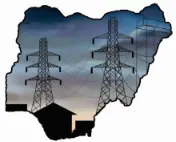
The Managing Director and Chief Executive Officer of Arewa Cotton and Allied Products Limited, Mr Anibe Achimugu, recently stated that electricity has become one of the biggest threats to industrial survival in Nigeria. This sentiment is shared by Alhaji Aliko Dangote, Africa's foremost businessman, who has repeatedly expressed concerns about the impact of unreliable power supply on businesses. The issue has significant implications for economic growth, as industries and commercial organisations, including small and medium enterprises, rely on diesel and petrol as alternative sources of generating power.
The perennial national grid failure and attendant shortage of electricity supply place a constraint on Nigeria's economic growth. The variable costs of alternative power generation are factored into the cost of production, which are indirectly borne by end consumers. This situation has grim consequences, including the folding up of businesses or layoffs of workers. The country's economic prosperity and attainment of medium and long-term development goals are at risk if the power sector is neglected.
The epileptic nature of power supply in Nigeria makes it one of the harshest environments to do business, rendering the country less competitive. In response to the unreliable power supply, individuals and businesses resort to self-help by generating their own power. However, privately generated electricity comes at a huge cost, with negative implications for the cost of living, business profitability, poverty incidence, health, safety, and the environment.
The promise of reforms in the power sector undertaken over a decade ago, which aimed to increase access to electricity, engender private sector investments, improve infrastructure, and create employment, has become a mirage. No nation can achieve true industrial growth or unlock its economic potential without stable power, as businesses cannot expand or compete when basic infrastructure like electricity is unreliable.
An analysis of firm-level data from the Nigeria World Bank Enterprise Survey showed that electricity supply is consistently the biggest constraint to doing business in the country. The World Bank report further stated that Nigeria's annual per capita electricity consumption is 147 kilowatt hour (kWh), which is a fifth of the average low middle-income country consumption of 736kWh and a twentieth of the global average consumption of 3,298kWh.
Today, there is hardly any part of Nigeria that does not experience power failure on a daily basis. In some places, several days go without electricity, with resultant effects on socio-economic activities. The World Bank report revealed that the country's power failure has significant implications for businesses and the overall economy.
The erratic power supply has significant implications for Nigeria's economic growth and industrial survival. With a growing population of jobless Nigerians, the need for stable power to create employment and stimulate economic growth has become increasingly urgent. The country's power sector requires urgent attention to address the challenges posed by unreliable electricity supply.
Key points
- Unreliable electricity supply is a major constraint to doing business in Nigeria.
- Nigeria's annual per capita electricity consumption is significantly lower than the global average.
- The country's power sector requires urgent attention to address the challenges posed by unreliable electricity supply.