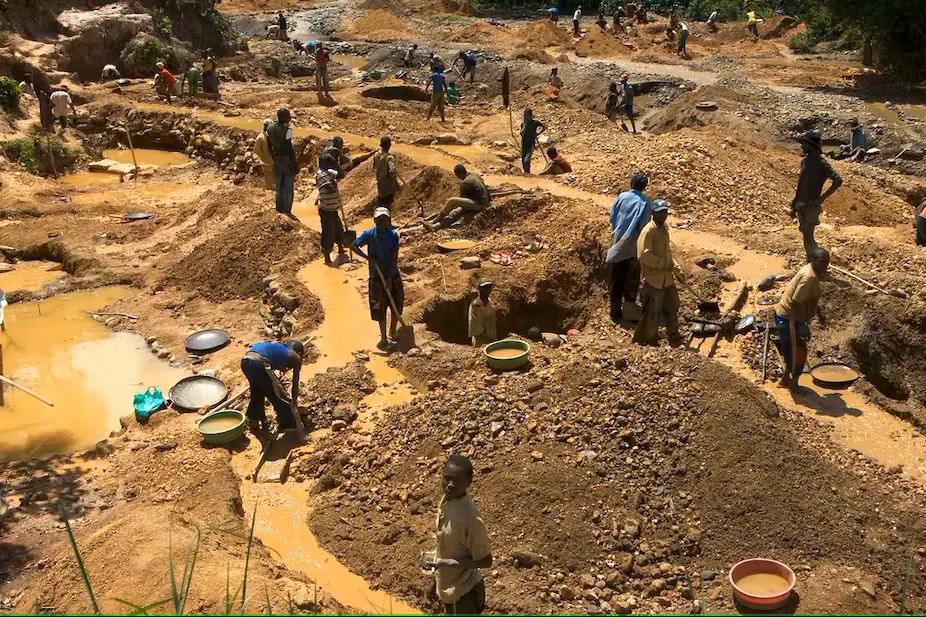
Nigeria's solid minerals sector presents a complex story of both opportunities and challenges. On one hand, mining has created wealth, jobs, and economic opportunities for individuals and communities, particularly in mineral-rich areas. It has provided livelihoods and opened new sources of income for many. However, the sector also faces significant challenges, including illegal mining activities that have contributed to insecurity, environmental degradation, exploitation, and social disorder in some communities.
In recent years, Nigeria's solid minerals sector has undergone significant reforms aimed at modernising the industry, strengthening regulation and enforcement, attracting investment, and promoting local processing and value addition. There has been growing interest in critical minerals, particularly lithium. Efforts to formalise artisanal mining and improve government revenue from the sector have also been underway. These reforms are expected to have a positive impact on the sector and the economy as a whole.
According to reports, the revenue generated by the solid minerals sector has increased significantly in recent years. In 2023, the sector generated about ₦16 billion in revenue. This figure rose to ₦38 billion in 2024 and approximately ₦68.1 billion to over ₦70 billion in 2025. This increase in revenue is a positive development for the sector and the economy.
Despite these positive developments, the sector still faces significant challenges. A recent tragedy in Niger state, in which 37 young lives were lost, has been linked to illegal mining, official negligence, and unprofessionalism by some Civil Defense officers. Illegal mining is a significant problem in Nigeria, and it is defined as the exploration, extraction, processing, or trading of mineral resources without the required licences, permits, or regulatory approvals.
Nigeria has an established legal and regulatory framework for mining, principally under the Nigerian Minerals and Mining Act, 2007, alongside subsequent legislation affecting the sector. The Nigeria Tax Act 2025, which took effect on January 1, 2026, also introduced changes affecting mining taxation and mineral royalties. However, despite this framework, illegal mining remains a significant challenge.
The problem of illegal mining is complex and multifaceted. It is not simply a matter of the absence of laws, but rather a combination of factors, including poverty, unemployment, weak enforcement capacity, informal economic activity, insecurity, and limited government presence in some remote areas. In rural communities, artisanal mining may provide livelihoods for families with few alternative sources of income.
To address these challenges, the Nigerian government will need to take a comprehensive approach that includes bringing legitimate artisanal miners into the formal economy, enforcing the law against criminal mining operations, protecting host communities and the environment, improving security around mining areas, and ensuring that Nigeria's mineral wealth translates into sustainable economic benefits for the country and its people.
Key points
- The Nigerian government's efforts to reform the solid minerals sector have led to an increase in revenue, but challenges persist.
- Illegal mining remains a significant challenge in Nigeria, with a recent tragedy in Niger state highlighting the need for effective regulation and enforcement.
- The government will need to take a comprehensive approach to address the complex challenges facing the sector, including poverty, unemployment, and environmental degradation.