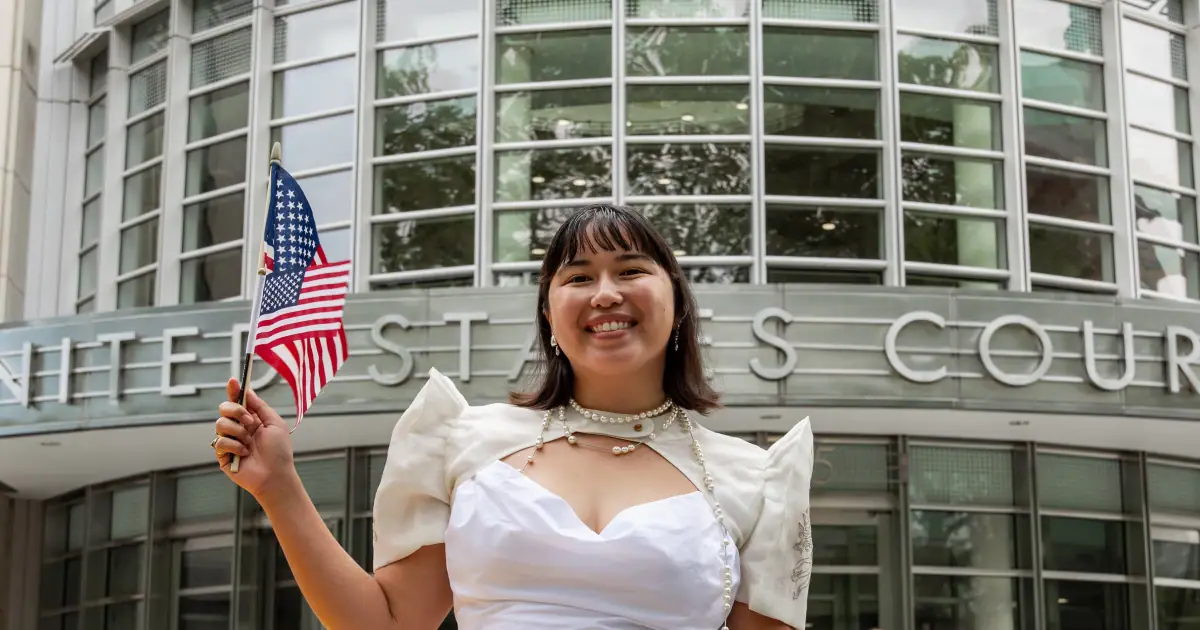
Nicole Solis-Sison, a 34-year-old from New York City, is voting in her first election after becoming an American citizen earlier this year. Her family, who fled the Philippine government, sought asylum in the U.S. when she was seven years old. Solis-Sison considers herself lucky and feels a responsibility to protect people going through the immigration process. She created her own voter guide and diary to prepare for the election.
Juan Escalante, a 37-year-old from California, is also voting in his first general election. Originally from Venezuela, his family moved to the U.S. when he was 11 years old. Escalante didn't know he was undocumented until high school, but his status changed under the Obama administration's DACA program. He became the first person in his family to graduate college and, in 2025, the first American citizen. Escalante says voting is profoundly personal and emotional for him.
Deisy España, a 24-year-old from Wisconsin, feels the weight of her family's immigrant history. Born in the U.S., her parents are from Mexico and were previously undocumented. España's mom recently obtained a green card, but the fear of ICE hasn't dissipated. Every time España encounters someone whose family member has been taken by ICE, she thinks, "That could have been my dad." Immigration policy has always been a priority for España.
Leydi Gonzalez, a 23-year-old from Texas, is an American citizen, but her parents are from El Salvador. Gonzalez sponsored her parents for legal status after turning 21, and they now have authorization to be in the U.S. Her experience has informed her vote, and she encourages young voters with immigrant families to vote for their loved ones. Gonzalez's parents can't vote, but she feels a responsibility to vote for them.
Many young voters, including Solis-Sison, Escalante, España, and Gonzalez, are motivated to vote by their family histories and experiences with immigration. They feel a sense of responsibility to protect their loved ones and ensure a better future. These voters are researching candidates and ballot propositions, and carefully considering the impact of their votes on their families and communities.
The power of voting is not lost on these young people. Escalante says, "Being a first-time voter here in the United States is something that's profoundly personal and emotional for me." Solis-Sison adds, "I feel like I do have a weight to protect people who are going through this process, who are getting left behind and harmed." Their experiences have given them a unique perspective on the importance of voting.
As these young voters cast their ballots, they are thinking about the future of their families and communities. They hope their votes will make a difference in the lives of those they care about. KEY_POINT: Young voters with immigrant family members and newly naturalized citizens are motivated to vote by their family histories and experiences with immigration.
Key points
- These voters feel a sense of responsibility to protect their loved ones and ensure a better future.
- Their experiences have given them a unique perspective on the importance of voting.