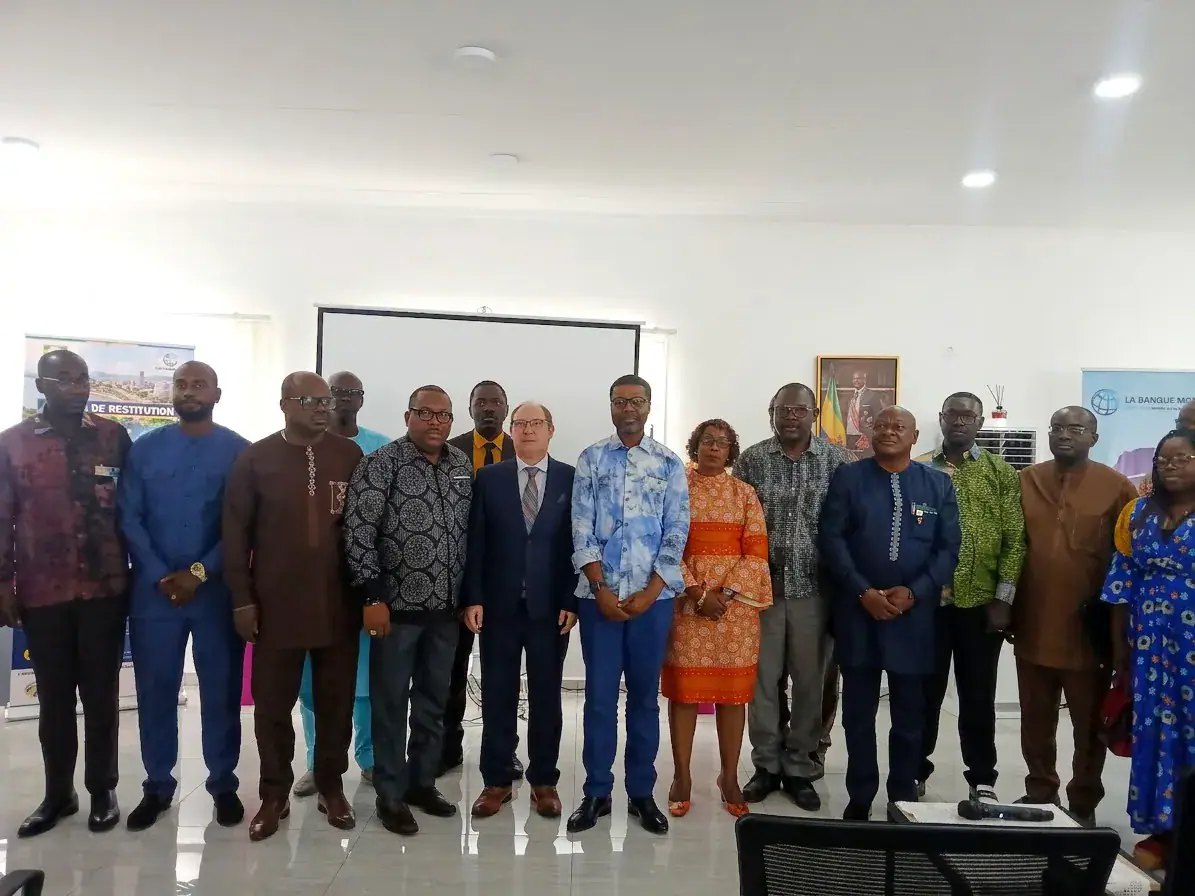
The Gabonese government's national public project portfolio has expanded significantly, growing from 675 to 1,162 projects, representing a 72% increase. This update follows a complementary inter-ministerial mapping mission, the results of which were presented at the Ministry of Planning and Prospective on Friday. A total of 487 additional projects have been integrated into the national database, providing a more detailed understanding of public investments across provinces, ministries, funding sources, and execution levels.
The updated portfolio offers a better assessment of investments in line with the priorities of Gabon's 2026-2030 National Growth and Development Plan (PNCD). According to Vulgain Andzembe Tsiegori, Commissioner General for Planning, this exercise enables more informed decision-making and enhances the monitoring of development project execution. The mapping exercise was conducted by the General Commissariat for Planning, with support from the World Bank and the Hiswaka project.
The objective of the exercise is to validate public investment data and strengthen planning, programming, monitoring, and evaluation mechanisms for development projects. The data collection process, which took place from May 10 to 24, involved sectoral ministries and their focal points, covering all nine provinces in Gabon. Field missions, divided into five teams, verified existing projects and identified new ones through administrative documents, on-site inspections, and information gathered from deconcentrated administrations.
The initial national mapping, launched on April 25, 2025, had identified 675 projects across the nine provinces. However, this baseline required regular updates to reflect project developments, changes in scope, funding sources, and emerging initiatives. The restitution workshop aims to enable stakeholders, particularly sectoral ministry focal points, to review the mission's results, identify potential omissions or inconsistencies, and formulate recommendations for data validation.
Participants at the workshop have been invited to cross-check the presented information with their knowledge of the field to consolidate the database. This approach is expected to provide Gabon with a more reliable national reference framework, informing public investment decisions and improving development project execution monitoring. The updated portfolio will facilitate better alignment of investments with national priorities and enhance overall development planning.
The successful implementation of this project demonstrates the commitment of the Gabonese government to improving the management of public investments and promoting sustainable development. The involvement of various stakeholders, including sectoral ministries and international partners, underscores the importance of collaboration in achieving these objectives. As Gabon continues to update and refine its project portfolio, it is likely to make more informed decisions about resource allocation and development priorities.
Going forward, the General Commissariat for Planning will likely continue to play a critical role in maintaining and updating the national project portfolio. By ensuring the accuracy and reliability of this data, the government can optimize its investments and accelerate progress toward its development goals. The updated portfolio will serve as a valuable tool for policymakers, enabling them to track progress, identify areas for improvement, and make data-driven decisions about future investments.
Key points
- The national public project portfolio in Gabon has increased by 72% to 1,162 projects following a comprehensive mapping exercise.
- The updated portfolio provides a more detailed understanding of public investments across provinces, ministries, funding sources, and execution levels.
- The exercise aims to validate public investment data and strengthen planning, programming, monitoring, and evaluation mechanisms for development projects.