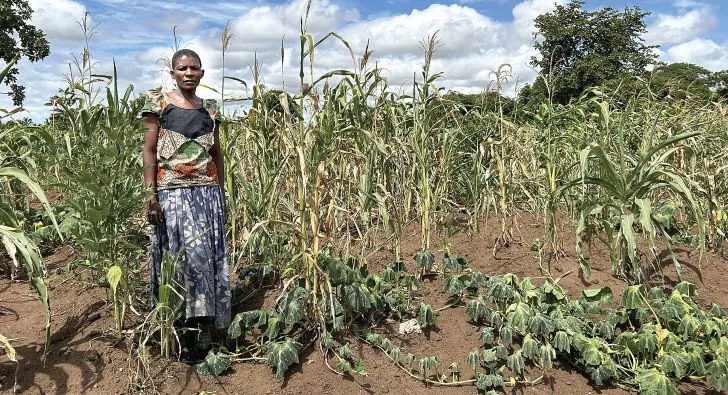
A new report by the Africa Food Trade and Resilience Initiative warns that Malawi is expected to experience deepening food insecurity, particularly in the Southern and Central regions. The report cites rising food prices, eroded household incomes, and limited agricultural labour opportunities as contributing factors. The looming El Niño weather phenomenon is also expected to exacerbate the crisis. El Niño is forecast to delay rainfall, reduce precipitation, and trigger dry spells.
The Centre for Social Concern (CfSC) has cautioned that the findings should not be dismissed as routine seasonal warnings, stressing that they highlight a deeper structural problem. According to the CfSC, households are struggling not because food is unavailable, but because they lack the income to afford it. The Malawi Vulnerability Assessment Committee estimates that 2.6 million people, 14 percent of the population, will face food insecurity during the 2026/27 consumption period.
The report notes that rising maize prices, especially in August, continue to constrain food market access for market-dependent households. Maize prices in Malawi increased by 16 percent in August, the largest month-on-month increase in the region. In contrast, maize prices declined in Zambia, Kenya, Togo, Tanzania, Rwanda, and Mozambique. The report also cites the sharp decline in tobacco revenues, which has worsened the situation and will continue to affect forex shortages and limit importation of essential commodities.
The country earned about K456 billion (about $260.8 million) from tobacco sales from the 2026 season, which officially closed on September 10. This is a significant decline from the previous season, when tobacco generated K949 billion (about $542 million). Despite favourable production prospects, maize prices have increased due to supply tightness. The government has allocated K100 billion to the National Food Reserve Agency for maize purchases and K60 billion to the Agricultural Development and Marketing Corporation to stabilise prices.
The Department of Disaster Management Affairs is expected to roll out the 2026/27 Lean Season Food Insecurity Response Plan next month. Under the response plan, food insecure households will be provided with assistance for up to four months. CfSC economic governance officer Agness Nyirongo emphasised that the distinction between food availability and food prices is important. She noted that a household can live in a community where maize is available in the markets but still go hungry if the family cannot afford to buy it.
Nyirongo observed that for poor households, the most immediate threat is the gap between food prices and household incomes. When food prices rise faster than wages and other sources of household income, families are forced to make difficult choices, such as reducing the number of meals they eat or withdrawing children from school. While praising efforts by donor partners, Nyirongo said the scale of the challenge means Malawi cannot rely on humanitarian assistance alone.
Consumer rights activist John Kapito said the report findings warrant proper planning to avoid the catastrophes that will come with these hunger challenges. He noted that most Malawians' purchasing power has been eroded by high taxes and worsened by volatile economic challenges. Kapito called for a strong committee to be responsible for putting in place meaningful strategies to deal with these challenges.
Key points
- 2.6 million people in Malawi are expected to face food insecurity during the 2026/27 consumption period.
- The looming El Niño weather phenomenon is expected to exacerbate the food insecurity crisis in Malawi.
- The government has allocated K100 billion to the National Food Reserve Agency for maize purchases to stabilise prices.