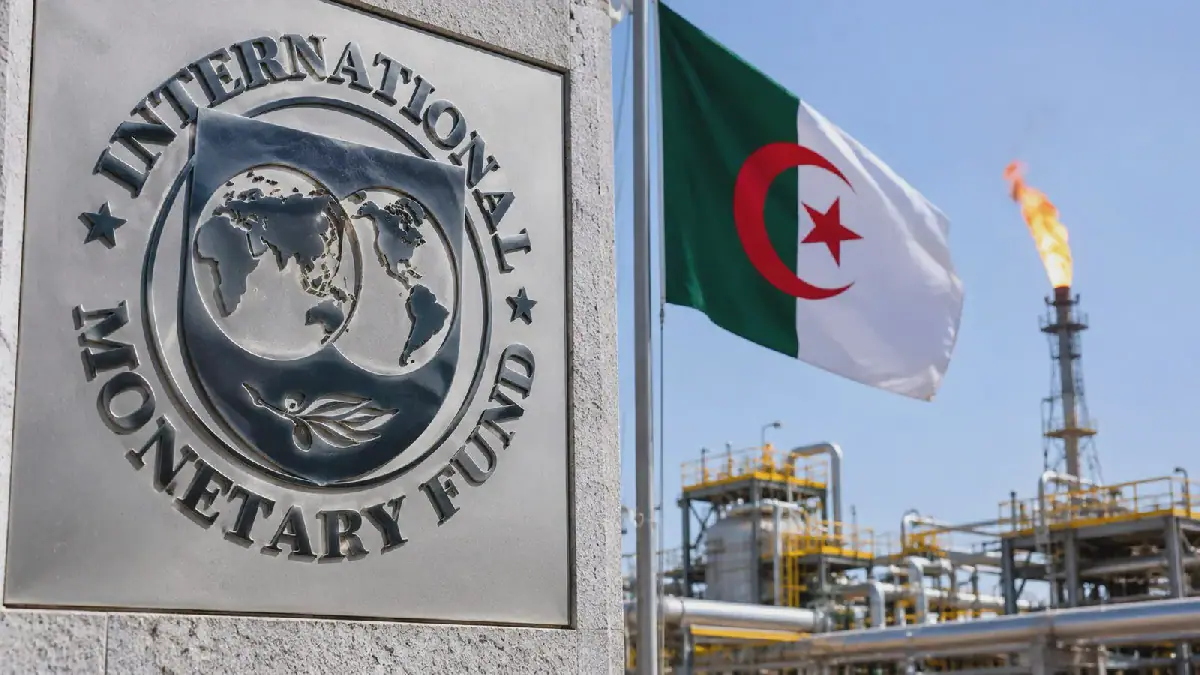
The International Monetary Fund (IMF) has expressed concerns over Algeria's economic fragilities, including a high budget deficit, rising public debt, and declining foreign exchange reserves. In its annual consultation with Algeria, the IMF noted that while the country has made progress in diversifying its economy, it still faces significant challenges. The IMF's analysis, published on November 3, highlights the need for Algeria to address these issues to maintain its economic momentum. Algeria's deficit reached 10.5% of GDP in 2025, down from 14% in 2024.
The IMF projects that Algeria's public debt could rise to 79% of GDP by 2031 if current trends continue. The country's foreign exchange reserves have also declined sharply, from $68.9 billion in 2024 to $51 billion in 2025. The IMF forecasts that reserves will dwindle to $19.8 billion by 2030, barely covering a few months of imports. Inflation has also ticked up, reaching 5.2% in April 2026. The IMF expects growth in non-hydrocarbon sectors to slow to 3.3% in 2026, down from 4.0% in 2025.
To address these challenges, the IMF has offered four key recommendations. Firstly, it suggests that Algeria should focus on selecting high-yielding investment projects that can boost productivity, create jobs, and promote the private sector. This would involve careful planning, prioritization, and implementation of projects. The IMF also emphasizes the need for a more competitive private sector to drive export growth, including in low-carbon activities.
The IMF recommends that Algeria should aim to rebalance its budget in a gradual and credible manner, relying on more efficient spending and stronger non-hydrocarbon revenue. This could involve reforming energy subsidies, with targeted support for vulnerable households. The IMF also advises Algeria to limit its reliance on financing from the Banque d'Algérie, the central bank, to exceptional circumstances only.
The IMF also suggests that Algeria should build up its savings from hydrocarbon revenues, which are volatile. By setting aside more of these revenues, Algeria can maintain public investment during periods of low oil prices. The IMF notes that the current rise in oil and gas revenues offers an opportunity for Algeria to replenish its reserves.
The Algerian government has defended its economic strategy, which focuses on public investment to drive diversification. President Abdelmadjid Tebboune has ruled out taking on external debt, in response to the IMF's projections on foreign exchange reserves. The government is counting on growth in non-hydrocarbon exports, which are expected to reach $4 billion in 2026.
The IMF's recommendations are not binding, as Algeria has not taken out a loan from the fund. Nevertheless, the IMF's analysis provides a valuable assessment of Algeria's economic challenges and offers suggestions for sustainable growth. The country's economic diversification efforts will be closely watched in the coming years, as it seeks to reduce its dependence on hydrocarbons.
Key points
- Algeria faces high deficit, rising debt, and dwindling reserves
- IMF recommends focus on high-yielding investment projects and private sector growth
- Algeria should build up savings from hydrocarbon revenues, IMF suggests