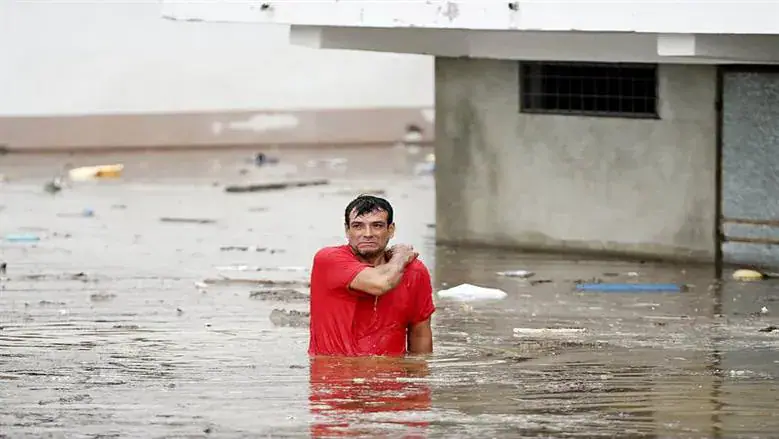
Heavy rainfall associated with the El Niño phenomenon has caused severe flooding in Peru and Ecuador, displacing thousands of people and resulting in significant damage to homes, roads, and infrastructure. In Peru, emergency responders have been working to rescue those trapped in flooded areas, with over 400 people rescued in the city of Piura alone. The Peruvian president has promised emergency financial assistance to affected families.
The flooding has been particularly severe in Peru's Piura region, where a record 143 millimeters of rain fell in just 24 hours, overwhelming drainage systems and causing widespread flooding. The flooding has damaged over 2,000 homes and displaced thousands of people. In Ecuador, the death toll from the flooding has risen to 34, with over 47,000 people affected.
The El Niño phenomenon is a complex weather pattern that affects the Pacific Ocean and can cause extreme weather events in South America. This year's El Niño event is expected to be particularly strong, with forecasts suggesting it will continue to intensify until February. The Peruvian and Ecuadorian governments are working to respond to the crisis, with assistance from international partners.
The flooding has also had significant economic impacts, particularly in Peru, where the inflation rate has risen to over 5% due to food shortages and supply chain disruptions. The Peruvian central bank has warned that the El Niño event could reduce economic growth by up to 1% this year and over 1% in 2027.
In Ecuador, the flooding has threatened the country's electoral process, with some polling stations forced to relocate due to the weather. The electoral council has warned that dozens of other polling stations are at risk due to the flooding. The Ecuadorian government had previously postponed the elections from February 2027 to November 2026 to avoid a clash with the expected peak of the El Niño event.
The Peruvian government has extended the red alert in the Piura and Tumbes regions until Monday, warning of continued heavy rainfall. The government is working to coordinate relief efforts and provide assistance to affected families. International partners, including the United States and China, are providing support to the relief efforts.
The El Niño event is expected to continue to have a significant impact on the region over the coming months, with forecasts suggesting that it will remain at high levels until February. The Peruvian and Ecuadorian governments are working to prepare for the ongoing challenges posed by the El Niño event, including protecting homes, roads, and agricultural land, and ensuring food supplies.
Key points
- The El Niño phenomenon is expected to continue to intensify until February, posing ongoing challenges for Peru and Ecuador.
- The flooding has resulted in significant economic impacts, including food shortages and supply chain disruptions.
- The Peruvian and Ecuadorian governments are working to respond to the crisis, with assistance from international partners.