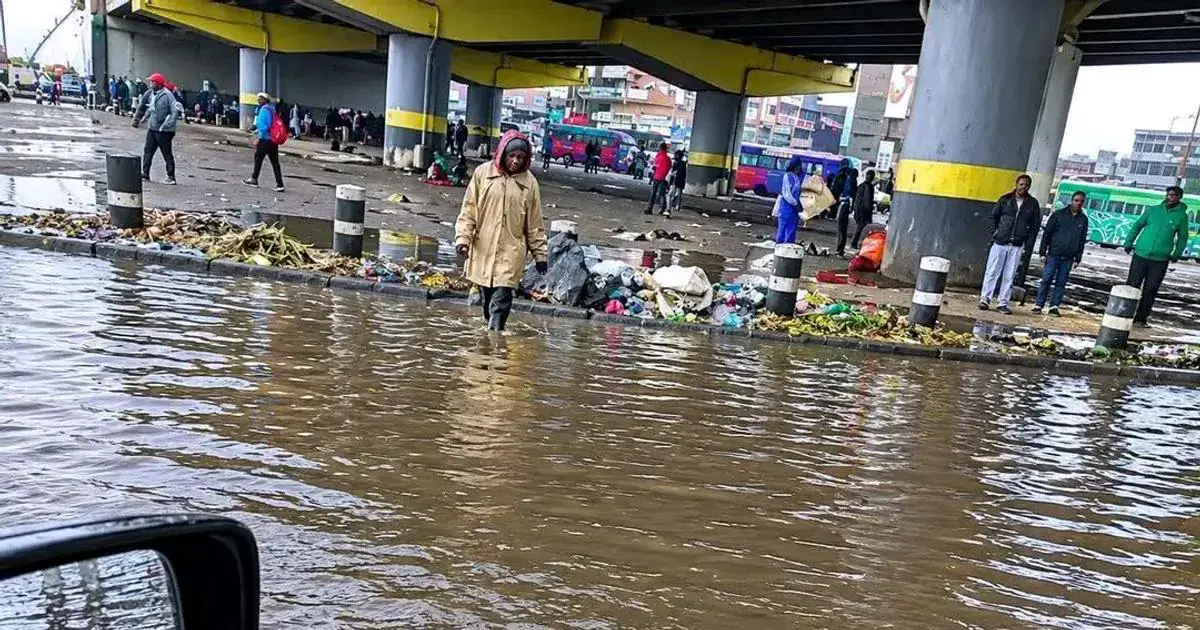
Heavy rainfall on Saturday morning caused flooding in several parts of Nairobi, Kenya. The city's drainage system struggled to cope with the downpour, despite the government spending billions of shillings on El Niño preparedness measures. Roads turned into rivers, and businesses were overwhelmed by rising waters. Photos on social media highlighted Nairobi's perennial drainage challenges and the city's preparedness for the anticipated heavy rains.
The flooding affected several areas, including Githurai Roundabout, a busy commuter corridor. The heavy downpour left sections of the transport hub submerged in floodwater, disrupting movement and turning the usually bustling intersection into a difficult passage for motorists and pedestrians. Vehicles struggled to navigate the waterlogged roads, while pedestrians were forced to wade through the murky waters or seek alternative routes.
Other areas, such as Parklands and Westlands, were also affected by the flooding. Roads resembled rivers filled with water flowing downstream, and pedestrians were stranded as vehicles partially submerged in water maneuvered the flooded roads. In Westlands, one of Nairobi's major commercial and entertainment hubs, heavy rainfall left sections of the road network inundated, disrupting the movement of vehicles and pedestrians.
The flooding has renewed scrutiny over the government's interventions to protect residents, businesses, and critical infrastructure from the impact of excessive rainfall. Kenyans are questioning whether the promised interventions have translated into meaningful action on the ground, with concerns over the ability of both the national and county governments to protect lives, property, and critical infrastructure.
The government had splashed billions of shillings on El Niño preparedness measures targeting the city's drainage system. However, the flooding has raised concerns over the effectiveness of these measures. The country's preparedness for the anticipated heavy rains and the government's much-publicized El Niño preparedness plans have been called into question.
The flooding comes after a similar incident in March 2026, when deadly floods hit Nairobi. The incident resulted in the loss of lives and property, and raised concerns over the government's preparedness for such disasters. The government has been criticized for its response to the flooding, with many Kenyans questioning the effectiveness of its measures to mitigate the impact of heavy rainfall.
As the country braces for more heavy downpours, Kenyans are calling for more effective measures to protect lives, property, and critical infrastructure. The government has been urged to review its preparedness plans and take more concrete actions to mitigate the impact of flooding. The flooding in Nairobi has highlighted the need for more effective urban planning and infrastructure development to address the city's perennial drainage challenges.
Key points
- The flooding in Nairobi has raised concerns over the government's preparedness for El Niño and its ability to protect residents and businesses from the impact of excessive rainfall.
- The government had spent billions of shillings on El Niño preparedness measures, but the flooding has raised questions over their effectiveness.
- The incident has highlighted the need for more effective urban planning and infrastructure development to address Nairobi's perennial drainage challenges.