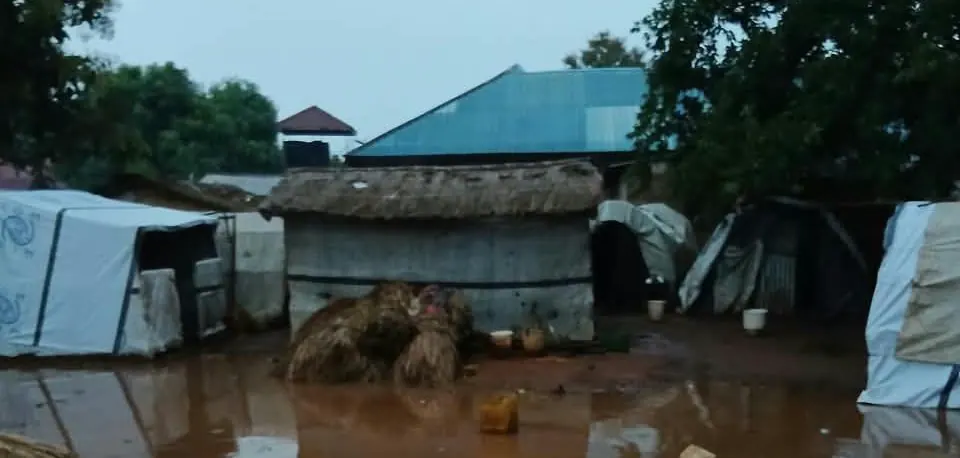
Heavy rainfall in Tambura County, Western Equatoria State, has caused widespread flooding, affecting several internally displaced person (IDP) camps. The flooding has damaged makeshift shelters, forcing some families to relocate to higher ground. Residents and local officials have reported that the situation is dire, with stagnant water posing a significant risk to sanitation and increasing the likelihood of waterborne diseases such as malaria.
According to John Kumbo, a resident of Tambura, the flooding has left water inside some shelters, making living conditions extremely challenging. Both children and adults are struggling to navigate the flooded areas. Kumbo warned that the stagnant water could lead to a surge in diseases, further complicating the already difficult situation. The flooding has also disrupted daily life, with residents facing significant challenges in accessing basic necessities.
The flooding has compounded existing problems in the IDP camps, including food shortages, limited access to healthcare, and education. Peter Marko Yeni, an IDP representative, stated that the health situation is precarious, with a lack of medicines and reliance on private clinics. Education is also severely impacted, with many children unable to attend school due to the flooding and lack of resources.
Lucy Edward, the Relief and Rehabilitation Commission coordinator in Tambura, reported that families in 15 camps across three payams are struggling to access food and other basic assistance. The flooding has destroyed shelters, and food prices have skyrocketed, with a gallon of cassava selling for approximately 6,000 South Sudanese pounds. Edward emphasized that the IDPs have been living in the camps for six years and urgently need improved health services, food, shelter, and education.
Residents are calling for urgent assistance, including food, medicines, shelter, and improved drainage. The situation in Tambura County is further complicated by years of violence and displacement, particularly since intercommunal fighting escalated in 2021. Although security has improved this year, it remains fragile, and residents have expressed concerns about potential attacks by SPLA-IO forces.
In response to the security concerns, increased patrols and a nighttime curfew have been implemented. However, the IDPs continue to face significant challenges in accessing basic necessities. The Relief and Rehabilitation Commission and other humanitarian organizations are working to provide assistance, but the situation remains dire, and further support is needed to address the complex issues facing the IDPs.
The flooding in Tambura County highlights the ongoing challenges faced by IDPs in South Sudan. The situation requires sustained attention and support from humanitarian organizations and the government to address the complex issues of displacement, food insecurity, and limited access to healthcare and education. Residents and local officials stress that urgent action is needed to mitigate the effects of the flooding and provide adequate support to those affected.
Key points
- The flooding has damaged makeshift shelters and forced some families to relocate to higher ground.
- Food prices have skyrocketed, with a gallon of cassava selling for approximately 6,000 South Sudanese pounds.
- Residents are calling for urgent assistance, including food, medicines, shelter, and improved drainage.