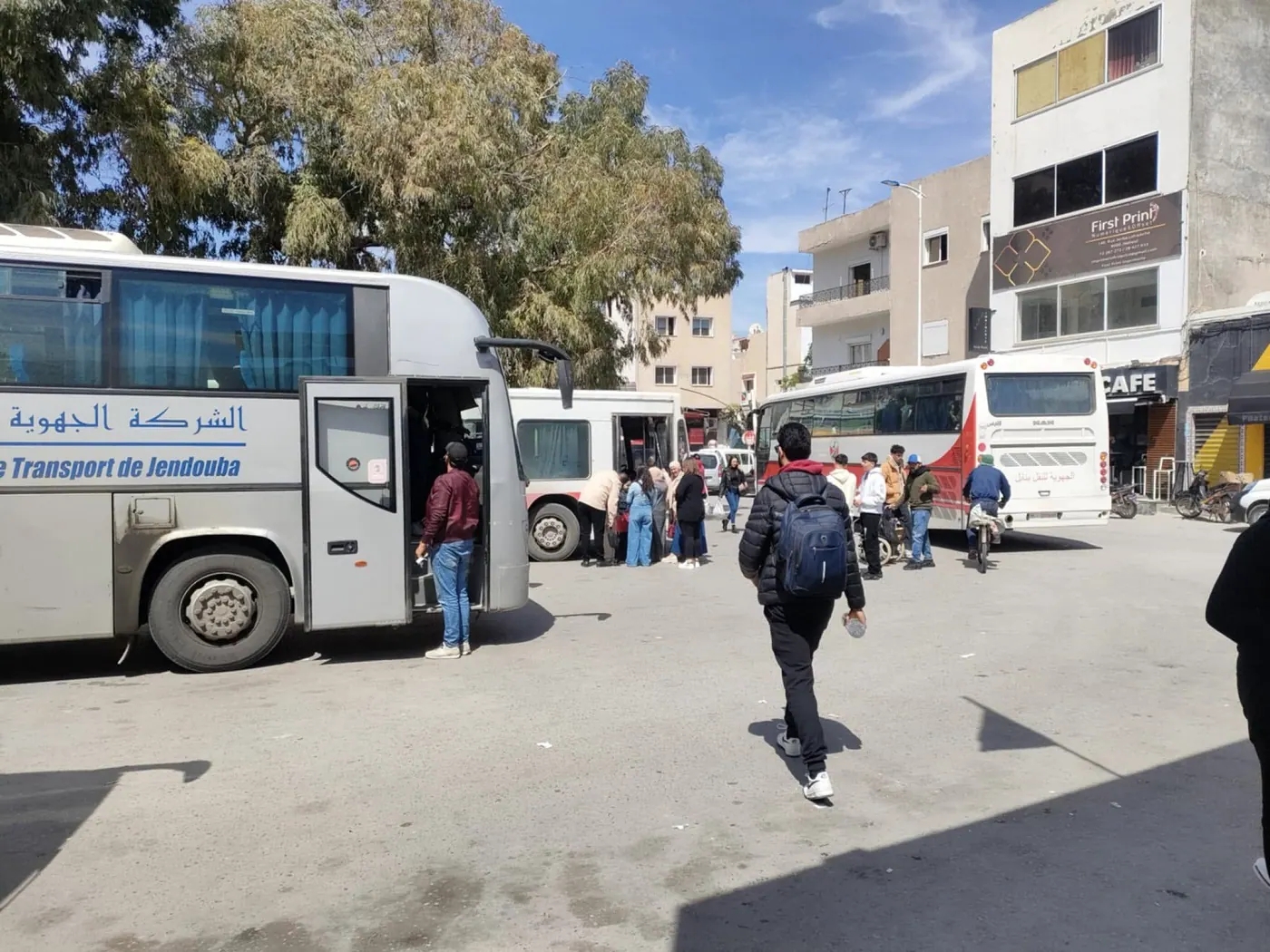
Four Tunisian regional public transport companies, namely those in Kairouan, Jendouba, Nabeul, and Sahel, have recently published their financial reports for different years. The reports reveal that these companies collectively generated 75.97 million dinars (MDT) in revenue while receiving 129.84 MDT in operating subsidies. However, their combined personnel expenses amount to 118.09 MDT, which is a significant portion of their revenue and subsidies.
The financial reports show that each dinar earned by these companies results in 1.55 dinars in salary expenses. This ratio varies across the companies, with Nabeul at 133%, Kairouan at 140%, Jendouba at 147%, and Sahel at 192%. Notably, Nabeul's salary expenses even exceed its subsidies by 6%. The operating subsidies primarily go towards paying salaries rather than financing the transport service itself.
When it comes to net results, the four companies collectively report a meager profit of 0.87 MDT. However, this figure is misleading due to a one-time event: Nabeul's profit of 3.52 MDT includes 10.92 MDT in tax penalties waived under an amnesty in 2019. Without this, the companies would collectively incur a loss of 10.05 MDT. Two companies, Jendouba and Kairouan, manage to report profits, while Sahel suffers a loss of 11.32 MDT.
The financial struggles of these transport companies are also reflected in their equity. Their combined equity is negatively impacted, with Nabeul and Sahel reporting -109.75 MDT and -59.81 MDT, respectively. These figures indicate significant financial difficulties, with the auditors questioning their survival and recommending an extraordinary general assembly.
One major factor contributing to the financial woes of these companies is the non-payment of debts by the Tunisian state. The Ministry of Interior alone owes 41.66 MDT to three of the companies. Other government ministries, including Defense and Justice, also have outstanding debts. The transport companies are forced to provision for these bad debts, which ultimately affects their financial performance and increases their reliance on subsidies.
The issue of non-payment is not limited to the state's debts to the transport companies. The companies themselves also have significant debts to the state and social security funds. For instance, Nabeul owes 65.97 MDT to the state and 25.39 MDT to social security funds. The situation is further complicated by the state's failure to pay its transport bills and the companies' inability to pay their taxes, which are later waived under amnesties.
The aging fleet of buses used by these companies is another significant challenge. The buses are heavily amortized, with Jendouba's fleet being 99.9% depreciated and Sahel's at 90%. Kairouan is the only company that has recently acquired new buses, but this was financed through bank loans. The Ministry of Transport has also clawed back unused investment subsidies from Nabeul, highlighting the difficulties in renewing the fleet.
Key points
- The financial struggles of Tunisia's regional public transport companies are largely due to the non-payment of debts by the state and the high cost of personnel expenses.
- The companies' reliance on operating subsidies, which primarily go towards paying salaries, rather than financing the transport service, is unsustainable.
- The aging fleet of buses and the lack of investment in new vehicles pose a significant challenge to the companies' ability to provide efficient and reliable services.