Despite rapid expansion of financial services in Tanzania, a significant gap remains between access to these services and the ability to use them effectively. Two out of every three Tanzanians struggle with managing their day-to-day expenses. This challenge has prompted efforts to integrate financial literacy into higher education, technical education, and vocational training. The goal is to equip young people with skills to manage income, expenditure, savings, debt, and investments before they enter the workforce.
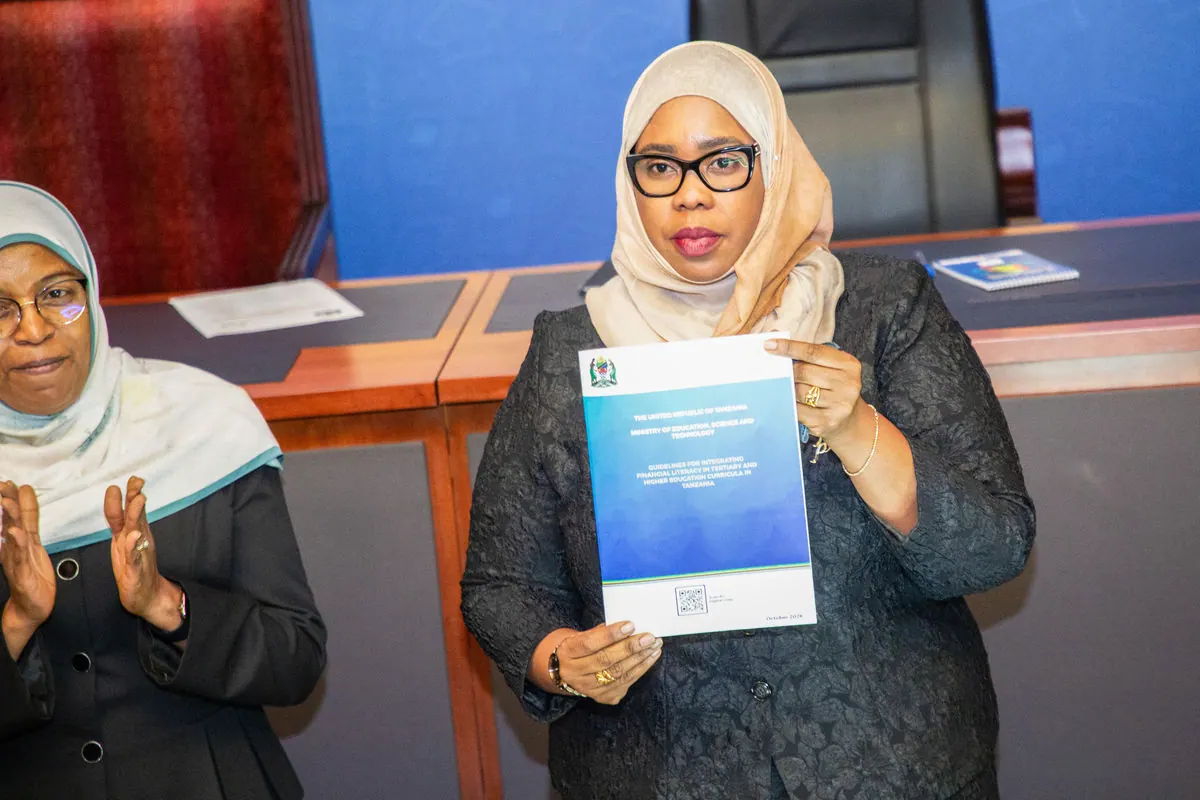
The issue was highlighted during the launch of a guideline for integrating financial literacy into curricula of higher education, technical education, and vocational training. Bank of Tanzania Director of Financial Inclusion and Development Services, Kennedy Komba, stated that access to financial services had increased significantly, from 11 percent in 2006 to 76 percent in 2023. However, greater access has not necessarily translated into the ability of citizens to make sound financial decisions.
According to the 2023 FinScope Survey, two out of every three Tanzanians face challenges in managing their day-to-day expenses. Mr. Komba emphasized that financial literacy is not only about increasing knowledge but also enabling households and individuals to plan expenditure, save, manage debt, withstand financial shocks, and make decisions that protect their well-being. He noted that access to financial products alone is not enough if users do not understand the costs, risks, and obligations associated with them.
The gap in financial literacy is becoming increasingly important as technology allows people to borrow, save, and conduct transactions through mobile phones without visiting financial institutions. Mr. Komba stated that financial literacy aims to help people understand not only how to access services but also their costs, potential risks, and how to use money in line with their financial capacity. This is particularly crucial in today's digital age.
The new guideline is being introduced in higher education institutions because students already face financial decisions involving education loans, accommodation, and daily expenses. Some students are also engaged in businesses and other income-generating activities. After graduation, they encounter other responsibilities involving salaries, loans, investments, savings, and the use of financial services.
BoT Deputy Governor Sauda Msemo stated that financial literacy is a foundation for building a strong, safe, and inclusive financial system, particularly as technological advances continue to introduce a wider range of financial products. She emphasized that these products cannot deliver their intended benefits unless users understand how they work. The new guideline aims to complete that chain by bringing financial literacy into higher and technical education.
Deputy Minister for Education, Science and Technology, Wanu Hafidhi Ameir, noted that the guideline is in line with the National Development Vision 2050, which seeks to build a competitive and productive economy supported by a skilled workforce. She emphasized that Tanzania needs graduates who are not only holders of academic certificates but also capable of applying their knowledge to address challenges facing society and contribute to national development.
Key points
- Two out of every three Tanzanians face difficulties managing day-to-day expenses.
- Financial literacy gap remains despite increased access to financial services.
- New guideline aims to integrate financial literacy into higher education, technical education, and vocational training.