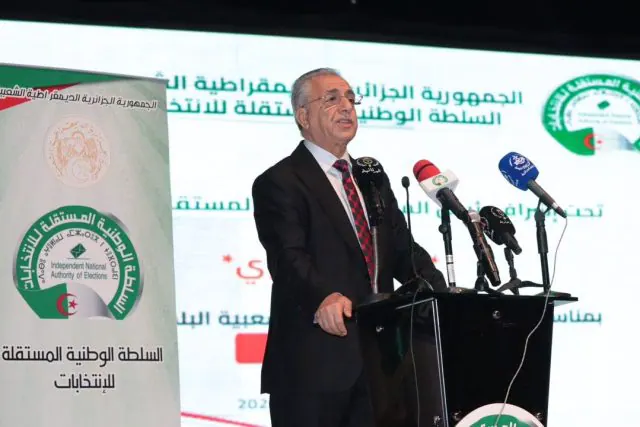
Algeria's Autorité nationale indépendante des élections (ANIE) is intensifying its preparations for the upcoming local elections on November 28. ANIE President Saâd Arous supervised a regional meeting in Algiers with coordinators from 25 wilayas in the central and southern regions. The meeting focused on monitoring the progress of preparations for the upcoming polls. Arous emphasized that the ANIE has entered a phase of intense activity on the ground, calling on local structures to be vigilant and ensure permanent monitoring of electoral operations.
Arous stressed the need to quickly address any difficulties encountered at the local level and ensure strict adherence to electoral legislation. He also highlighted the importance of neutrality, independence, and objectivity in managing the electoral process, as well as ensuring the free choice of voters. The role of the media was also emphasized, with Arous calling for professional and responsible coverage of the different stages of the electoral process. This mobilization comes as political parties and independent lists finalize their candidacy files.
The ANIE must proceed with the controls provided by the legislation before the definitive validation of candidatures. The Authority had already dedicated a specific meeting to examining the legal questions related to candidacy files, particularly to ensure their conformity with the regulations in force. Among the main conditions required for candidates are Algerian nationality, registration on the electoral list of the concerned constituency, the required legal age, and regularity of the situation regarding national service.
Candidates must also satisfy the requirements related to their judicial situation and other criteria provided by the Electoral Code. The files must be accompanied by justificatory documents allowing the verification of the respect of these conditions, particularly those related to nationality and registration on the electoral lists. The constitution of lists remains a major challenge for several formations, with some parties revising their ambitions downwards, faced with difficulties in gathering enough candidates in the 1,541 communes distributed over 69 wilayas.
Several formations report a decline in enthusiasm for candidatures, particularly among young people and university students. The assessments diverge, however, on the causes of this situation. Some parties cite the requirements of the Electoral Code and the fears linked to the legal consequences of candidacy, while others consider that the new rules, particularly those aiming to fight against political money, must be respected. The RND, for its part, displays its will to maintain a national coverage.
The challenge is now to finalize and deposit the lists within the given deadlines. The ANIE has set the deadline for the deposit of collective candidacy declaration files for the elections of the Communal and Wilaya Popular Assemblies for October 8 at midnight. According to the last balance sheet communicated by the Authority on September 23, 12,881 collective declaration files had been withdrawn for the APC elections, concerning the 1,541 communes of the country.
These files concerned 12,557 dossiers parroned by 34 political parties, 20 by alliances of parties, and 304 corresponding to independent lists. For the APW, 672 files had been withdrawn in the 69 wilayas. These figures relate to the files withdrawn and not to the definitively validated candidatures. The next step will consist of examining the deposited files and stopping the lists answering to the legal conditions, before entering the following phases of the electoral process.
Key points
- The ANIE is intensifying preparations for the November 28 local elections in Algeria.
- The Authority has set the deadline for depositing collective candidacy declaration files for October 8 at midnight.
- Some parties are facing challenges in gathering enough candidates due to the requirements of the Electoral Code.